
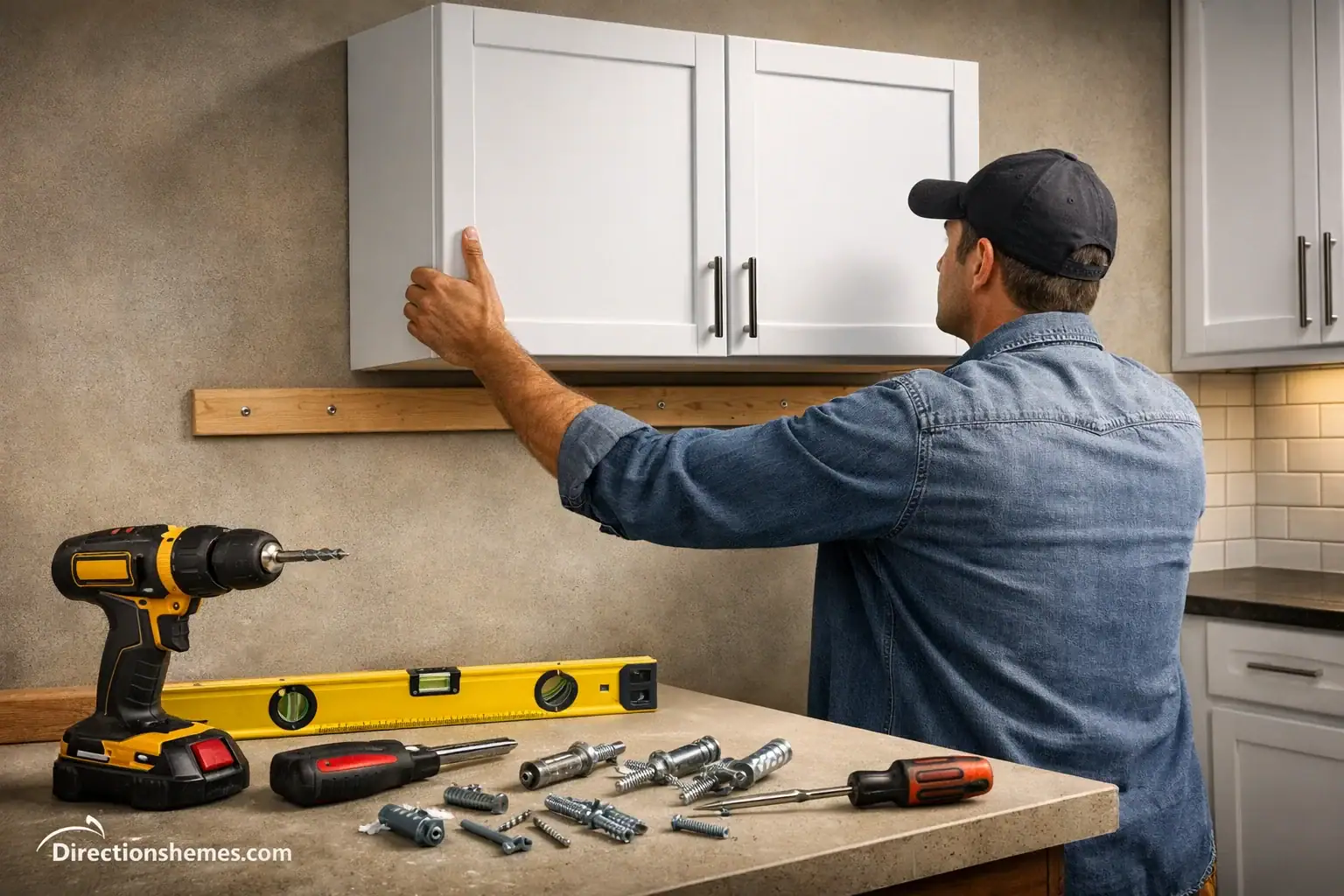
Many people ask this simple question: Can you hang wall cabinets without studs? The answer is yes, but you must follow safe steps. Cabinets hold weight. If you do not use studs, you must use other strong supports. This guide explains how to install wall cabinets without studs in a safe, simple way.
Some homes do not have studs where you want to hang the cabinet. Others may have old walls, plaster, brick, or drywall that hides studs too deeply. In rental homes, wall anchors may be your only choice. In each case, you can still mount the cabinets with smart tools and the right support.
This guide explains the full process. You will see what tools you need. You will learn which wall anchors to trust. And you will also find step-by-step help. The process works on drywall, concrete, plaster, or brick. We will also include key tips from experts and safety notes that matter.
Use this article if you plan to mount a kitchen cabinet, laundry shelf, wall cupboard, or storage unit. Whether you work alone or with help, these tips will make your install smoother and safer.
Why Studs Matter (and What to Do Without Them)
Wall studs act like bones in a wall. They give strong support for heavy items. Most cabinets screw into studs using wood screws. But what if your studs do not line up with your cabinet holes? Or worse, what if the wall has no studs at all?
Do not panic. Anchors solve this problem. They spread the weight across the wall. You just need the right type. Standard screws will not work in drywall alone. Cabinets could fall, bend, or crack. That’s why strong wall anchors exist.
Here are your best anchor options:
- Toggle bolts
- Molly bolts
- Snaptoggle anchors
- Metal hollow-wall anchors
- Concrete anchors (for brick or cement)
Each anchor type fits a wall type and weight range. Some hold 50 pounds. Some hold over 200 pounds. If your cabinet is large, use multiple anchor points.
Tools You Need Before You Start
Gather all tools before the first drill. This will save time and stress. You do not need fancy gear. Simple tools can do the job. You will need:
- Power drill and driver
- Level (manual or laser)
- Tape measure
- Pencil or painter’s tape
- Wall anchors or toggle bolts
- 2-inch or longer screws
- Screwdriver
- Stud finder (to confirm no studs)
- Ledger board (1×4 wood strip)
Optional but helpful:
- Helper (to hold the cabinet during installation)
- Masking tape
- Safety goggles
- Dust mask
Step 1: Check the Wall and Studs
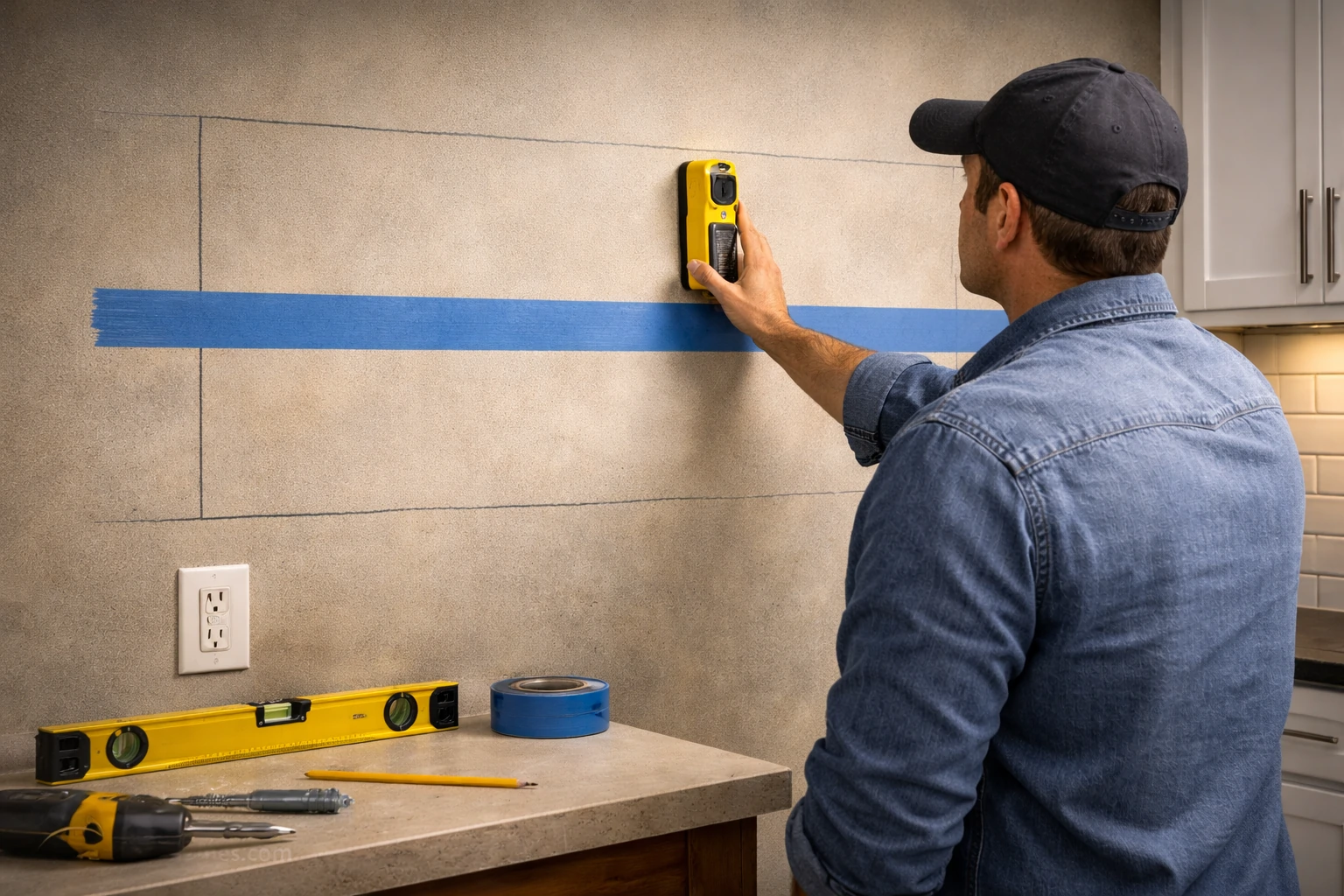
Use a stud finder. Sweep it across the wall where you want to hang the cabinet. Make sure it shows no studs. Tap the wall. Hollow sounds confirm no wood studs behind. If you hit a stud, you can use it. If not, continue with anchors.
Mark the cabinet placement. Use tape or a pencil to outline the top and bottom cabinet edges. Double-check the height. Standard cabinet bottoms sit 54 inches above the floor.
Step 2: Add a Ledger Board
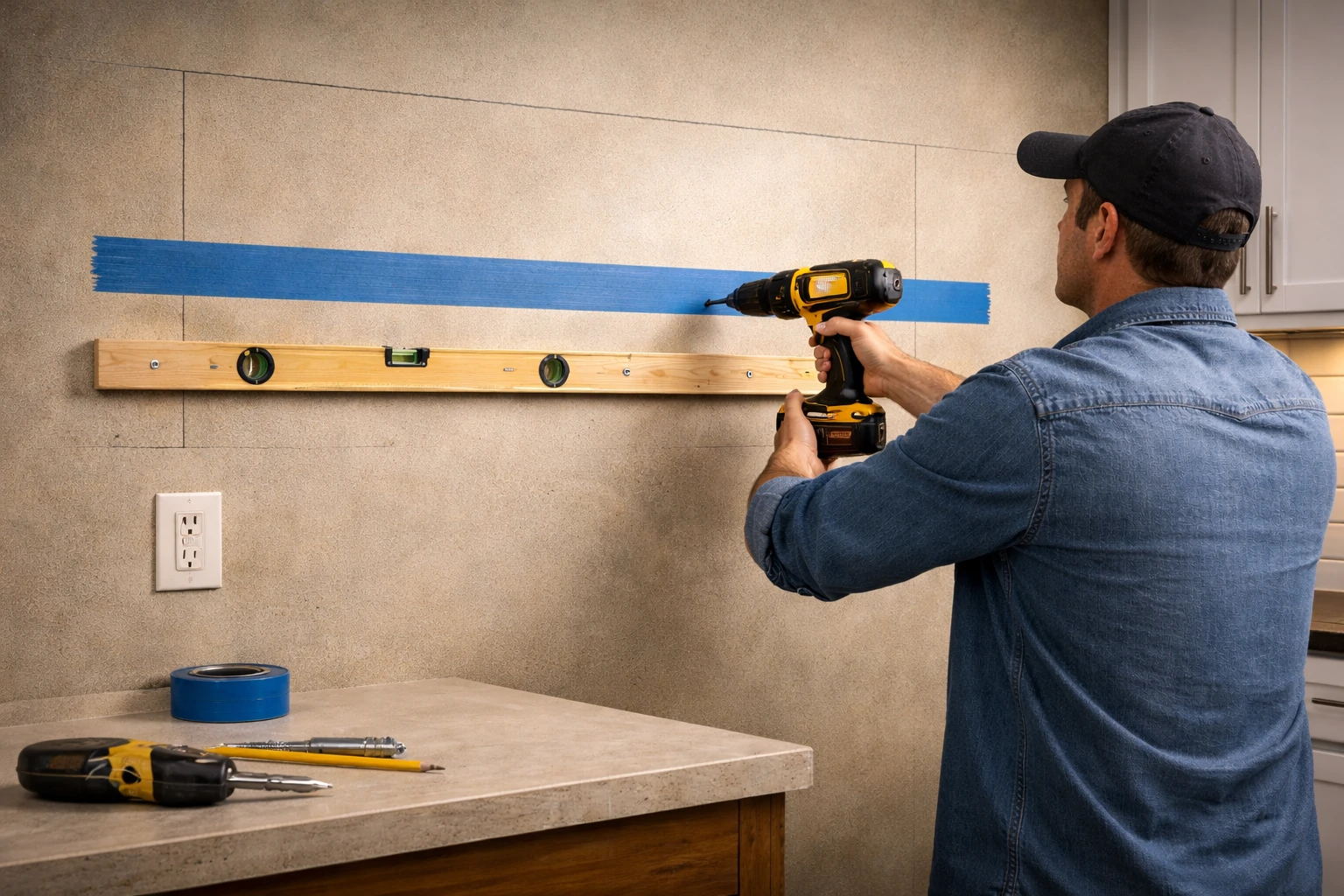
A ledger board helps support the cabinet during the install. Screw a 1×4 wood strip to the wall along the bottom line of the cabinet. Make it level. This gives the cabinet a resting point.
You can remove the ledger later. This trick helps one person work alone. It also holds the cabinet straight as you drill anchor holes.
Step 3: Choose the Right Anchors
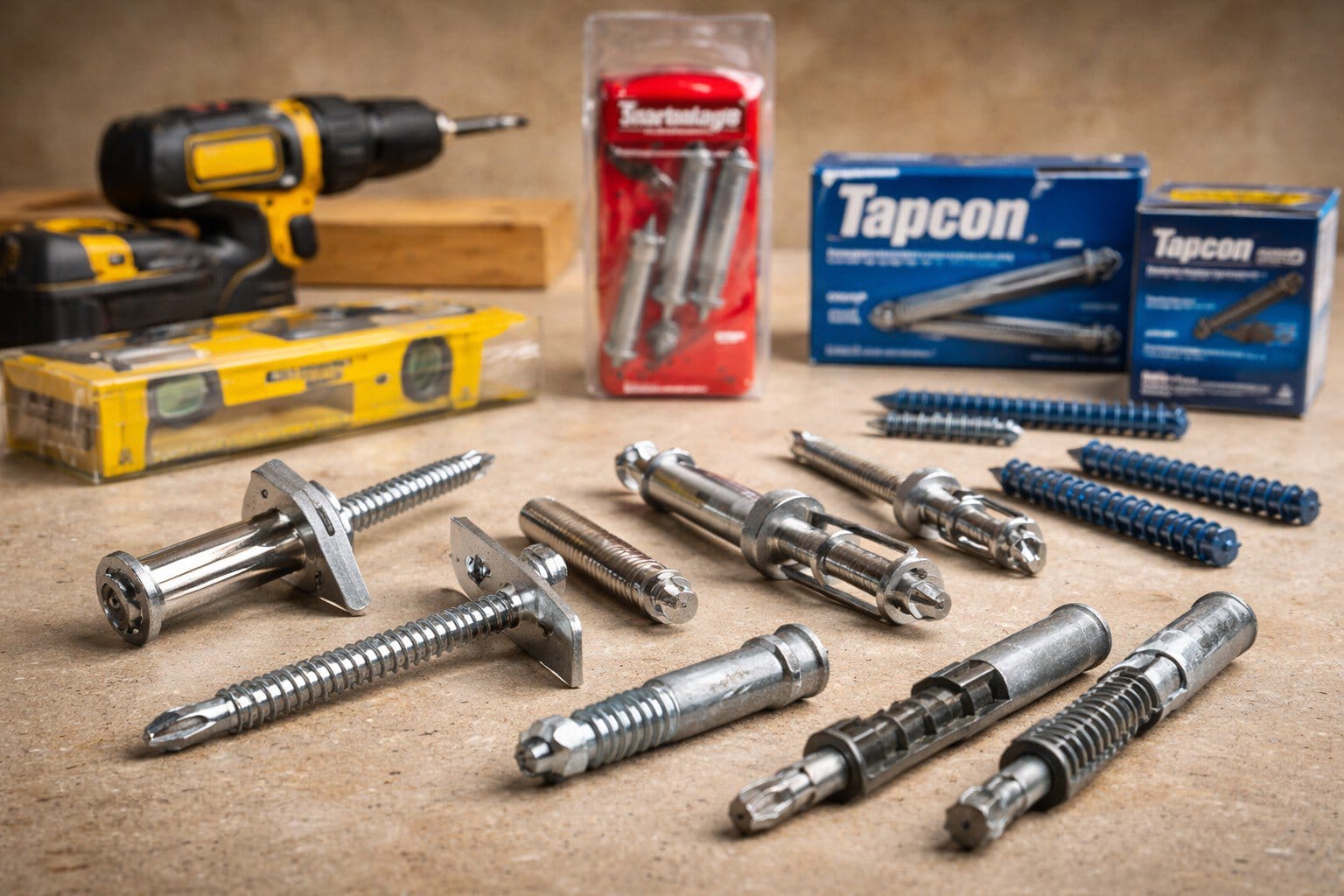
Do not use plastic wall plugs. They can fail under heavy loads. Use heavy-duty anchors instead.
- Toggle bolts: Metal anchors that spread wide behind drywall. They hold 100–250 lbs.
- Molly bolts: Expand inside drywall. Safer for small to mid cabinets.
- Snaptoggles: Hold strong and work with standard bolts. Great for drywall.
- Concrete screws: Needed for brick or cement walls. Tapcon is a trusted brand.
Check the cabinet’s weight. Include the expected weight of dishes, food, or tools. Match anchor load rating to total weight.
Step 4: Drill the Anchor Holes
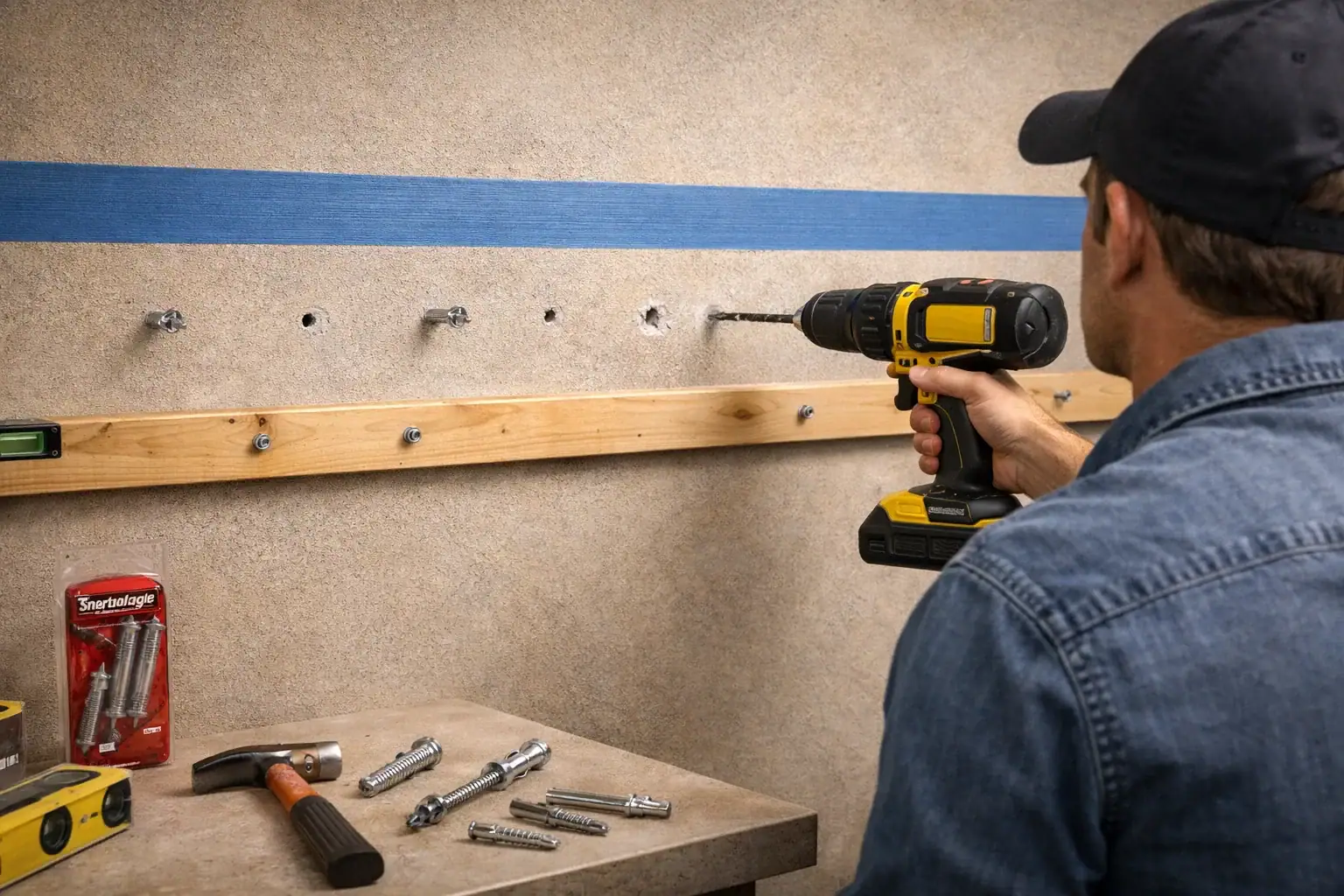
Remove the cabinet. Mark your anchor holes on the wall. Use a drill to create holes at each mark. Make the hole big enough to fit the toggle or anchor sleeve.
Insert the anchors one by one. Toggle bolts need a spring mechanism. Molly bolts need tapping with a hammer. Read anchor instructions before starting.
Step 5: Hang the Cabinet
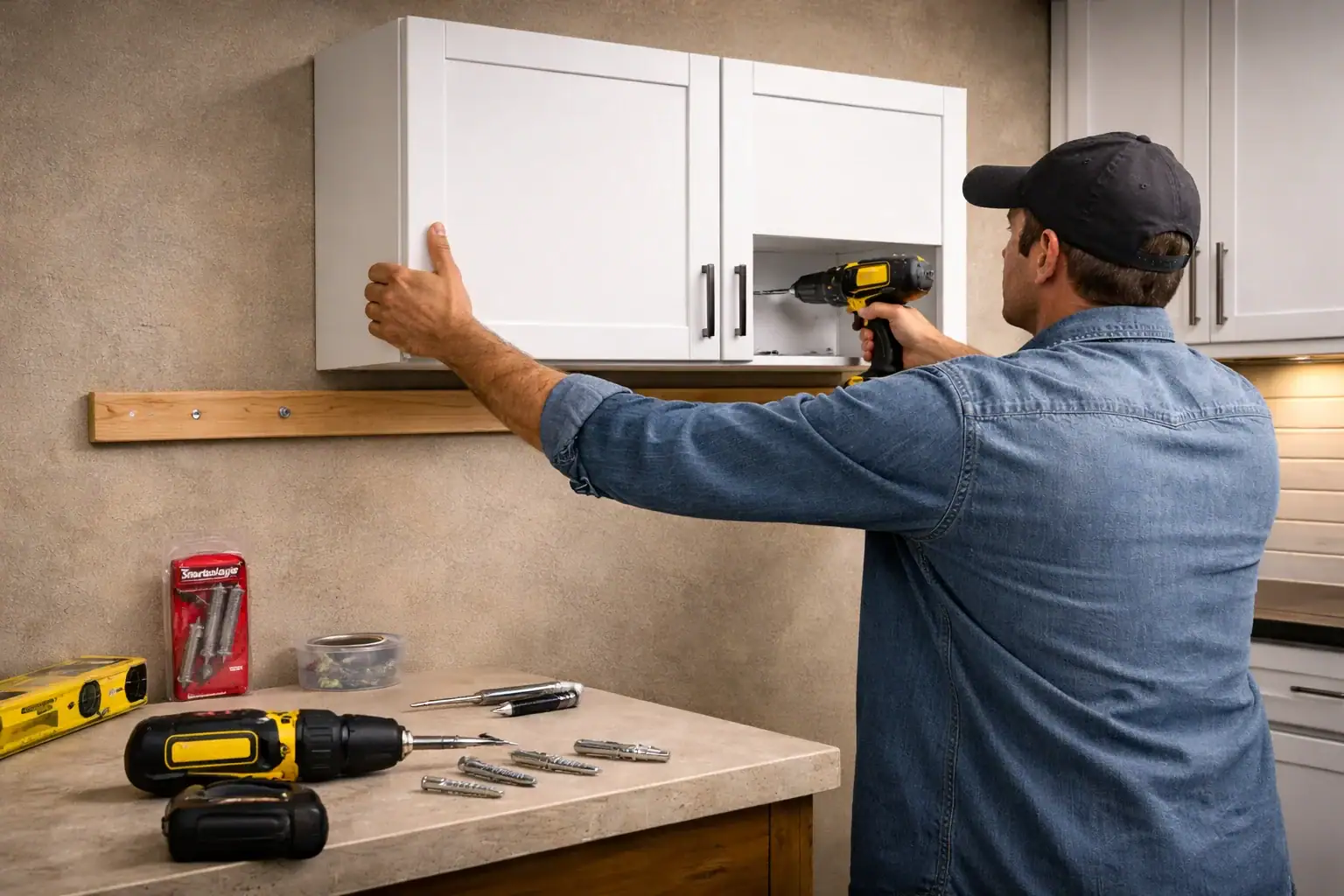
Lift the cabinet back into place. Use the ledger board for support. Align the anchor holes with the cabinet holes. Insert screws into the wall anchors. Tighten gently at first.
Make sure the cabinet stays level. Then fully tighten each screw. Have a helper hold the cabinet steady. If working alone, double-checkthe balance after every screw.
Step 6: Remove the Ledger and Test Strength
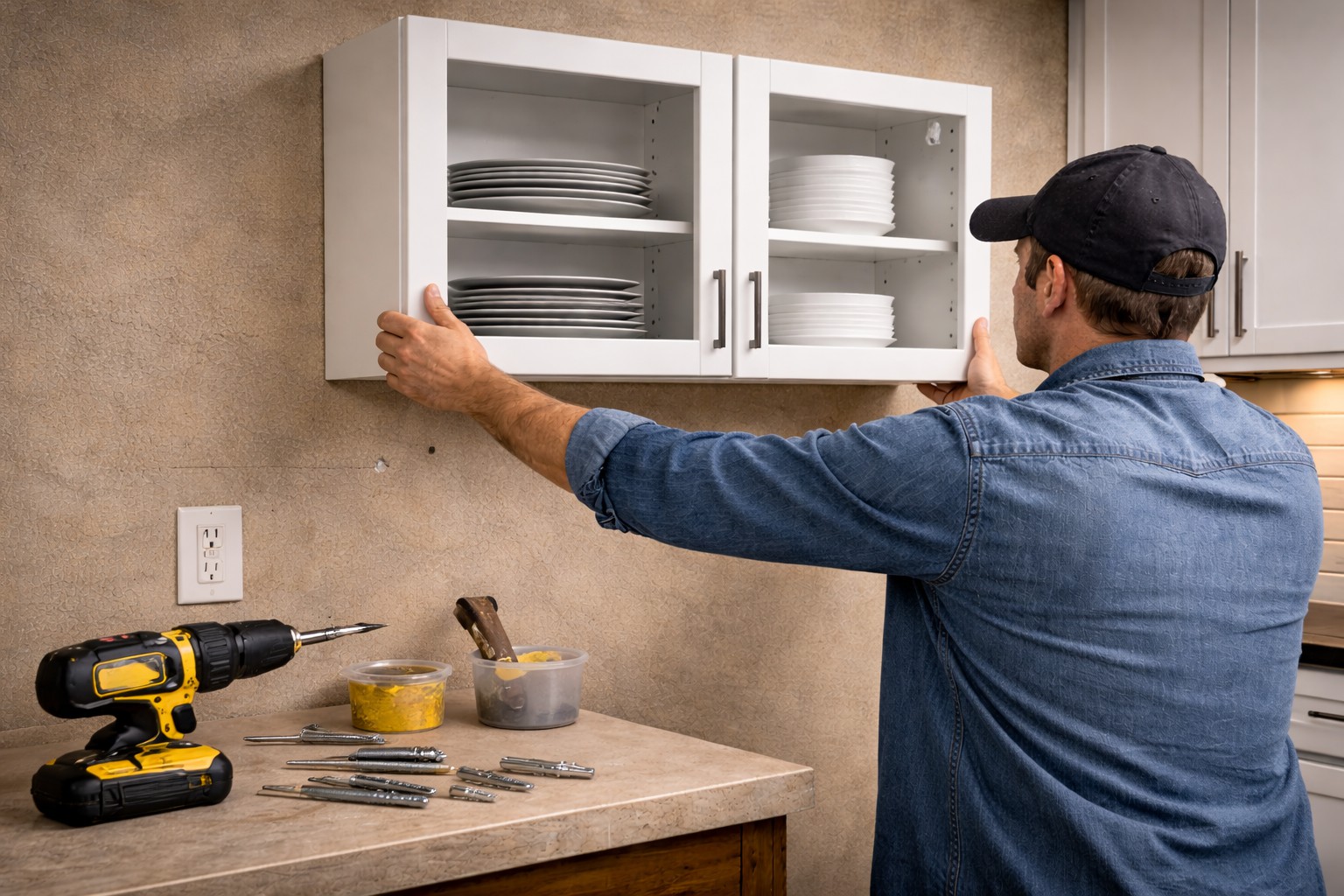
Once all screws are tight, take off the ledger board. Fill the holes if needed. Pull gently on the cabinet. It should not wiggle. If it moves, stop. Check the anchors again. Load the cabinet slowly. Start with light items. See how the cabinet holds over 24 hours. Then add heavier items as needed.
Best Wall Anchor Brands to Use
Some cheap anchors break. Use trusted brands only. These get high ratings and are used in homes and offices often:
- Toggler Snaptoggle
- Hillman Toggle Bolts
- TOGGLER Alligator Anchors
- Red Head Concrete Anchors (for masonry)
You can find these at Home Depot, Lowes, or Amazon. Use these links to compare weight limits. Choose based on your cabinet size and wall type.
Can You Use French Cleats Without Studs?
Yes, a French cleat is a wooden or metal strip that holds the cabinet from behind. One piece mounts to the wall. The other mounts to the cabinet. The two pieces lock together.
You can screw the cleat into the wall anchors. This spreads the load across more points. French cleats also help if the cabinet needs to be removed later.
Make sure the cleat is level. Use at least four anchor points. Heavy cabinets may need six.
Can You Mount Cabinets to Drywall Only?
Drywall alone cannot hold heavy cabinets. It will tear under stress. But drywall with toggle bolts can hold 100+ pounds safely. Always use at least four bolts. Spread them wide across the back of the cabinet. Use this only on upper kitchen cabinets, bathroom shelves, or laundry room storage.
What if You Have Brick or Cement Walls?
Cabinets on brick or concrete need masonry anchors. Use:
- Tapcon concrete screws
- Sleeve anchors
- Wedge anchors
Drill with a hammer drill and masonry bit. Always pre-drill holes. Use anchors rated for 150–300 pounds. This works well in basements, garages, or older homes with thick walls.
Can You Install Cabinets Without Any Screws?
No, you cannot install wall cabinets with glue, nails, or brackets alone. Cabinets must be screwed to the wall using anchors or studs. Some people try adhesive strips or brackets. These are unsafe for large cabinets. Use strong fasteners only.
Final Safety Tips
- Do not mount large pantry cabinets without stud support.
- Never overload cabinet shelves.
- Always check the anchor box for weight limits.
- Test each anchor before loading the cabinet.
- Use at least one stud anchor if possible.
People Also Ask Questions
Can you hang kitchen cabinets without wall studs?
Yes, use toggle bolts or wall anchors with high weight limits. Place at least four per cabinet for safety.
What is the best anchor to use for cabinets?
Metal toggle bolts or Snaptoggle anchors are best for drywall. Tapcon screws work for concrete.
Do wall anchors hold as much as studs?
No, studs provide stronger support. Anchors can hold weight, but only if installed correctly and spaced well.
Are floating cabinets safe?
Floating cabinets are safe with proper anchors. French cleats and toggle bolts help balance the load.
Can I mount cabinets on plaster walls?
Yes, use toggle bolts or molly bolts. Make pilot holes carefully to avoid wall cracks.
Conclusion
You do not need studs to mount wall cabinets, but you do need the right plan. Anchors replace studs when installed with care. Choose the right bolts. Use a ledger board. Double-check the level. Test the cabinet before use.
Whether your wall is drywall, plaster, or brick, a strong anchor setup will hold firm. Your cabinet will stay up for years if you follow these steps. Take your time, measure twice, and never skip anchor safety.
Cabinet install jobs often feel tough. But smart prep and strong anchors make the process safe and simple. No studs? No problem. Just anchor smart, and your cabinet will hold strong.
See More Home Improvements Posts:
