
Directions home means finding a clear route back to your home from your current location. A person may need driving directions home after work, travel, shopping, a long road trip, or a wrong turn in an unknown area. A map app can help, but safe travel also needs a calm plan, a charged phone, and a basic sense of road signs.
Modern tools make the process fast. Google directions home, GPS directions home, Waze alerts, and MapQuest routes can show step-by-step driving directions in seconds. Still, a smart driver should know what to do if the phone battery gets low, the signal drops, or the app sends the route through tolls, highways, or heavy traffic.
Get Directions Home From My Location
Directions home from my location start with your live position. A phone, car GPS, or map app checks your current location through GPS, mobile data, Wi-Fi signals, or nearby towers. After that, the app compares routes and shows the best path to your home address. A saved home address makes this faster. You can open Google Maps and type home, or say Give me directions home if your home address is already saved.
Location access must stay on for accurate results. If the app cannot read your current position, it may place you in the wrong area and give poor route advice. That can lead to wrong turns or extra travel time. Check the blue location dot before you start the trip. Directions home from here can also change during the drive because traffic, road work, lane closures, weather, and accidents can affect the route.
Get Driving Directions Home Step By Step
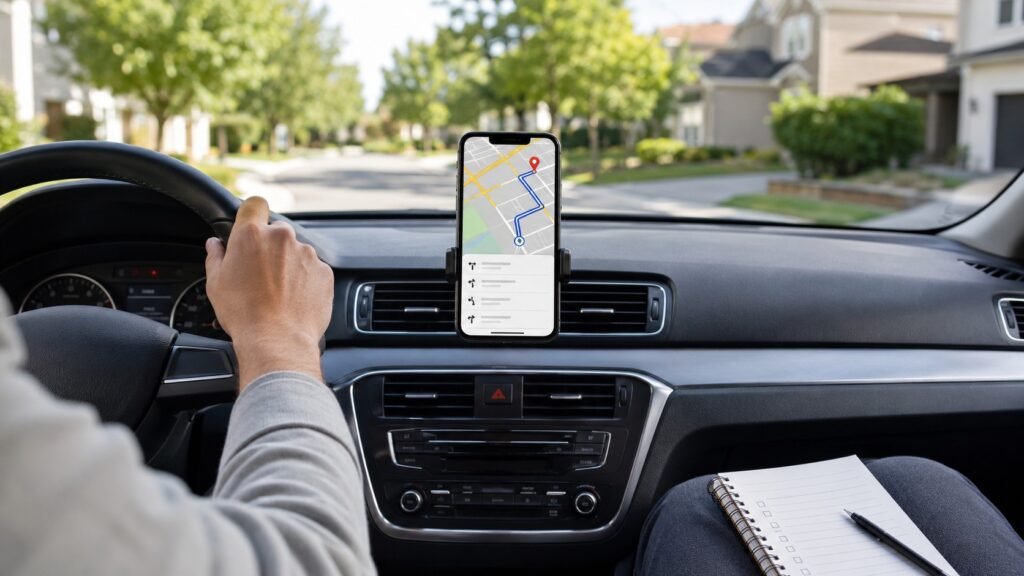
Driving directions work best when the start point and end point are clear. Your start point can be your current location, a street address, a business name, or a landmark. Your end point should be your home address or a saved home location. Step-by-step driving directions help drivers stay calm because they show each turn, road name, distance, and estimated travel time. Voice guidance also helps because the driver does not need to look at the screen again and again. Set the route before you leave, check the main roads, choose driving mode, and review options like fastest route, no tolls, or no highways before you start.
| Step | Action | Purpose |
|---|---|---|
| 1 | Open a trusted map app | Start route search |
| 2 | Allow location access | Find your current point |
| 3 | Enter your home address | Set the destination |
| 4 | Choose driving mode | Get car route options |
| 5 | Check route settings | Avoid tolls or highways if needed |
| 6 | Start navigation | Follow live directions |
A driver should set the route before the car moves. Phone use during the drive can cause risk. If the route needs a change, stop in a safe place first, then adjust the app.
Use Google Directions Home
Google Directions Home can help if your home address is saved in Google Maps. Open the app, tap the search bar, type home, and choose directions. The app can show route time, traffic color, road names, and alternate routes, so you can compare the route before you start. Google driving directions also support voice search. A driver can say get directions home or give me directions home through Google Assistant if the phone supports it. This works best when the home address has already been saved in the Google account, because the app can start the route faster.
Google Maps can also show route options such as avoid tolls, avoid highways, or avoid ferries. This helps when you need directions home without tolls or directions home without highways. Traffic data also helps Google pick a better route. A green road often means clear traffic, and orange or red roads can mean slow traffic or delays.
Use MapQuest Driving Directions Home
MapQuest still works as a route tool for drivers who want another option. The phrase driving directions – MapQuest often appears when users want a classic route planner with clear road steps. You can enter your current location and home address to create driving directions home. MapQuest can also show a route summary, distance, travel time, and turn-by-turn details, which helps when you want to compare a Google route with another map source.
MapQuest may suit users who prefer printed directions. A printed route can help during a dead zone, phone battery issue, or long trip. Print the road names and main turns if you plan to drive through remote areas. A smart driver should not depend on one app only. Google Maps, Waze, Apple Maps, MapQuest, and car GPS can each give a route, so compare the routes if the trip feels complex or unfamiliar.
Choose Fastest Directions Home
Fastest directions home means the route with the shortest travel time at that moment. It may not be the shortest distance. A longer road with better speed can get you home faster than a short road with traffic lights and delays. Quickest directions home can also change during rush hour because school zones, events, road work, and traffic patterns can affect the best route.
Best directions home should balance speed and safety. A narrow road, dark shortcut, or high-speed highway may not suit every driver. A safer route may take a few extra minutes but reduce stress. Check the route preview before you tap start. Look at total time, miles, road type, tolls, and major turns, then pick the route that fits your comfort level.
Before a long drive, test two routes in Google Maps. One route may look shorter, but the faster route can use wider roads with fewer stops. Check travel time, tolls, highways, and first major turn before you start.
Set Directions Home No Tolls or No Highway
Directions home no tolls can help drivers avoid extra cost, and directions home no highway can help anyone who wants a calmer route. Open route options in your map app and choose avoid tolls or avoid highways before you start. A no-toll route may take longer because it can pass through local streets, traffic lights, or slower roads. A no-highway route can also add more stops, but it may feel easier for new drivers, older drivers, or anyone who feels stressed on fast roads. Check the time difference, road type, and main turns before you choose a route. If the app sends you through unsafe areas, dark roads, or confusing turns, pick another route that matches both the map and your comfort.
Save Offline Maps Before Travel
Offline maps help when mobile signal drops. Google Maps lets users save map areas before travel, so the app can still show basic navigation in that area with weak service. Offline map setup works best before the trip. Download the area around your home, work, and travel route, then refresh saved maps from time to time because roads and business data can change.
Dead-zone navigation also needs backup. Car GPS, offline Google Maps, Apple Maps offline areas, printed directions, and a paper map can all help when phones fail. Offline maps do not always show full live traffic, so they may miss fresh road closures or accidents. Use live maps again when the signal returns.
Download your home area and travel route before leaving. Offline maps can help if signal drops, but live traffic may not update until your phone connects again.
Keep Battery Power Ready
A phone route is only useful if the phone stays on. Long drives can drain battery fast because GPS, screen brightness, mobile data, and voice navigation use power. Low-power mode can help extend battery life, and a car charger should always stay in the vehicle. A portable power bank also helps when the car charger fails or when you leave the vehicle.
Lower screen brightness and close unused apps before the drive. Download offline maps on Wi-Fi so the phone does not use extra power during the route. Keep the phone in a cool spot because heat can drain battery and harm performance. Battery plans matter more during night travel and remote trips because a dead phone can remove your map, emergency contacts, and SOS access at the same time.
Use Real-Time Traffic Alerts
Real-time traffic alerts can help you avoid sudden roadblocks, crashes, and slow routes. Waze can be useful because users report traffic, police, hazards, and blocked roads. Google Maps also updates routes based on live traffic data. Set alerts before the drive and let the app speak route changes through the car speaker or phone audio, so you can keep your eyes on the road.
A route change is not always perfect. The app may send drivers through side streets that feel slow or complex, so check the route if it suddenly changes a lot, especially in an area you do not know. Traffic apps work best with common sense. A road sign, police direction, or official closure should take priority over the app.
Use Manual Navigation When Apps Fail
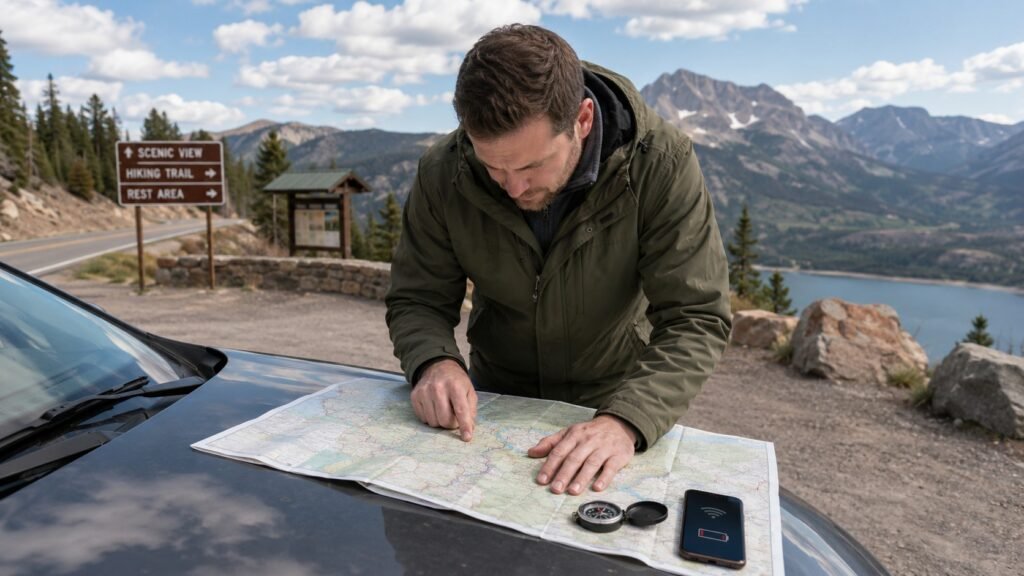
Manual navigation can help when your phone loses signal, battery, or accuracy. Road signs, mile markers, landmarks, and main roads can guide you back toward a known area. Paper maps, highways, exits, city names, and a compass can also help when apps fail. Learn the major roads near your home, work, and common places, and use landmarks like gas stations, bridges, schools, hospitals, or tall buildings to build a mental trail. Practice the route back from familiar places without opening the app, so you stay calmer if navigation stops.
Ask for Directions Safely
A lost driver should stop in a safe public place before asking for help. A gas station, store, hotel, police station, or busy service area can be safer than a dark roadside. Keep the car locked until you feel safe, and ask for a major road or landmark instead of sharing your private home details. You can say, How do I get back to the main road? or Which way leads to the highway?
Confirm the advice with a second source if possible. Check a sign, map, another person, or your phone once service returns. Human directions can help, but they can also be wrong or unclear. Stay calm if the route feels confusing. Pull over, breathe, and review the last known road before you move again.
Follow Lost Driver Safety Rules
A lost driver should not keep driving deeper into unknown roads without a plan. Stop in a safe place and review the route, because the stay put habit can prevent extra risk. Emergency communication also matters, so learn how your phone handles satellite SOS or emergency features before a remote trip. Keep basic supplies in the vehicle, such as water, a flashlight, a charger, a tire kit, and a written list of key addresses. A full fuel tank also gives you time to correct a route mistake during a long or remote trip.
- Save your home address in your map app.
- Download offline maps.
- Charge your phone and power bank.
- Keep a car charger ready.
- Check fuel before departure.
- Write down key addresses.
- Share your route with a trusted person.
- Review no-tolls or no-highway settings.
- Keep a paper backup for remote areas.
Use Smart Home Tools for Arrival
Smart home tools can make arrival safer and easier. Geofencing can turn on lights when your phone gets close to the driveway, which helps at night and reduces the need to enter a dark area. Voice commands can also help. An I’m home command can turn on lights, adjust the thermostat, or start a security routine if the system is set up in advance.
Smart locks can support safer entry if used with care. Cloud keys, temporary codes, or biometric locks can help families and guests enter without hidden keys. Keep a backup entry plan in case the lock battery fails. A clear entryway can also reduce stress after a long drive, so create a drop zone for keys, wallet, bag, and charger.
Separate Directions Home Loan From Driving Directions
Directions home loan and directions home loans have a different search intent from driving directions home. A person who types directions home from my location, get directions home, or fastest directions home usually wants a route back to their house. A person who types directions home loan may want mortgage help, loan terms, lender details, or home finance advice. If both topics sit in the same main guide, the page can feel confusing. Search engines may also struggle to understand if the page is about GPS routes or home loans.
A better plan is to create a separate article for the loan topic. Use a clear title such as Directions Home Loan Meaning and Borrower Guide. That page can explain loan basics, mortgage terms, credit checks, down payments, closing costs, pre-approval, and lender questions. It can also answer user questions in a simple way, such as what a home loan means, how a borrower can compare lenders, and what documents a buyer may need before applying for a loan. This gives the finance topic its own space without taking focus away from the driving directions page.
The homepage can still link to the loan article with one short line near the end. For example, you can write, Looking for loan help? Read our Directions Home Loan guide. Keep the main Directions Home page focused on routes, maps, GPS, safety, offline maps, traffic alerts, and return travel. Clear topic focus helps users and supports better SEO. A reader who needs directions home from my current location gets route help fast, and a reader who needs home loan advice gets a separate page with direct answers.
Getting Home Every Time
Getting home safely depends on both smart tools and basic habits. Google directions home, GPS directions home, MapQuest, Waze, and offline maps can all help, but a driver still needs battery power, route awareness, road signs, and safe choices. Save your home address before you need it, download offline maps before a long drive, and keep a charger plus power bank in the car.
Manual navigation still has value when apps fail. Road signs, landmarks, main roads, and local help can guide you back to a known area. A calm driver can solve route problems faster than a stressed driver. Directions home should feel simple, but safety comes first, so choose a route you understand and stop in a safe place if you feel lost.
FAQs
How do I get directions home from my location?
Open a trusted map app, allow location access, enter your home address, and choose driving mode. The app will create directions home from your current location.
How can I get Google directions home?
Open Google Maps, type “home” if your address is saved, or enter your full home address. Tap Directions and start voice navigation.
What is the best way to get driving directions home?
A live GPS app usually gives the best route because it can check traffic, road closures, distance, and estimated travel time.
How do I get directions home with no tolls?
Open route options in your map app and select avoid tolls. Review the new route because it may take longer.
How do I get directions home with no highway?
Choose avoid highways in route settings before you start. This can create a calmer route through local roads.
What should I do if I need directions home but my phone has no signal?
Use offline maps, road signs, a paper map, landmarks, and safe public places to check your route. Move only after you understand the next road.
Can directions homes give driving directions home?
Directions homes can create step-by-step driving directions home when you enter your current location and home address.
What does directions home loan mean?
Directions home loan relates to mortgage or loan information. It should be covered on a separate finance page, not mixed with driving directions.