
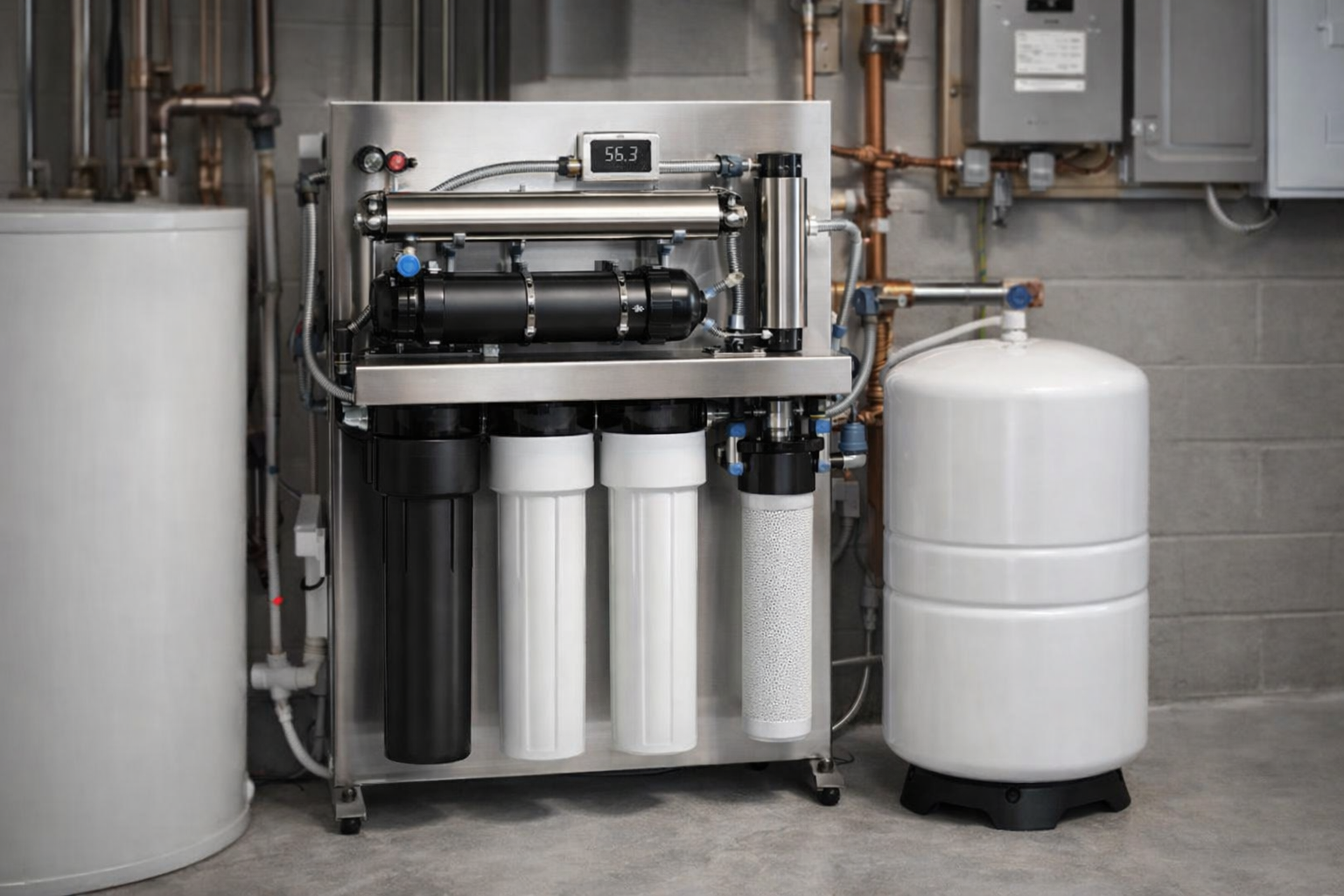
Did you know that tests show about 80% of municipal water supplies in the U.S. carry at least one contaminant above safe levels, like lead or arsenic? Homeowners face this issue every time they turn on a faucet for cooking or bathing.
A whole house reverse osmosis system changes that. It filters water for your entire home, unlike those small under-sink units that only clean one spot. This setup removes up to 99% of dissolved solids and harmful stuff, giving you pure water from every outlet.
Understanding Whole House Reverse Osmosis (WHRO) Technology
Whole house reverse osmosis, or WHRO, takes water purification to the next level for your whole property. It pushes water through special barriers to strip out impurities that other filters miss. Think of it as a gatekeeper for your home’s water line, blocking out tiny threats before they spread.
How Reverse Osmosis Works at Scale
Reverse osmosis uses a thin membrane that lets water pass but traps salts and contaminants. In a whole house setup, pumps create high pressure—often 40 to 60 PSI—to force water through this barrier. Some water gets rejected as brine, which drains away, while the clean stuff flows to your taps.
This process shines in big systems because it handles gallons per minute for showers, laundry, and more. You might waste three to four gallons for every one you use, but newer models cut that down. Before buying, check your home’s water pressure. A simple gauge from a hardware store can tell if it’s high enough, or you may need a booster pump.
WHRO vs. Standard Water Filtration (Carbon Blocks and Water Softeners)
Carbon block filters catch chlorine and bad smells, but they let dissolved minerals slip by. Water softeners swap out calcium for sodium to fight hard water spots, yet they ignore chemicals like fluoride. A whole house RO system tackles total dissolved solids, or TDS, dropping levels from hundreds to under 50 parts per million.
The EPA sets limits on over 90 contaminants in drinking water, from bacteria to nitrates. RO knocks out most of these, like heavy metals and pesticides, far better than basic filters. For homes with well water or old pipes, WHRO stands out as the top choice.
System Components: Pre-filtration, RO Membrane, and Post-Filtration Stages
Most whole house RO units have three to five stages to clean water step by step. First, a sediment filter grabs dirt and rust to protect later parts. Then, granular activated carbon, or GAC, absorbs chemicals and improves taste.
The heart is the RO membrane, a coiled sheet that filters at a molecular level. After that, post-filters polish the water, and some add minerals back for better flavor or pH balance. In large homes, these stages ensure steady flow without clogs. Expect setups with tanks for storage if your model needs it.
Benefits of Installing a Whole House RO System
Beyond crisp drinking water, a whole house reverse osmosis system boosts your home in ways you feel daily. It cuts hidden risks and saves money over time. Let’s break down how it pays off.
Superior Health Benefits and Toxin Removal
WHRO removes nasty stuff like lead, arsenic, and PFAS chemicals that linger in pipes and groundwater. It also clears out pharmaceuticals and nitrates from farm runoff. Your family gets water free of these threats for showers, brushing teeth, and meals.
Studies from the NSF show certified RO systems eliminate 95% or more of these pollutants. One report from the Environmental Working Group found PFAS in 40% of U.S. water samples—WHRO handles that. Bathing in clean water means less skin irritation too.
Enhancing Appliance Lifespan and Plumbing Integrity
Hard minerals build up in heaters and pipes, causing breaks and high bills. A whole house RO system strips calcium and magnesium, stopping scale before it forms. Your dishwasher runs smoother, and showerheads stay unclogged.
Homeowners save big here. Scale damage can shorten a water heater’s life by half, costing $800 to replace. With RO, that gear lasts 10 to 15 years longer. Pipes stay clear, cutting leak risks in older homes.
Dramatically Improved Water Taste and Feel
High TDS water tastes flat or metallic, ruining coffee and soups. After RO, every sip feels fresh, like spring water. Cooking gets easier—no odd flavors in rice or veggies.
Your skin and hair thank you too. Hard water dries them out, but pure H2O leaves you feeling soft. Brew tea without bitterness. It’s a small change that brightens daily routines.
Sizing, Installation, and System Selection Criteria
Picking the right whole house reverse osmosis system means matching it to your home’s needs. Get the size wrong, and you face low pressure or quick breakdowns. Start with basics like family count and water use.
Determining Required Flow Rate (GPM)
Flow rate, measured in gallons per minute, decides if water pressure holds during busy times. A family of four might need 10 to 15 GPM for two showers plus a sink. Add irrigation, and it climbs.
Calculate peak use: multiply fixtures by their draw—one shower uses 2.5 GPM. Undersized units strain and fail. For big homes, look for 20+ GPM models. Test your current flow with a bucket and timer for accuracy.
Installation Considerations: Plumbing and Drain Access
Pro installers handle most jobs, tying the unit to your main line after the meter but before branches. It goes upstream of softeners if you have one. You need space in a garage or basement, plus an electrical outlet for pumps.
Drain lines carry waste water—plan for a floor drain or sewer tie-in. Costs run $500 to $1,500, depending on pipe changes. Skip DIY unless you’re handy; errors lead to leaks.
Choosing the Right System: Capacity and Certification
NSF/ANSI 58 certification proves a system meets RO standards for contaminant cut. Pick based on home size: 500 GPD for small places, 2,000+ for large ones. Check recovery rates too—higher means less waste.
Brands like iSpring or APEC offer solid options. Read reviews for real flow in homes like yours. Certified units guarantee performance.
Maintenance Requirements and Long-Term Cost Analysis
WHRO isn’t set-it-and-forget-it, but upkeep is straightforward. It beats buying cases of bottled water every month. Weigh the effort against the gains.
Understanding Filter Replacement Schedules
Pre-filters last 6 to 12 months, trapping sediment first. The RO membrane endures 2 to 5 years, depending on water quality. Post-filters swap yearly for taste.
Track dates with a calendar app or stickers on the unit. Signs like slow flow mean it’s time. Annual costs hit $200 to $400, but kits make it easy.
Managing Water Rejection Rates and Water Waste
Older RO systems waste up to 4 gallons per clean one. Modern whole house models hit 1:1 ratios with efficient pumps. Some recycle brine for gardens.
In dry areas, this matters. Adjust based on your source—soft water wastes less. Efficiency saves bills over time.
Long-Term ROI: Comparing Ongoing Costs to Bottled Water Expenses
A $2,000 system pays back in 2 to 3 years. Bottled water for a family runs $1,000 yearly. RO cuts that to zero, plus appliance savings of $300 a year.
Factor maintenance: $300 annually versus $1,300 for bottles. In five years, you save $5,000 or more. It’s a smart home upgrade.
Conclusion: Securing Your Home’s Water Future
A whole house reverse osmosis system delivers health perks, protects your gear, and ups water quality across the board. It beats spot filters by covering every faucet with proven tech. You get peace of mind from fewer toxins and lower costs.
Key points stick: RO removes what others can’t, extends appliance life, and tastes great. Don’t wait for issues—test your water now. Call a pro for a free analysis to spec the perfect WHRO for your setup. Pure water starts today.