
What Does Bathroom Vanity Depth Actually Mean?
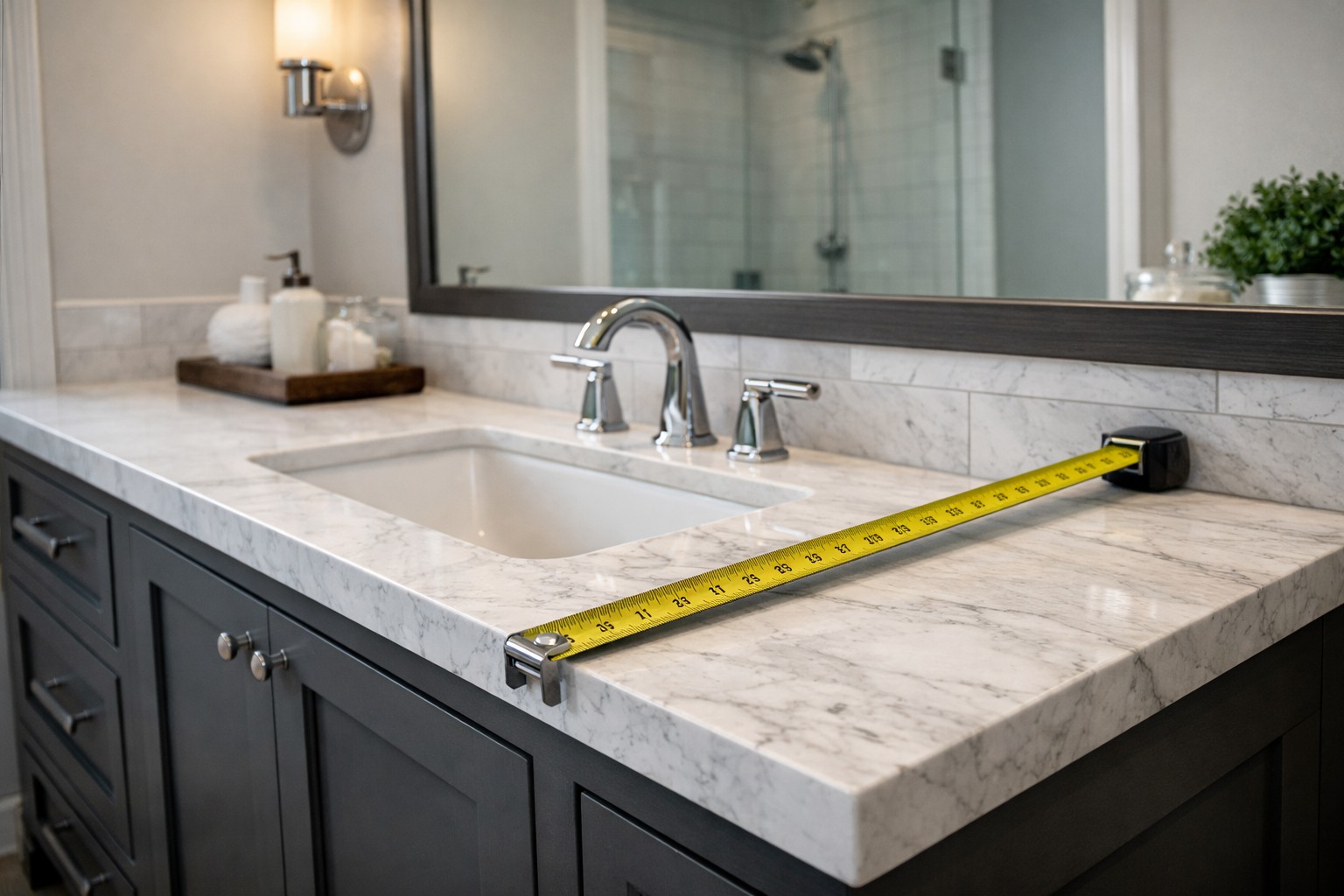
Bathroom vanity depth describes the distance from the finished wall to the front edge of the vanity. This measurement includes cabinet faces and usually the countertop edge. Many homeowners confuse depth with width. The width runs along the wall. Depth moves into the room. A clear understanding prevents costly errors during installation.
Manufacturers calculate vanity cabinet depth carefully. They allow room for pipes, drawers, and sink bowls. When listings show bathroom vanity dimensions, depth already factors in the countertop overhang included. This detail explains why a vanity may feel deeper than expected. Accurate bathroom vanity measurements always start at the finished wall surface.
Standard Bathroom Vanity Depth Used in Most Homes
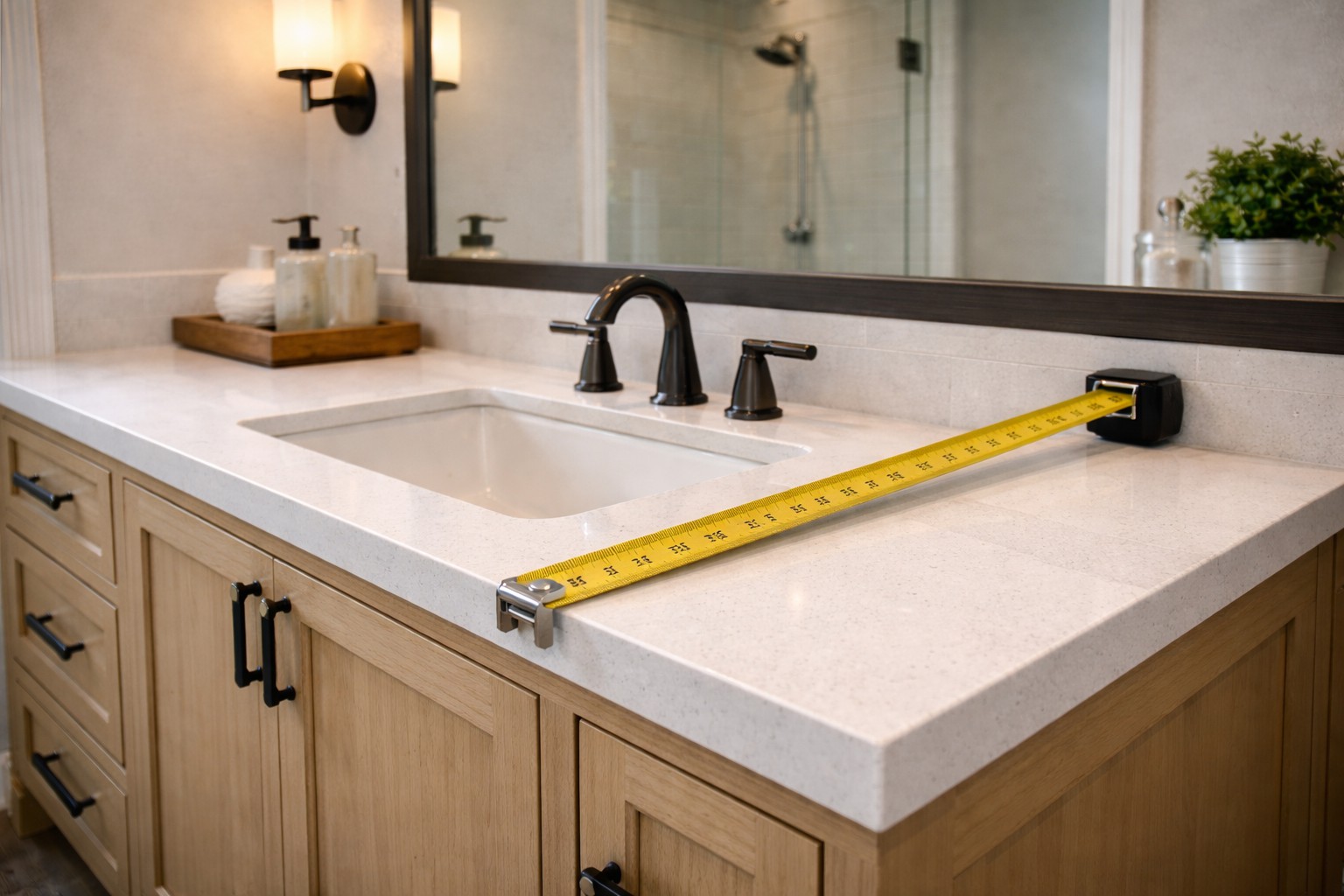
The most common standard bathroom vanity depth in the United States sits near 21 inches. Builders favor this size because it balances reach and movement. It supports comfortable sink use without forcing you to lean. This size also fits standard plumbing parts without modification.
Home designers often call this the average vanity depth. It works across many home styles. From new builds to remodels, contractors rely on this measurement for consistency. When you ask about bathroom vanity depth in inches, expect answers between 20 and 21 inches for standard homes.
Common Bathroom Vanity Depth Sizes Explained
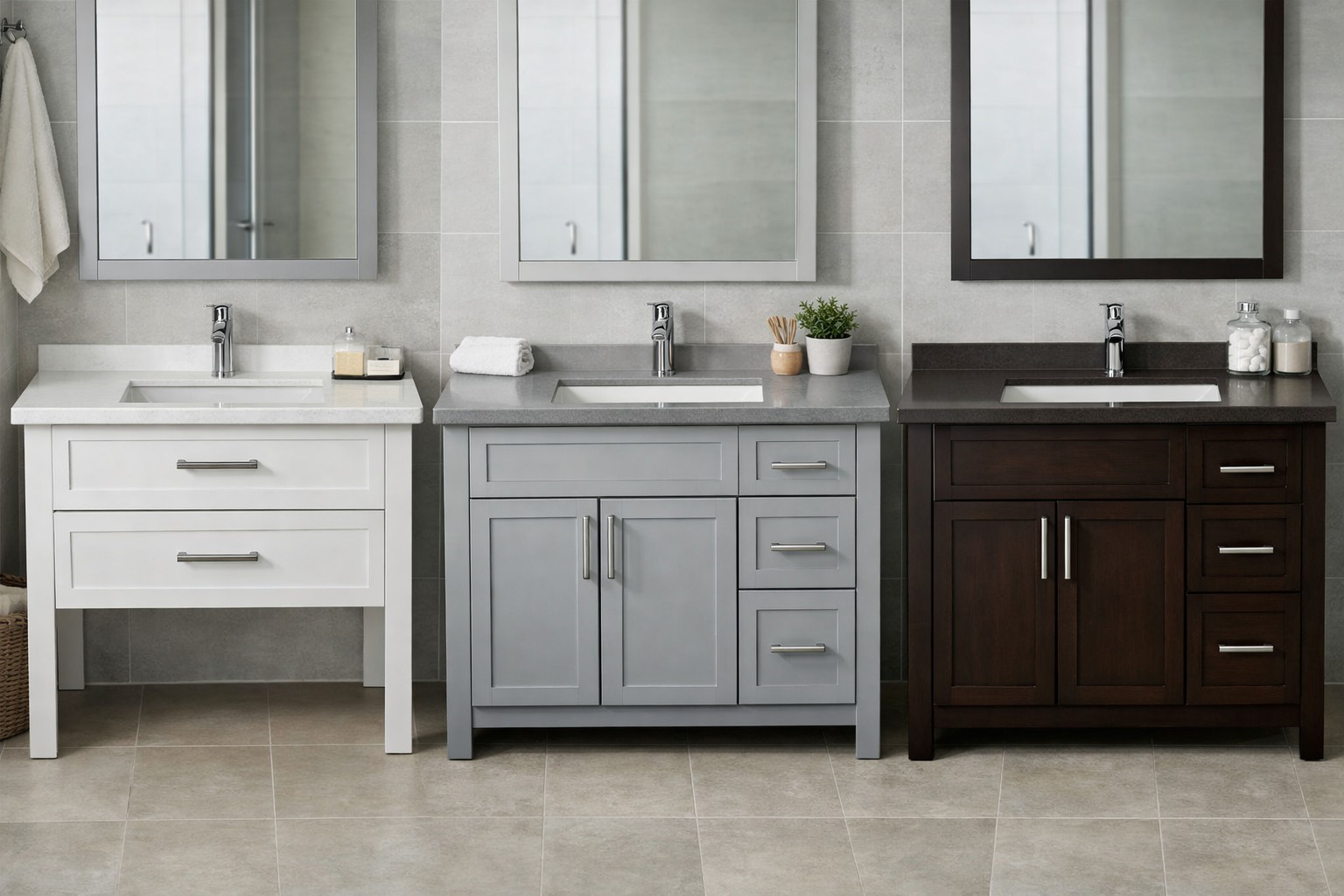
Vanities come in several depth ranges to suit different needs. Standard models usually fall between 20 and 21 inches. These sizes feel familiar and support easy access. They represent the typical bathroom vanity size most buyers expect in a full bath.
Compact options reduce depth to 16 or 18 inches. This shallow bathroom vanity depth suits tight spaces. Deeper models extend to 22 or even 24 inches. A deep bathroom vanity cabinet offers more surface and storage. These bathroom vanity depth options allow flexibility across layouts.
| Vanity Category | Depth Range (Inches) | Best Use Case |
|---|---|---|
| Compact | 16–18 | Powder rooms, tight spaces |
| Standard | 20–21 | Most full bathrooms |
| Deep | 22–24 | Large or luxury baths |
Vanity Depth Based on Bathroom Type
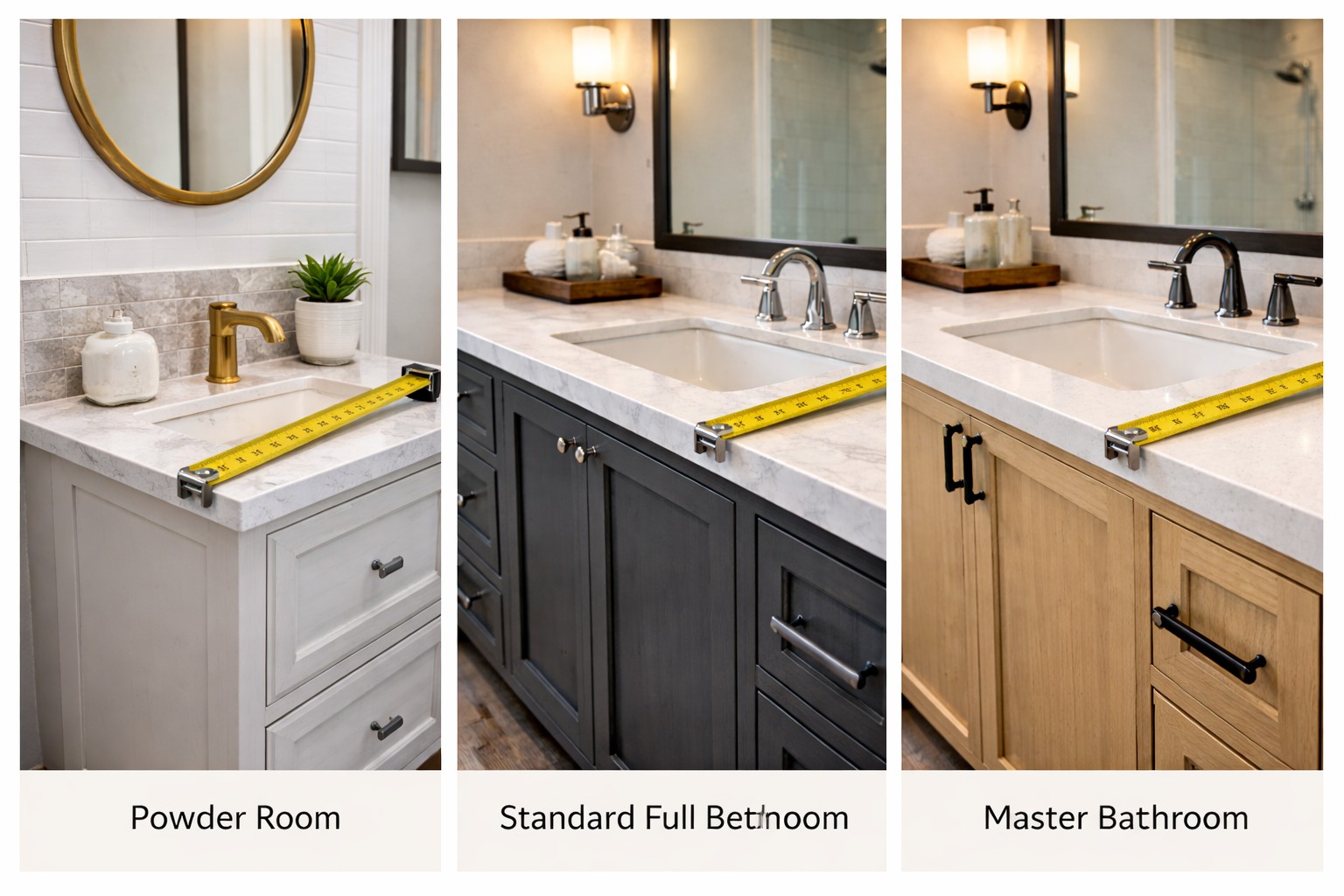
Different bathrooms demand different depths. A vanity depth for a powder room often stays shallow. Powder rooms need clear walking paths. A compact depth keeps the space open and welcoming. Guests move easily without bumping corners.
Full baths handle standard depth better. A vanity depth for small bathrooms often stays near 18 inches to preserve space. A vanity depth for a master bathroom can reach deeper ranges. Master suites benefit from storage and surface space. Depth adapts to the use frequency and the room scale.
How Bathroom Layout Affects Vanity Depth Choice
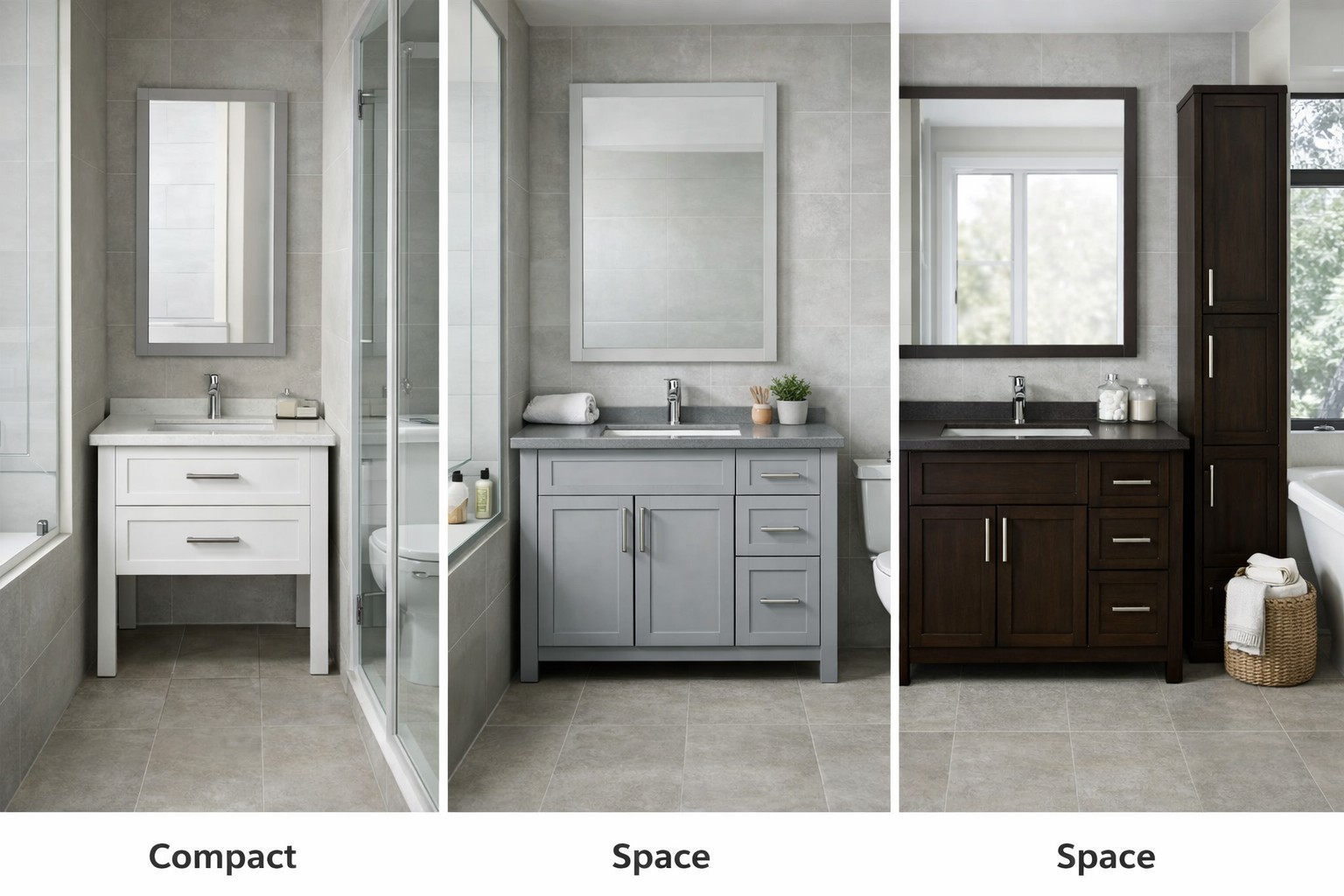
Bathroom layout drives depth decisions. Door swings need room to open fully. Ignoring door swing clearance causes daily frustration. Shower doors and drawers also compete for space. Depth must support smooth movement.
Designers focus on bathroom layout planning to protect flow. Adequate clearance in front of the vanity ensures comfort. Good depth supports bathroom traffic flow. It also creates space optimization. A well-sized vanity preserves a walkable bathroom layout without crowding fixtures.
Vanity Depth for Different Vanity Styles
Style changes depth expectations. A single sink vanity depth often stays standard. It balances form and function. A double sink vanity depth rarely increases. Width expands instead. This keeps movement easy for two users.
Modern designs shift depth. The floating vanity depth often stays shallow. Wall support works better with less projection. Wall-mounted vanity depth creates visual openness. A furniture style vanity often feels deeper. Minimalist vanity design favors slim profiles that lighten the room.
The floating vanity depth often stays shallow to reduce wall load and improve safety, especially when homeowners plan installations similar to installing wall cabinets without studs.
Storage, Comfort, and Daily Use Considerations
Depth directly affects storage and drawer space. Deeper cabinets hold larger items. They also allow wider drawers. However, comfort matters too. Proper sink reach comfort prevents strain. Users should stand naturally without leaning.
An ergonomic bathroom design supports long-term ease. Depth influences daily use convenience. Families benefit from organized storage. Couples appreciate elbow room. Thoughtful depth choices create visual balance in bathroom spaces without sacrificing function.
Standard vs. Custom Vanity Depth: Which Is Better?
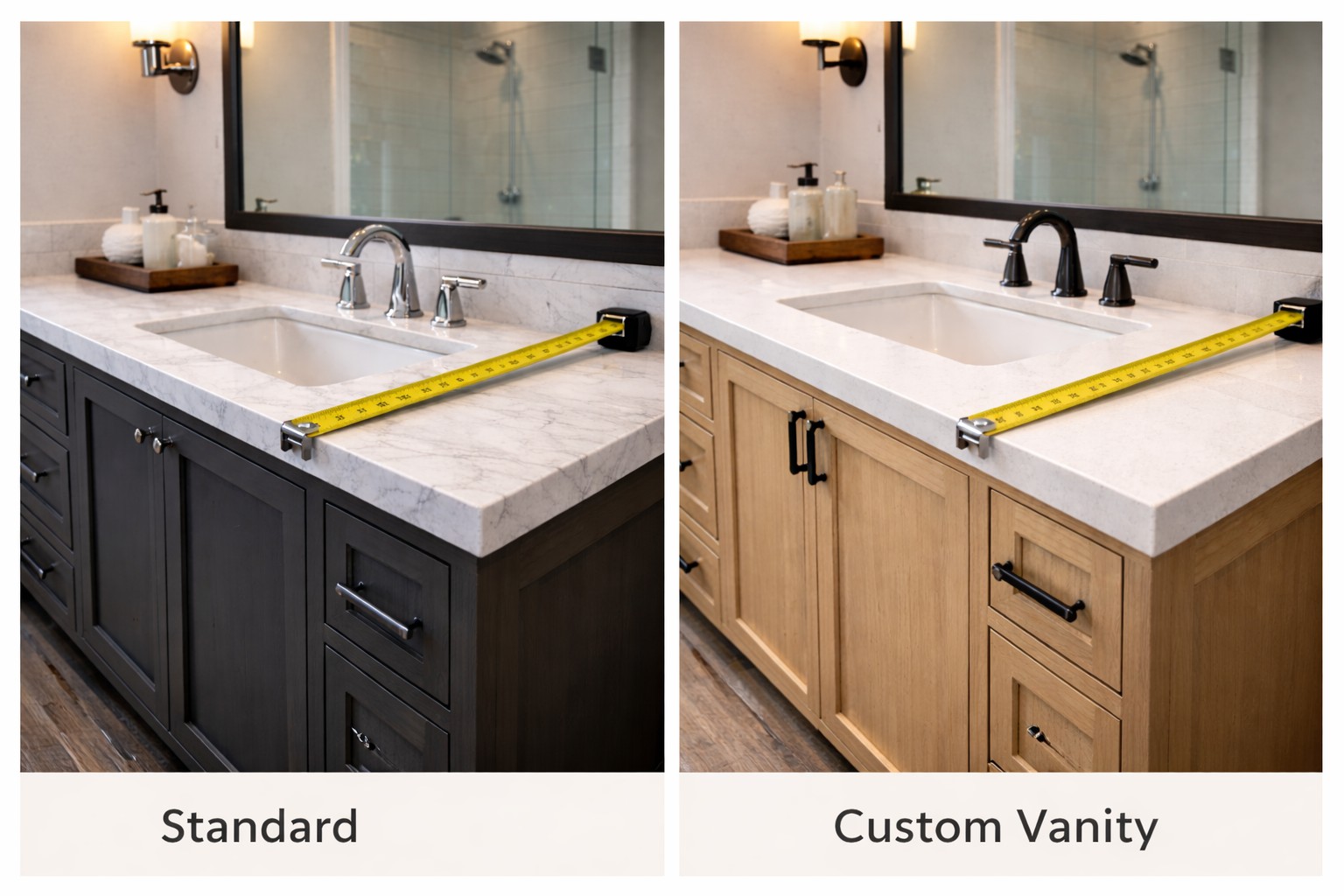
Standard depth suits most homes. It costs less and installs faster. A standard vanity cabinet size works with common plumbing. It also helps resale since buyers recognize familiar proportions. Many experts call it the recommended vanity depth for typical projects.
Custom depth solves unique problems. Narrow rooms or angled walls need adjustment. Custom builds support special storage needs. They also fit unique bathroom vanity depth guide goals. Custom work costs more. Yet it can save space and improve flow when standard sizes fail.
How to Measure Bathroom Vanity Depth Correctly
Correct measurement starts at the wall finish. Always use a finished wall measurement. Raw studs mislead sizing. Measure straight out to the planned front edge. Include countertop projection and handles.
Plumbing space matters. Leave plumbing clearance space inside the cabinet. Measure with fixtures in mind. Confirm vanity depth with countertop included. Accurate steps prevent door conflicts and awkward gaps during installation.
| Measurement Step | What to Check |
|---|---|
| Wall surface | Finished drywall or tile |
| Cabinet box | Depth without doors |
| Countertop | Overhang added |
| Clearance | Space for doors and movement |
Plumbing clearance space behind the vanity matters, especially in homes that use modern systems such as tankless water heater setups.
Mistakes to Avoid When Choosing Vanity Depth
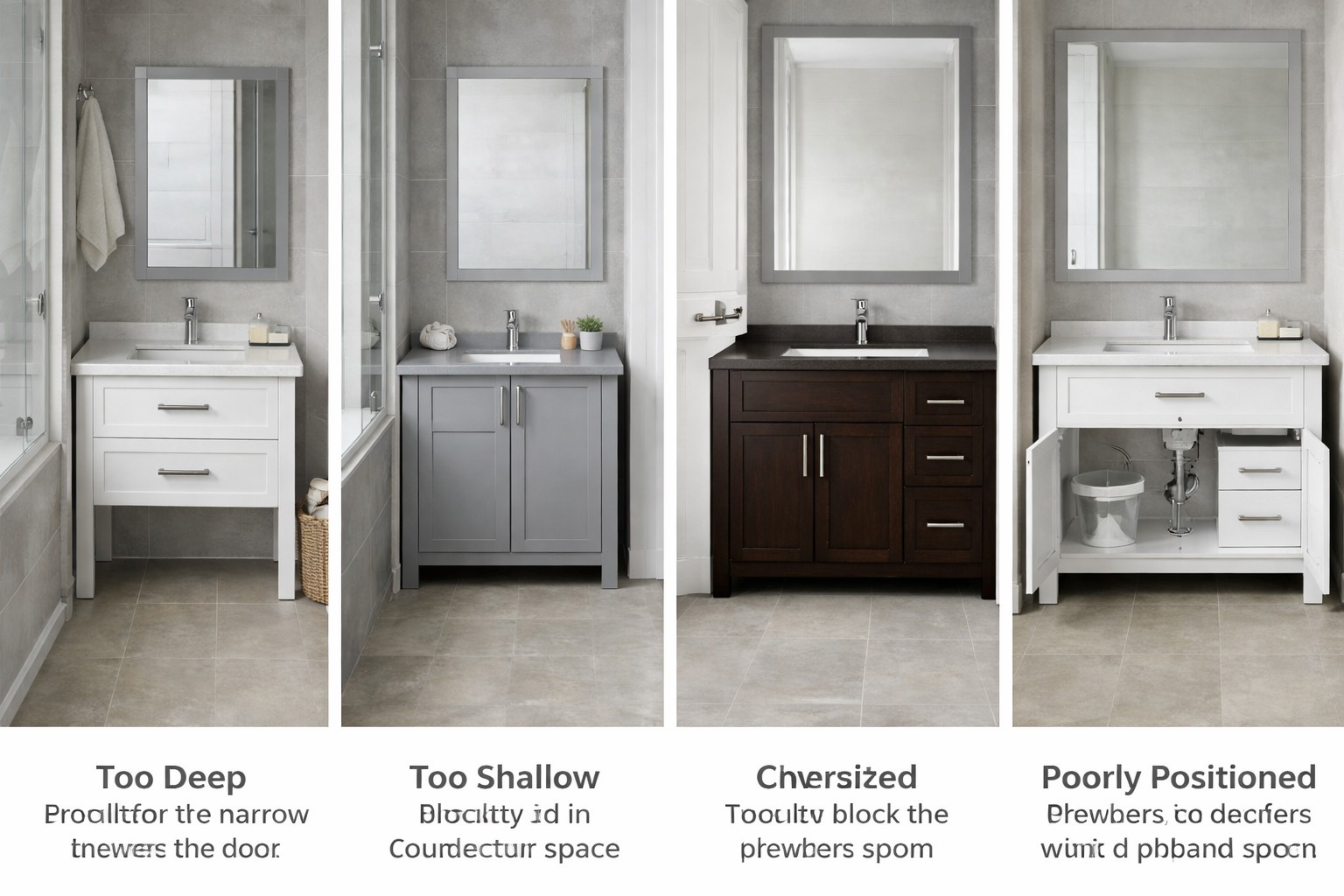
Many buyers choose depth based on looks alone. This leads to blocked doors or tight movement. Ignoring narrow bathroom solutions often creates cluttered layouts. Depth must support real use.
Another mistake involves a style mismatch. A modern minimalist bathroom needs a slimmer depth. A traditional bathroom vanity often feels better with standard depth. Luxury bathroom storage needs space. Matching depth to style prevents regret later.
Homeowners who enjoy researching planning tools and home improvement resources often explore multiple guides before finalizing vanity depth decisions.
Final Thoughts
Choosing vanity depth shapes comfort and design. The ideal vanity depth balances space, movement, and storage. Most homes succeed with standard sizes. Some benefit from shallow or deep options.
Think about layout, style, and daily habits. Consider the large bathroom vanity needs versus compact rooms. Match depth with sinks like vessel sink compatibility or undermount sink clearance. A smart choice today supports beauty and ease for years.
People Asked FAQs
What is the best depth for a bathroom vanity?
The best depth is 21 inches. It offers comfort, storage, and easy movement in most bathrooms.
Is 24 too deep for a bathroom vanity?
A 24-inch depth works only in large bathrooms. In small spaces, it can block movement and feel bulky.
Is 5×7 too small for a bathroom?
A 5×7 bathroom is small but usable. Smart layout choices and compact fixtures make it work well.
What is the depth of a 36-inch vanity?
A 36-inch vanity usually has a depth of 21 inches. Width does not change the standard depth.
What are popular vanity styles and their depths?
Floating vanities use 18–20 inches. Standard floor vanities use 20–21 inches. Luxury styles reach 22–24 inches.
What is the ADA-recommended vanity depth?
ADA guidelines allow a maximum depth of 25 inches to ensure wheelchair access and safe reach.