
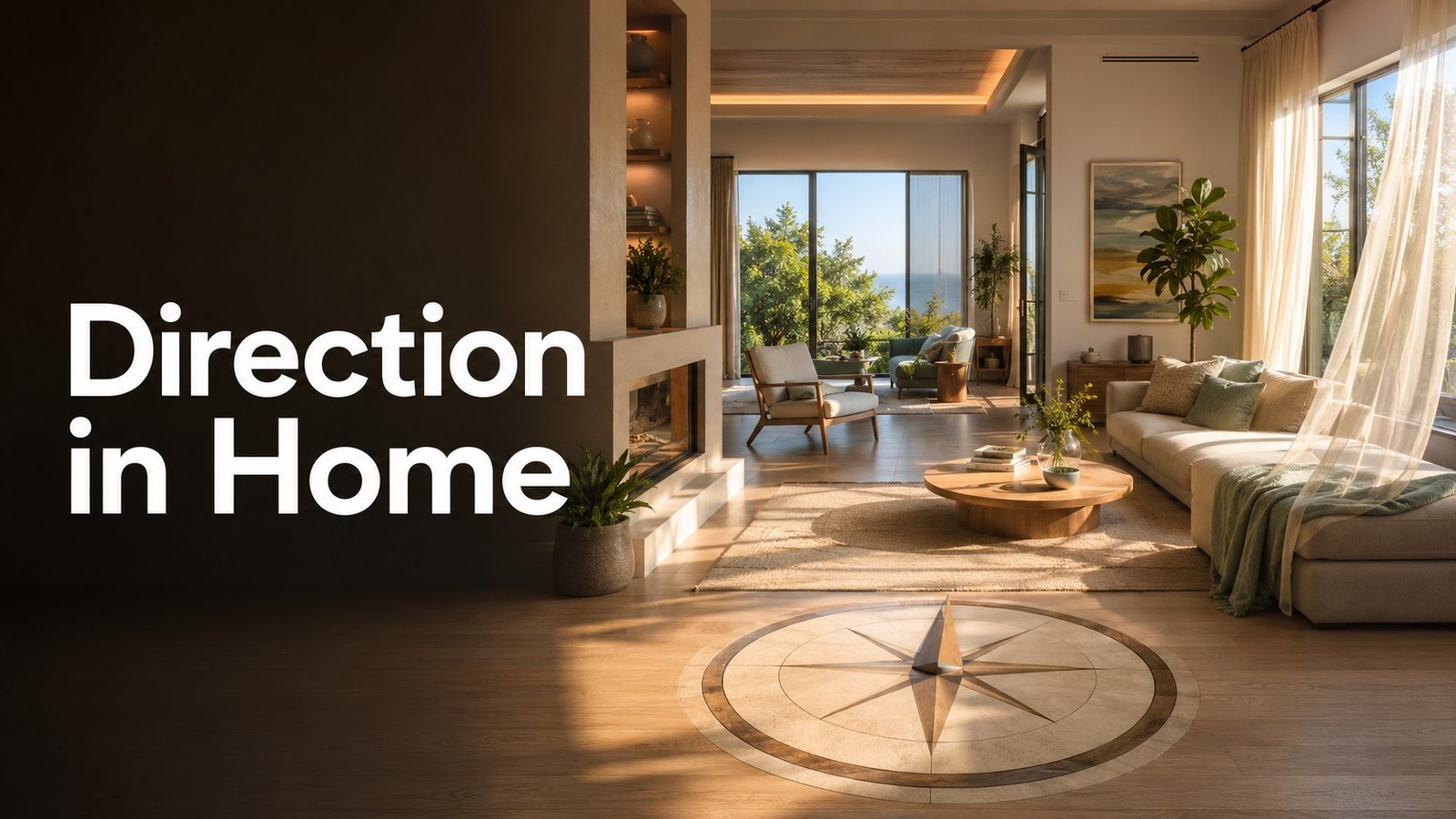
The best direction for a home depends on sunlight, local climate, ventilation, and how each room is used. North- and east-facing homes are often preferred because they can receive softer daylight and less intense afternoon heat. However, no single direction suits every property or location. A home’s direction affects much more than the view from its main door. It controls when sunlight enters, which rooms stay warm, and where excess heat may build near windows.
It may also reduce the need for lights, fans, or air conditioning. Direction also matters to homeowners who follow Vastu Shastra or Feng Shui. Vastu often favors north, east, and northeast, but the complete layout remains important. Use a compass to confirm the property’s direction, then consider room placement, local weather, nearby buildings, trees, and the existing features of the lot.
How Direction in Home Affects Light, Airflow, and Daily Comfort
North, south, east, and west describe orientation, but they don’t tell the whole story. A home may face east at its main entrance while its living room windows face south and its kitchen faces west. Each exposure has a different effect. In the Northern Hemisphere, the sun rises in the east, travels through the southern part of the sky, and sets in the west.
East-facing bedrooms get gentler morning light, which can suit early risers. South-facing rooms often receive the strongest and longest daylight. That can make a living room bright in winter, but it may also create glare and heat in summer. North-facing windows usually provide steadier, indirect daylight. Artists and people who work at home often like that even light. Meanwhile, west-facing kitchens and offices can become hot late in the day, especially with large unshaded glass.
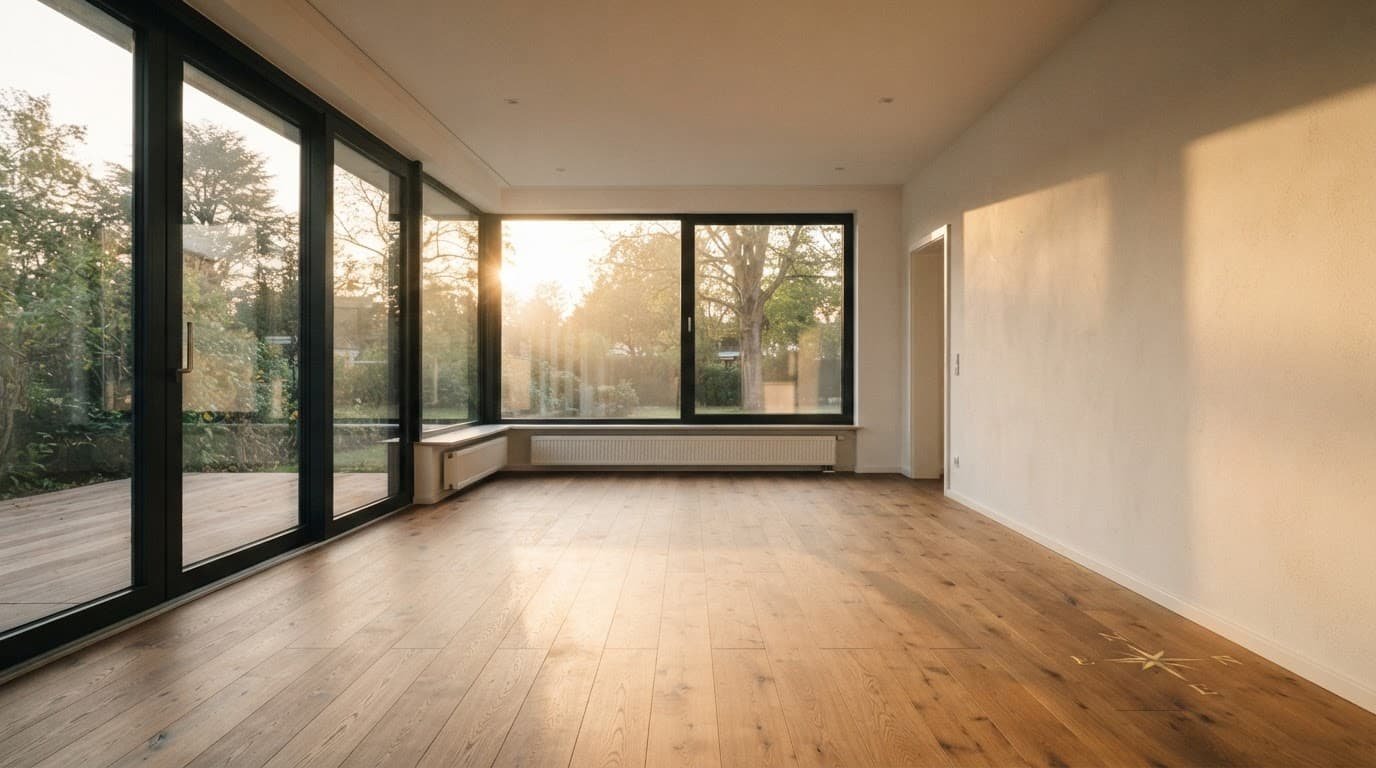
Climate changes these choices. A sunny southern exposure can help in a cold state, while deep shade and exterior screens may matter more in Arizona or Florida. In the Southern Hemisphere, north-facing rooms get the more direct sun pattern, so local conditions should guide the final plan.
How to Find the Facing Direction of Your Home
Stand at the main entrance and use a phone compass or a simple physical compass. Many real estate listings call the direction you face while looking outward from that door the home’s facing direction. Vastu traditions may also use this inside-looking-out method. Next, check the floor plan. Mark the direction of major windows, patios, and exterior doors. Then visit the property in the morning and late afternoon if possible. Neighboring houses, mature trees, hills, and balconies can block sunlight more than the compass reading suggests.
A front door’s direction is only one clue. The direction of your largest windows has a bigger effect on indoor light and heat.
Match Each Room to Its Best Direction
The best direction in home planning depends on how you use each space.
| Direction | Typical light pattern | Rooms that may benefit |
|---|---|---|
| East | Bright, cooler morning sun | Breakfast area, kitchen, early-use bedroom |
| South | Stronger daylight in much of the Northern Hemisphere | Living room, family room, solar-friendly spaces |
| North | Soft, consistent indirect light | Office, studio, utility room |
| West | Intense late-day sun and heat | Rooms with shading, storage, limited-use areas |
A primary bedroom may need quiet and a cool temperature more than sun. A kitchen needs ventilation and workable counter placement, regardless of compass direction. Window size, insulation, blinds, roof overhangs, and your daily schedule all change the answer.
Using Vastu Shastra and Feng Shui to Choose Home Directions
Practical orientation focuses on sun, wind, temperature, privacy, and energy use. Vastu Shastra and Feng Shui add cultural and spiritual ways to organize a home. Many people use both approaches, especially when a new build gives them choices. Vastu Shastra comes from Indian architectural traditions. It often considers the entrance, the center of the home, kitchen placement, primary bedroom, and prayer or meditation area in relation to compass directions. Common Vastu guidance for new homes also gives the entrance a central role.
Feng Shui developed in China and considers the movement of qi, or energy, through a space. Practitioners may use a bagua map to relate parts of a home to areas of life. The entrance, clear pathways, room proportions, furniture placement, and balance of materials all matter. Still, they don’t replace building science. Ventilation, safe construction, drainage, insulation, and local code requirements need equal attention.
Common Directional Guidelines for Vastu-Inspired Homes
Kitchens often go in the southeast, while a primary bedroom may sit in the southwest. Northwest areas are sometimes assigned to guest rooms, storage, or spaces with more movement. Use these ideas as flexible preferences. Moving plumbing, removing structural walls, or sacrificing natural ventilation to meet one directional rule can create a home that works less well every day. A small adjustment, such as room decor or furniture placement, may be enough to honor the tradition.
How Feng Shui Uses the Entrance and Room Layout
Feng Shui often begins at the entry. Keep the path to the door open, well-lit, and free of piles that make arrival feel cramped. Inside, avoid forcing people to squeeze around furniture or walk through a cluttered corridor. Place living room seating so people can talk comfortably and see the entrance without sitting directly in its path. Add soft textiles to a room filled with hard floors and sharp-edged furniture. These changes are affordable, reversible, and useful even if you don’t follow Feng Shui formally.
How to Choose the Right Home Direction for Your Needs
Start by ranking what matters most. A family that spends afternoons on a patio may prioritize shade. A person who paints at home may want north light. Someone in a cold climate may value rooms that collect winter sun. Use this quick review before renting, buying, or building:
- Check the property at more than one time of day.
- Notice glare, heat, street noise, and sightlines from each major window.
- Look for awnings, trees, overhangs, operable windows, and cross-breezes.
- Ask how insulation, window glazing, and exterior shading control seasonal heat.
- Consider whether your schedule may change over the next few years.
A well-planned house can work in almost any orientation. Exterior shading can tame a west-facing wall. Good insulation reduces temperature swings. Openable windows and a sensible floor plan can improve airflow where the site allows it.
Mistakes to Avoid When Planning by Direction
Don’t assume one direction works best everywhere. A south-facing wall has different demands in Minnesota and coastal Texas. Also, don’t confuse the front door’s compass reading with the solar orientation of every room. Summer overheating often surprises buyers who only visit in winter. Nearby construction, tall trees, and adjacent buildings can also change a home’s daylight after you move in. For major renovations or new construction, consult an architect, builder, or energy professional, particularly in hot, cold, or storm-prone areas.
A Better Way to Read Your Home’s Orientation
The best direction in home decisions comes from observation, not a single rule. Watch the light across a normal day, notice which rooms feel too warm or too dim, and match each space to the way you live. Compass direction is a useful starting point. Comfort comes from combining it with climate, window design, airflow, site conditions, and personal beliefs. Small changes, such as shades, seating placement, or better ventilation, often improve a home before costly renovation becomes necessary.
Frequently Asked Questions
How can I find direction in my house?
Stand in the center of your house and open a compass app. Hold your phone flat and point it toward the main entrance. Stay away from metal objects that may affect the reading. The compass will show whether the entrance faces north, south, east, or west.
Which direction is good to take home?
North- and east-facing homes are commonly preferred because they can receive useful natural light. East-facing homes get morning sunlight, while north-facing homes often stay bright without excess heat. Ventilation, room layout, and local climate also matter. Choose a home that feels comfortable and suits your daily needs.
Which side face is good for a house?
East-facing homes are popular because they receive morning sunlight. North-facing homes can provide softer and more balanced daylight. South- and west-facing properties may become warmer in hot climates. The best direction depends on the location, design, and surrounding buildings.
Which direction is good for a house as per Vastu?
Vastu commonly considers north, east, and northeast favorable directions. A main entrance in one of these directions is often preferred. The placement of rooms, doors, and open spaces also affects the overall Vastu. Direction alone does not decide whether the complete house follows Vastu principles.
How do I check my direction?
Open a compass app and stand in the center of the house. Keep your phone flat and point its top toward the area you want to check. Move away from appliances, metal doors, and electrical equipment. Read the direction shown on the compass screen.
How to confirm direction?
Take compass readings from two or three areas of the house. Repeat the process to make sure the result stays consistent. You can also compare the direction with Google Maps or the property plan. A professional surveyor can provide final confirmation if accuracy is essential.




Pingback: Affordable Door Jamb Growth Chart Ideas for Your Home
Pingback: 3 Bedroom Mobile Home Buying Guide: Costs and Tips