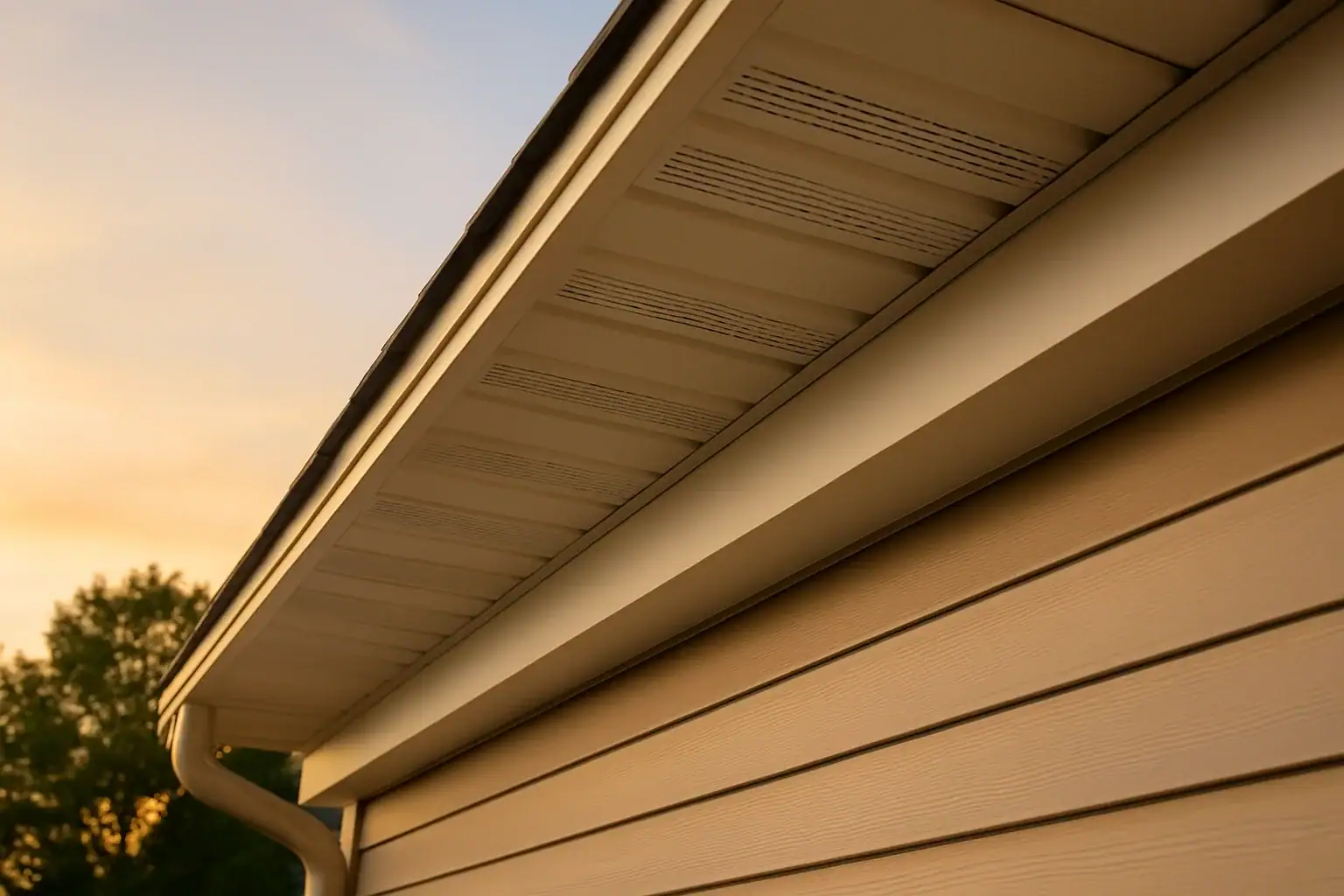
A roof needs many small parts to do its job. One part hides under the edge and keeps the whole system in order. People call it the soffit. Most owners never look at it closely, yet the house depends on it every day.
A soffit closes the open space under the roof overhang. That space sits between the edge of the shingles and the top of the wall. Wind, rain, and pests target that gap first. A neat panel across that line turns a weak spot into a shield.
A home with a sound soffit breathes better and looks better. Fresh air reaches the attic in a steady flow. Damp air leaves without fuss. Paint, trim, and rafters stay dry. The roof edge shows a clean finish that lifts curb appeal at once.
This guide explains the part in plain words. You will see what it is, why it matters, which options exist, and how to keep it in shape. You will also learn how costs break down and how to plan a smart upgrade.
What Is a Soffit?
A soffit is the flat surface under the eaves. It links the last board of the roof to the outside wall. The panel hides rafters and wires and keeps the edge tight. Builders fit it in long runs that match the length of the roof.
The word comes from old craft terms for a small “ceiling.” That image fits. Look up under an overhang, and you see a compact ceiling. Each strip joins to the next in a tidy seam. Vents often sit in those strips to let air pass into the attic ventilation.
A soffit is not trimmed alone. It is part of the roof system. It teams with the fascia, the gutter, and the attic vents. Each piece helps the others do more. The whole set keeps heat down, stops moisture, and blocks pests.
Why This Small Part Matters
Air Moves the Right Way
Cool air enters at the eaves. Warm air rises and exits near the ridge. This crossflow sets up a steady cycle. A vented soffit feeds that cycle. Air moves in. Moisture leaves. Insulation stays dry. The roof deck keeps its shape.
Rain Stays Out
An overhang gives water a path into the frame. The panel blocks that path. Seams and joints keep drips from the rafters. Paint on the fascia lasts longer. Stains on the wall vanish once the leak source ends.
Pests Lose Their Favorite Entry
Birds love bare rafters. Bees and wasps hunt for small holes. Mice climb and press through thin gaps. A tight soffit removes the access point. Mesh in the vents and snug joints keep the edge secure.
The House Looks Finished
The underside of an eave can look rough without cover. A clean panel hides saw cuts and nail heads. The roof line turns into a single crisp band. Buyers notice the difference at once, even if they do not know why.
Main Types You Can Choose
Solid Panels
Solid panels contain no vent holes. Builders use them over small bump-outs or areas with no attic space. The solid face still shields wood and keeps the look consistent. Many owners pair solids with separate strip vents nearby.
Vented Panels
Vented panels include slots or a fine field of perforations. These let outside air reach the attic. The small holes stay tight enough to block insects. Vented runs suit warm, humid zones and long roof spans.
Continuous Strip Vents
A continuous vent runs the full length of the eaves. The slot sits in a metal or vinyl body that drops into the soffit line. This choice offers uniform intake and pairs well with a ridge vent. The attic air sealing gets a smooth, even flow from end to end.
Custom Wood Boards
Some homes use tongue-and-groove boards with small gaps or hidden slots. The look suits classic styles and high-end builds. The vent area still must meet code. A pro can add discreet channels on the back side to meet targets.
Common Materials and How They Compare
Vinyl
Vinyl costs less and resists moisture. Panels snap together and clean up with soap and water. Color runs through the material, so chips do not show. Heat movement can cause slight flex. Good fasteners and correct spacing control that risk.
Aluminum
Aluminum stands up to harsh weather. It will not rot, swell, or host mold. Paint bonds well to the surface. Perforated versions provide strong airflow. The price sits above vinyl yet below most fiber cement sets.
Wood
Wood brings warmth and character. Cedar, pine, or fir can match old homes and fine trim work. Regular paint or clear coat is a must. Lack of care leads to rot or warp. In dry, shady eaves with sound gutters, wood can last for decades.
Fiber Cement
Fiber cement offers high strength and long life. The board resists fire, insects, and water. Weight is higher than vinyl or aluminum, so labor needs rise. Paint holds well, and touch-ups match with ease.
UPVC
UPVC delivers a tough, low-care surface. The body resists sun, rain, and dust. Parts stay straight and clean. Many modern builds use UPVC for a uniform look across the fascia and soffit.
Ventilation Targets in Plain Numbers
A roof needs enough vent area at the eaves and ridge, about 1 sq ft per 150 sq ft of attic floor. Some codes allow 1:300, where a balanced system exists. Half the total should sit at intake. The rest should sit at the exhaust near the ridge.
These numbers keep the cycle strong. Air comes in low and exits high. No dead zones. No trapped heat and no wet corners. A balanced plan also makes ice dams less likely in cold zones.
Planning a New Soffit
Check the Roof Edge
Look for straight lines, firm sub-fascia, and sound rafter tails. Softwood must go. A new panel over rot fails fast. Confirm that gutters drain well. Water that spills over a gutter lip can soak the underside and stain the wall.
Map the Vent Area
Count the intake you need. Add the exhaust target as well. Spread vents evenly across the eaves. A few large vents near one corner do less than a continuous run across the full length.
Pick a Material That Fits the Climate
High humidity calls for aluminum, vinyl, fiber cement, or UPVC. Dry regions can use wood with ease. High heat favors light colors that reflect the sun. Coastal zones need corrosion-proof fasteners and hardware.
Match the Look
Color and profile should align with the trim, siding, and windows. Narrow channels fit modern styles. Wider beads suit a craftsman or cottage look. Subtle choices around the eaves tie a façade together.
Basic Install Steps a Pro Follows
- Remove old panels and trim.
- Repair sub-fascia and rafter tails.
- Set “J” channels or starter tracks along the wall and fascia.
- Cut panels to length with a fine blade or snips.
- Slide each strip into the tracks and fasten it to the framing.
- Keep a small gap at the ends to allow movement where the material expands.
- Add continuous vents or vented panels per the plan.
- Seal joints where needed, then paint or clean the surface.
A pro crew completes long runs fast and keeps lines true. Care with layout and support gives a tight, rattle-free finish.
Typical Costs in Today’s Market
Prices vary with region, access, and roof shape. The ranges below reflect many jobs on single-family homes.
- Vinyl panels: $1.50-$3.00 per linear foot
- Aluminum panels: $3.00-$6.00 per linear foot
- Wood boards: $5.00-$10.00 per linear foot
- Fiber cement: $4.00-$8.00 per linear foot
- Labor: $20-$40 per linear foot in many areas
A small ranch may total near $2,000-$3,500. A large two-story plan with complex eaves can reach $6,000-$9,000. Repairs to rotten tails, fascia, or gutters add to the bill. Clean framing keeps project time down and quality up.
Signs Your Soffit Needs Attention
- Paint flakes or dark streaks under the eaves
- Panels sag, or gaps appear at joints
- Wasps, bees, or birds gather near the edge
- The attic smells musty or feels damp to the touch
- Ice forms at the eaves in winter despite clean gutters
A quick check each spring and fall helps you catch trouble early. Small fixes cost less than full tear-outs.
Simple Care that Extends Life
Clean gutters at the start of each rainy season. A neat gutter keeps water off the underside. Rinse vinyl or aluminum twice a year. Use a soft brush and mild soap. Touch up paint on wood before the bare grain shows.
Clear vent holes with a soft nylon brush. Do not block intake with insulation. Baffles above the wall plate keep insulation in place and preserve the air path. Trees near the roof need a trim. Branches that rub can mark or dent panels. A small trim now saves a patch later.
Energy and Comfort Benefits
A cool attic lowers the strain on air conditioners. A dry attic preserves the R-value of insulation. Humid air reduces the power of many insulation types. Good intake keeps that risk low. Roof deck temperatures fall, which helps shingles last longer. The home feels more stable through heat waves and cold snaps.
Style Ideas That Lift Curb Appeal
Color on the eaves can frame the façade. A match to the fascia sets a calm band at the roof edge. A light tone under deep overhangs brightens shadow lines. Narrow reveals pair well with modern windows. Wider beadboard pairs with farmhouse or craftsman trim. Small choices around the eaves give a house its final polish.
Soffit vs. Fascia in One View
The soffit covers the underside. The fascia caps the edge. Gutters mount to the fascia, not the soffit. Both parts share the load of weather at the roof line. A strong pair protects the frame and guides water to downspouts. Treat them as one system in any plan or repair.
Mistakes to Avoid
- Covering the intake with insulation at the wall plate
- Pairing a large ridge vent with a weak intake
- Nailing panels too tightly and preventing movement
- Skipping gutter repairs that soak the eaves
- Using interior paint on exterior wood
A careful plan prevents these errors. Balanced air, sound wood, and correct fasteners make the edge last.
When to Call a Pro
Large heights, complex roof lines, and old rot call for expert help. A pro identifies hidden issues at the tail and plate. The crew owns the right ladders, brakes, and snips.
Work goes faster, lines stay true, and warranties hold. Owners with safe access can handle small cleaning and light touch-ups. Major swaps merit a full crew and a clear scope.
Conclusion
A soffit looks small, yet it guards the roof and the rooms below. The panel closes a risky gap, moves air, and shapes the edge that frames your home. Good intake keeps the attic dry. Strong joints keep pests out. Clean lines lift the look of the façade.
A smart plan starts with sound wood, clear air paths, and the right material for the climate. Balanced intake and exhaust protect the deck and the shingles on top. Regular checks keep the edge tight and free of stains.
This is a quiet hero of the roof. Give it fair care, and it pays you back each day. Your home lasts longer, feels safer, and looks complete from every angle.
Frequent Questions in Plain Answers
Do all homes need vents at the eaves?
Most roofs with attics need intake. Some sealed assemblies use a different design, yet that choice must match the full roof spec.
Can I mix solid and vented sections?
Yes, many crews place vented panels across most runs and leave solids at short spans or porch roofs with no attic.
What stops bugs from entering vent holes?
Quality panels include mesh or small slots that block pests. Correct fit at joints matters as well.
Does snow block intake?
Deep drifts can cover eaves for short periods. A continuous slot with baffles holds an edge. Once the snow melts, the flow returns.