
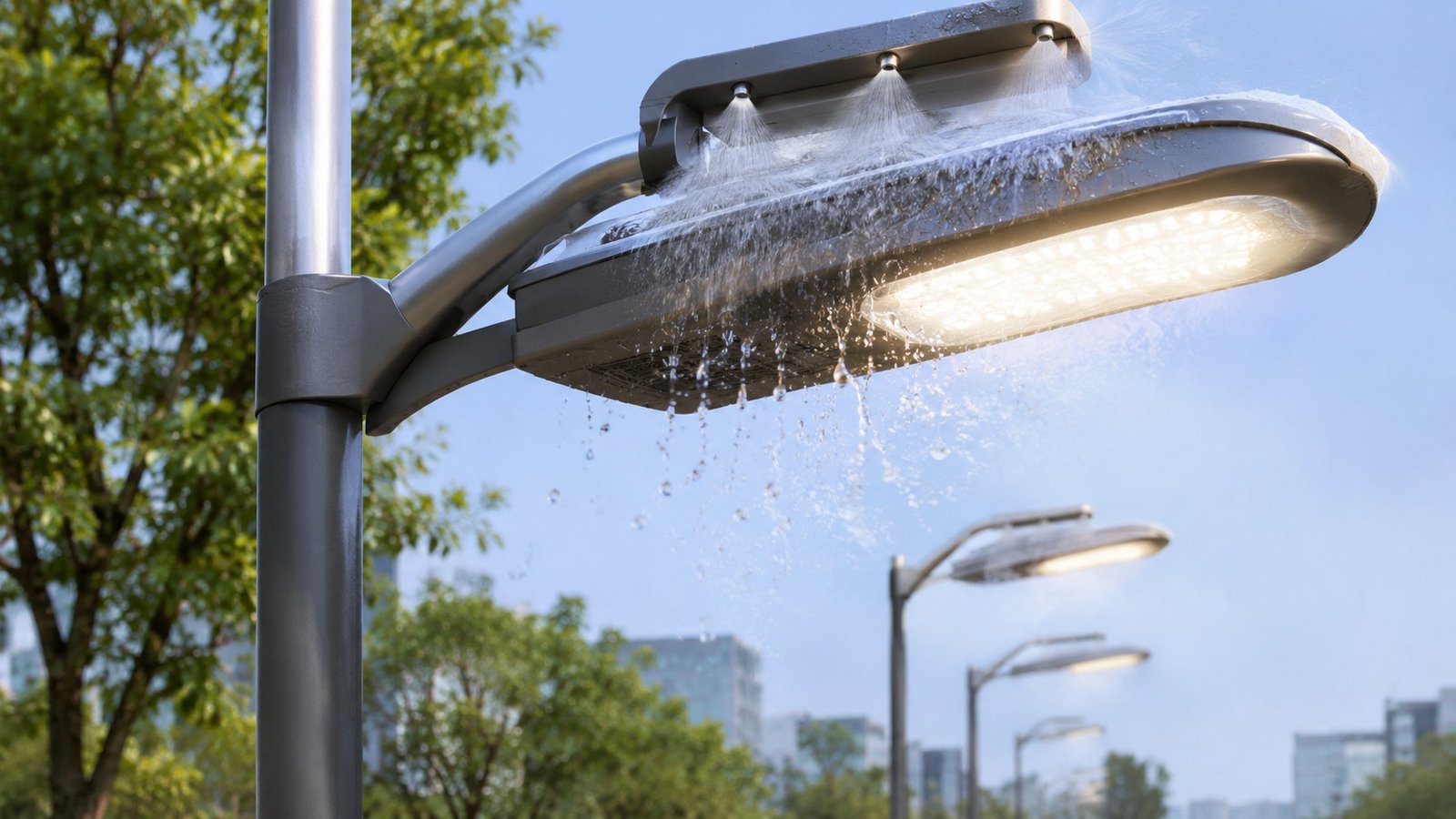
Self-cleaning street lamps are real. Researchers have tested automatic dust-removal devices on pole-mounted solar panels, and companies sell streetlights with integrated dust-sweeping systems. The important difference is what gets cleaned: usually the solar panel that charges the battery, not the LED lamp itself. Dust-resistant construction and automatic cleaning are not the same thing.
What Self-Cleaning Actually Means
A solar streetlight uses a photovoltaic panel to charge a battery that powers an LED after dark. Road dust, airborne soil and pollution can settle on the panel, blocking some incoming sunlight. A dirty panel can generate less energy, especially after dry weather near heavy traffic or construction.
A self-cleaning system adds a mechanism that removes dirt from the panel without a maintenance crew visiting the pole for every cycle. It may use a moving brush, wiper or other engineered tool. A dust-resistant coating can help dirt release, but does not automatically demonstrate that any cleaning happens.
A Real Research Project in Pakistan
In 2019, the journal Thermal Science published A Self-Cleaning Device for Pole Mounted Solar Photovoltaic Installations, written by researchers associated with Mirpur University of Science and Technology. The team built a device programmed for a 20-second cleaning cycle every 24 hours. It avoided cleaning during rain and when battery voltage was too low.
Researchers compared two equivalent pairs of solar panels over six weeks in Pakistan, one pair fitted with the cleaning mechanism and another left uncleaned. The uncleaned pair showed major reductions in output as dust accumulated. The cleaned pair remained more consistent. That is a controlled experiment, not evidence that every self-cleaning streetlight will deliver identical savings.
The original pole-mounted panel cleaning paper describes the configuration and measured results. This documented trial establishes that the idea is more than an online invention sketch.
Why Dust Affects Nighttime Lighting
Dust has an additional consequence on solar lighting: less sunlight can reach the photovoltaic cells that charge the battery. If the lighting system operates through cloudy days, further loss from dust may reduce its available energy reserve. The result depends on the battery capacity, light operating modes, panel size and local weather.
The International Energy Agency’s PV Power Systems Programme identifies soiling as a substantial cause of lost solar energy worldwide. The effect is highly variable. A light beside a dusty unpaved road may behave differently from one on a rainy residential street. Dust can also adhere to the panel when moisture mixes with fine particles, so occasional rain is not always sufficient cleaning.
The Cleaning Mechanism Step by Step
A basic design combines a cleaning element with a small motor and controller. When the controller signals a cycle, the motor moves the brush or wiper across the panel. The system needs adequate power and safeguards against operating in conditions that could harm its own components. Some controllers use a schedule rather than a dust sensor.
That difference matters when reading a sales claim. A timer runs at set intervals; it does not measure dirt. A device with a soiling sensor may use a different control strategy, but the manufacturer must document it. Moving parts also wear out. A brush with trapped grit may scratch the glass, and a jammed cleaner can add maintenance instead of eliminating it.
Three Features That Are Not Equivalent
An automated wiper physically removes material from a panel. An anti-soiling coating changes how dirt or water interacts with a surface but cannot guarantee that contamination disappears. A sealed dust-resistant lamp housing keeps dust out of certain internal areas, rather than removing it from the outside of a solar panel.
These features can appear together on a product. An IP65 enclosure rating, for example, concerns protection against dust entry and water jets under standardized conditions. It does not mean that a panel washes or wipes itself. Buyers should look for an actual moving cleaner and a description of how its operation is controlled.
Commercial Streetlights with Sweepers
At least some companies list self-cleaning solar streetlights as real products. Australian lighting supplier EarthLight advertises a Solar Pro Self-Cleaning Street Light with an automatic panel dust-sweeping function and different LED wattage models. That listing shows that the concept has commercial offerings, beyond laboratory experiments.
A seller listing is not independent proof of the savings, durability or battery life claimed in marketing. Ask for the installation manual, a demonstration of the mechanism, spare-part availability and warranty exclusions. If the light is intended for a dusty road, request performance evidence from a location with similar traffic, weather and dirt conditions.
Does the Lamp Lens Get Cleaned?
Usually the published solar streetlight projects concentrate on cleaning the photovoltaic panel. The lens in front of the LED may still accumulate mud, insects or exhaust grime. A panel brush does not necessarily reach the lamp cover. Inspect the exact product design rather than assuming the phrase self-cleaning applies to every exterior surface.
Separate engineering concepts exist for cleaning lamp housings, but patent filings and prototypes are not the same as proven widespread deployments. The actual commercial model and its service instructions should identify which part of the fixture is cleaned automatically.
Where Automatic Cleaning Could Help
An automated mechanism may make sense when solar panels are high above an active roadside and regular manual access would be expensive or disruptive. Sites with recurring airborne dust, industrial debris and little rainfall are obvious candidates for a closer cost comparison.
There is a trade-off. Motors, controls and brushes add complexity and may use some of the stored energy. In a low-dust location, maintenance savings may not justify the extra equipment. A small garden solar light that can be reached from the ground is usually a different problem from a tall municipal installation.
Questions to Ask Before Buying
- Which specific surface does the device clean?
- Is cleaning controlled by a timer, dust sensor or manual command?
- What are the battery capacity, panel size and verified operating modes?
- Can the brush be replaced, and what happens if it jams?
- Does cleaning stop when battery charge is too low or rain begins?
- Can the manufacturer supply test results from similar dusty environments?
Outdoor public lighting also needs suitable structural mounting, electrical safety, light distribution and compliance with applicable local requirements. The self-cleaning feature does not replace a qualified design or proper servicing. Working at height or near live roads should be handled by trained personnel.
Can Students Build a Dust-Removal Prototype?
A small tabletop solar-panel project can demonstrate the concept without pretending to be a road-ready product. A low-voltage motor, timed controller and suitable cleaning element can illustrate one cycle. Students should measure panel output under controlled dusty and cleaned conditions and account for the energy used by the motor.
Repeatable test conditions matter. Record the amount of dust, panel angle, sunlight conditions and visible surface changes. Report limitations such as short trial duration or uncertain outdoor durability. A classroom demonstration does not certify equipment for public roads or prolonged exposure to weather.
Common Questions
Do dust-resistant lamps clean themselves?
Dust-resistant materials can limit entry or reduce adherence, but they do not automatically remove dirt from the outside of a solar panel. Look for a documented cleaning mechanism if that function is required.
Are self-cleaning solar lamps maintenance-free?
No. Batteries, LED fixtures, supports and moving cleaning parts still need inspection. Automatic dust removal reduces a specific maintenance task rather than eliminating all maintenance.
Are these products available for purchase?
Some manufacturers offer commercial solar streetlights with advertised automatic sweeping. Check current availability, local installation support and complete specifications before treating a listing as a suitable purchase.
Is the research real?
Yes. Peer-reviewed work has tested automatic cleaning on pole-mounted solar photovoltaic panels. Individual commercial performance claims still need their own supporting evidence.