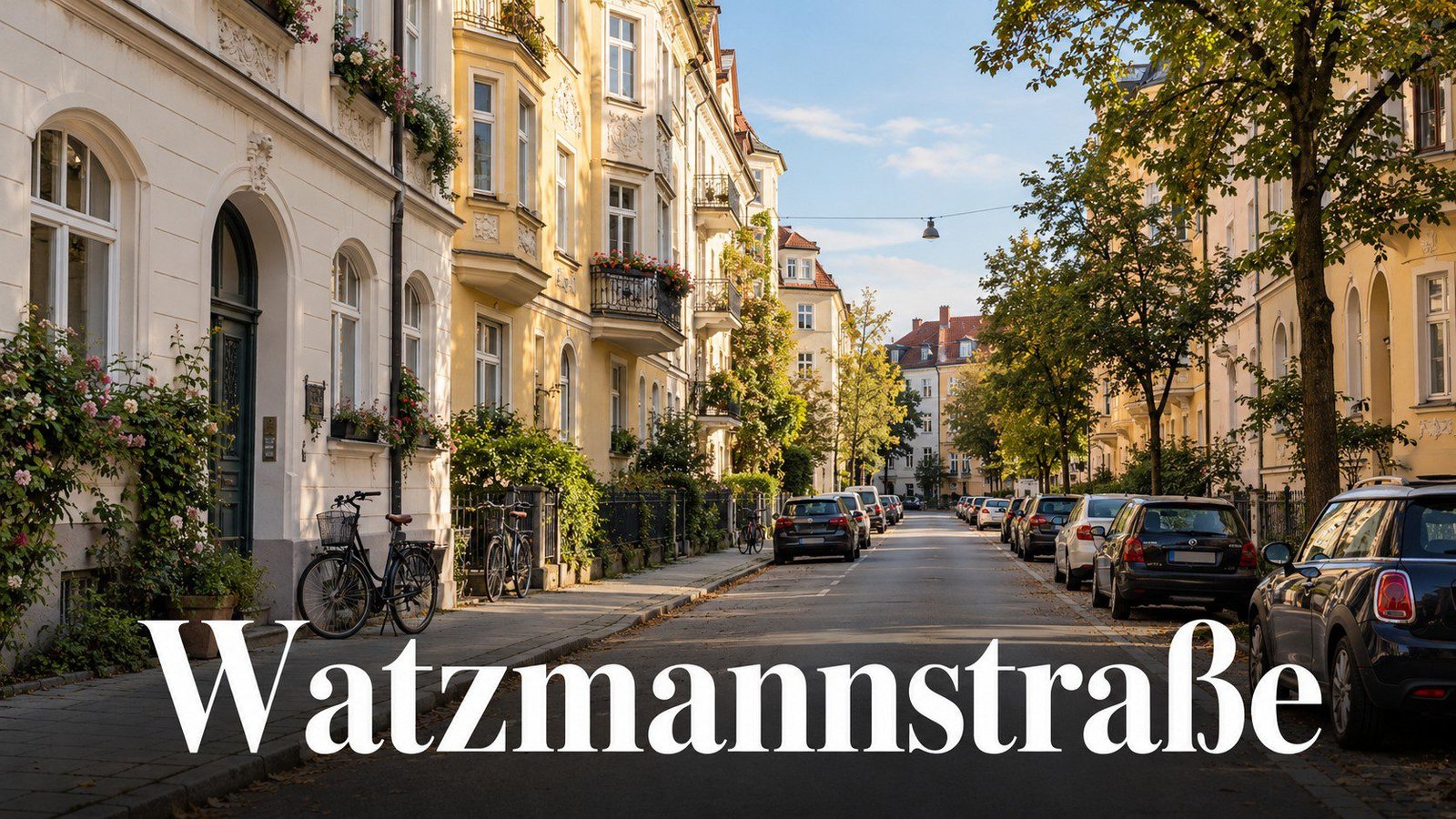
Watzmannstraße is a short street in Munich’s Obergiesing neighborhood, within the Obergiesing-Fasangarten district. Its postal code is 81541, and its name comes from the Watzmann mountain in the Bavarian Alps. If you need directions, enter the full Munich address and the house number. The street name alone can lead to another town. Munich’s street-history directory records Watzmannstraße as 319 meters long, with a first mention in 1877.
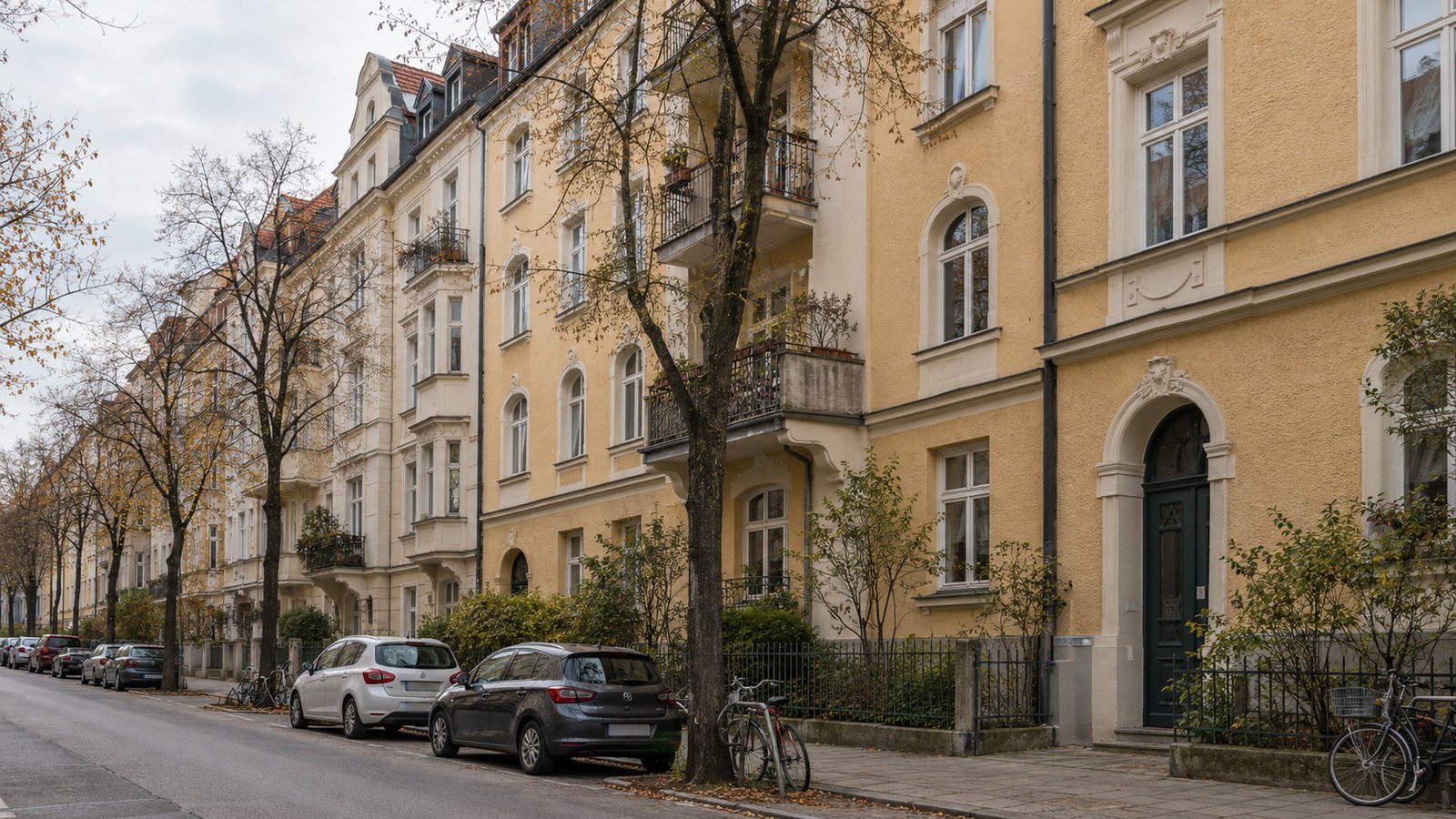
The street’s interest lies in its residential architecture and its place within Giesing. Several documented apartment buildings date from around 1900, with facades that draw on Renaissance and Baroque styles. These are homes rather than museum buildings, so a visit usually means a look from the sidewalk. Anyone considering an apartment here will need to look beyond the exterior: the condition of the particular unit, its daylight, and its entrance matter more than a historic address.
Watzmannstraße Map and Address
Location: Watzmannstraße, 81541 München, Obergiesing-Fasangarten, Germany
Street reference coordinates:</str View Watzmannstraße, 81541 Munich, on Google Mapsong> 48.117430, 11.584371
The coordinates mark the street area, not a specific doorway. Add the house number for an apartment appointment, business visit, or delivery. Munich and München are the English and German names for the same city. Either can appear in search results. Obergiesing is the more specific neighborhood label; Obergiesing-Fasangarten is the larger administrative district. A listing that uses the longer name does not necessarily place the property in Fasangarten.
You can also enter the complete address into the DirectionsHomes route planner to compare a walking, cycling, or driving route from your starting point.
Munich and Haar Are Different Locations
Information about Watzmannstraße in Haar should not be used to describe this Munich street. The shared name is easy to overlook, especially when a page discusses the mountain rather than the surrounding neighborhood. The simplest way to avoid confusion is to keep 81541 München beside the street name during a search. Match that address before you use photographs, business listings, or directions. A mountain image needs similar care. It may explain where the name came from, but it does not show what you will see when you arrive.
A Mountain Name on a Munich Street
The Watzmann is a mountain massif in the Berchtesgaden Alps. Its Mittelspitze summit reaches 2,713 meters above sea level. Munich’s street takes its name from that massif, rathThe Watzmannstraße entry in Stadtgeschichte München records 1877 as its first mention. Older descriptions reproduced on the same page refer to naming dates in both 1876 and 1877. That makes first recorded in 1877 a better description than a precise claim about when construction began.er than from a resident or a former local business.
Street names and building dates tell different parts of a place’s history. A name can survive changes to the road, replacement buildings, and alterations inside the houses. It cannot tell you when an apartment received its present layout or windows. The wider history of Giesing helps put the address in context. Munich’s municipal history guide records that Giesing became part of the city in 1854. Its later expansion left buildings from several periods, including substantial housing from the city’s growth around the turn of the twentieth century.
Three Buildings That Give the Street Its Character
Watzmannstraße has documented examples of historic apartment architecture at numbers 2, 9, and 11. Their records describe different approaches to facade design, even though their construction dates fall within a relatively short period.
| Address | Recorded date | Description |
|---|---|---|
| Watzmannstraße 2 | Around 1900 | Apartment building in a restrained Renaissance Revival style |
| Watzmannstraße 9 | 1912 | Apartment building with Baroque-inspired plaster decoration, designed by Heinrich Herrmann |
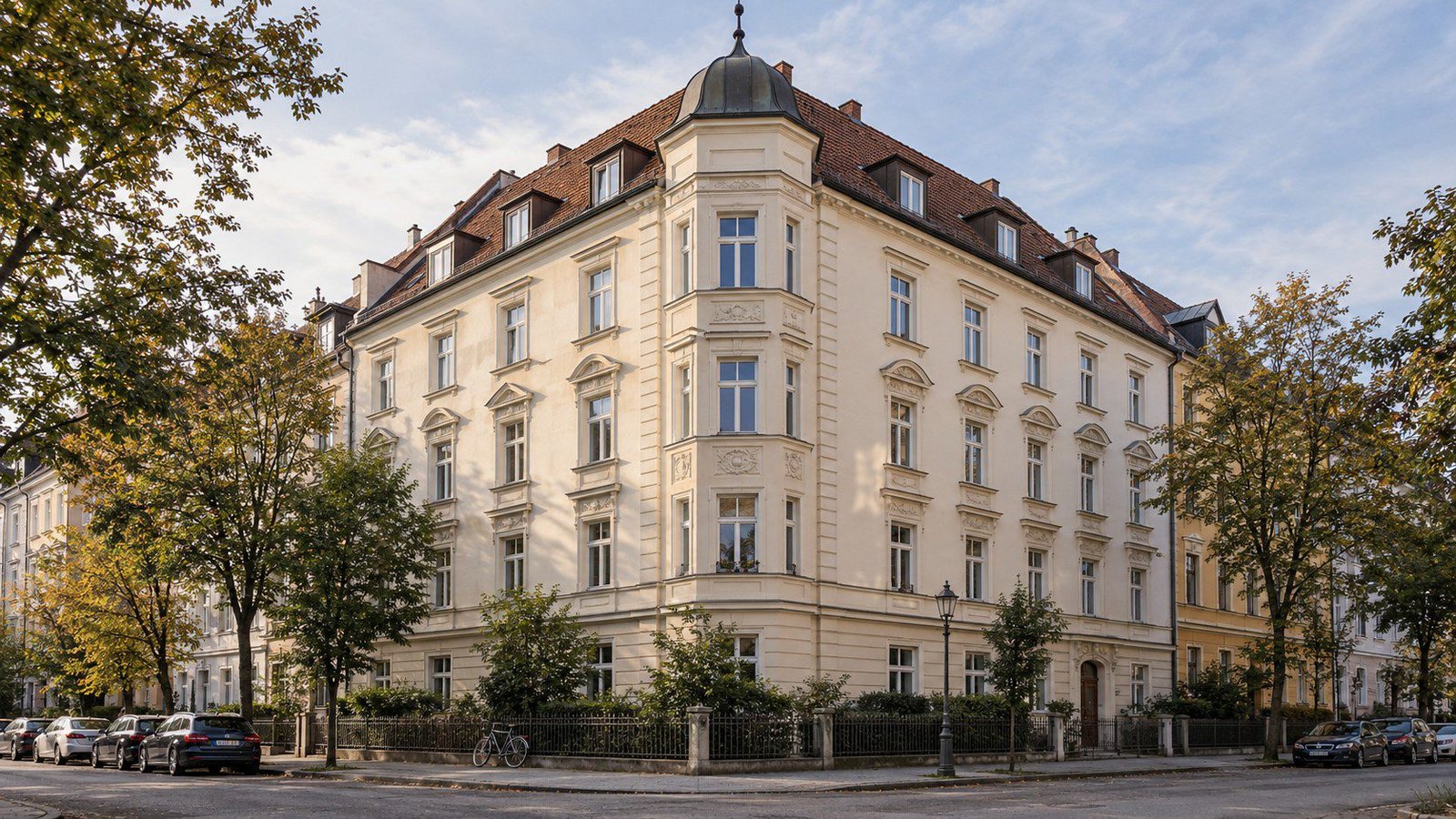
| Watzmannstraße 11 | 1900 | German Renaissance Revival corner building, designed by Heinrich Hilgert |
The individual building records support these dates and descriptions. Number 11’s entry also notes that parts of its design have been simplified.
Watzmannstraße 2
Number 2 is described as a restrained example of Renaissance Revival architecture from around 1900. It offers a useful reminder that historic character does not always depend on elaborate decoration. When you look at the facade, notice the window arrangement and the balance between the openings and wall surfaces. Those relationships can be as important to a building’s appearance as ornamental details. The exterior record does not establish what remains inside. A modern apartment interior and an older facade can belong to the same building.
Watzmannstraße 9
Number 9 dates from 1912 and is attributed to Heinrich Herrmann. Its documented feature is Baroque-inspired plasterwork. The wording matters. This is a twentieth-century building that uses an earlier architectural language, not a house built during the Baroque period. Describing it simply as a “Baroque building” would lose that distinction. It is worth looking at how the plaster decoration frames and divides the facade. A close photograph can help reveal those details, although it should identify the correct house number.
Watzmannstraße 11
Number 11 is a corner apartment building designed by Heinrich Hilgert in 1900. Its record places it within German Renaissance Revival architecture. A corner position lets you compare how the design addresses two sides of the building. That can make it a useful stop on a short architecture walk.
It does not, however, tell you how an individual apartment is arranged. Some units may have a different outlook from others, and no facade photograph can establish the daylight or condition of every room. These buildings remain residential properties. Public sidewalks provide the appropriate place to view them unless you have permission to enter.
Getting There by Public Transport
MVG’s local-area map for Silberhornstraße includes Watzmannstraße and the surrounding streets. It is a useful starting point for understanding the relationship between the address, Silberhornstraße station, and the Ostfriedhof area.
The best arrival point depends on where your journey starts and which house you need. A stop that works well for one address may be less convenient for another. Use the complete destination in the journey planner. Then look at the final walk, including the station exit and any road crossings. This is especially useful if you have luggage or need a route without stairs.
An October 2026 Transport Notice
MVG lists track and district-heating work around Regerstraße and Franziskanerstraße from August 3 through an expected completion date of November 22, 2026. Under the published arrangement, tram 25 runs on a shortened route. Replacement bus 25 serves the affected connection through Rosenheimer Platz and Ostfriedhof to Silberhornstraße. Travelers should use current MVG journey information rather than an older timetable or saved screenshot.
This notice concerns nearby transport connections. It does not mean that Watzmannstraße itself is closed. Someone viewing a home can use the journey as a practical test. Walk from the stop to the entrance, and note the parts that a travel-time estimate leaves out: crossings, steps, and the distance from the street door to the apartment.
Looking for a Watzmannstraße Menu?
There is no single “Watzmannstraße menu.” The phrase identifies a street, so you need the name of a restaurant or café to find the right food menu. Start with the venue on your booking confirmation, receipt, or map listing. Match its Munich address before you use a menu page. A nearby restaurant may have a neighboring street as its postal address, and a similarly named result may belong to another town.
The venue’s own current menu is more useful than an undated customer photograph. Lunch offers, evening dishes, and delivery prices can differ. Opening hours also do not necessarily tell you when the kitchen stops accepting orders. If a particular dish is the reason for your visit, contact the restaurant before you travel. A street-level search cannot confirm that it remains available.
Where Watzmannstraße Fits Within Obergiesing
The street makes more sense as part of a neighborhood visit than as an isolated destination. Munich’s official district history guide includes Heilig-Kreuz-Kirche, Feldmüllersiedlung, Ostfriedhof, and Giesinger Bahnhof among the places covered in its Obergiesing-Fasangarten walks. These are wider-area destinations, not attractions situated on Watzmannstraße. An architecture visit might combine the street’s apartment facades with other documented buildings in the district. A housing visit needs a different route: the walk to transport, food shops, or another place you would use regularly.
Keep the purpose of each place in mind. Ostfriedhof is a cemetery. Its presence nearby should not be treated as equivalent to a public playground or unrestricted recreation area. The same restraint helps when reading property descriptions. “In Obergiesing” identifies a broad area, but it does not tell you how convenient a particular home will be. A route from the actual entrance is more informative.
What to Look at During an Apartment Visit
A historic exterior can draw your attention, but the apartment needs its own assessment. Two homes in the same building may differ in light, layout, access, and outlook. A floor plan is useful before the appointment. It gives you a way to compare the listing photographs with the real rooms and identify where your own furniture would go.
Daylight and Room Layout
Look at the places where you would spend time, not only the brightest window. A desk at the back of a room may receive different light from the sofa beside the glass. Note the position of neighboring buildings and the depth of each room. Ask when the listing photographs were taken if they seem very different from the viewing. Furniture fit deserves the same attention. Door swings, radiators, and narrow passages can limit a layout even when the total floor area seems sufficient. Measure the space that matters to you rather than rely on a photograph’s sense of scale.
Sound Inside the Home
Listen in the bedroom as well as the main living room. If possible, compare conditions with the windows open and closed. Sounds from the staircase or a shared entrance can matter as much as outdoor traffic. These are questions for the particular apartment, not reasons to label the whole street noisy or quiet. A second appointment may be worthwhile if the first takes place at a time unlike your normal routine. Someone who sleeps during the day needs different information from someone who is away at work.
The Entrance and Shared Areas
Follow the full route from the sidewalk to the apartment. Steps before a lift can still be an obstacle, and a lift may not stop at every level. Ask where bicycles, strollers, and bulky belongings can go. Shared space should not be assumed to come with the apartment. A moving-day route also deserves a look. Tight staircase turns or a small lift may affect which furniture you can bring upstairs. The room dimensions alone will not answer that question.
Before You Plan Changes to a Historic Home
The city’s guidance on heritage permission states that alterations to protected buildings can require authorization, subject to statutory exceptions. Establish the status of the property and discuss the proposed work with the relevant authority before you commission it. The renovation plans need an address-specific assessment. Munich’s heritage authority explains that protected features can include interiors as well as facades, and sometimes associated structures.
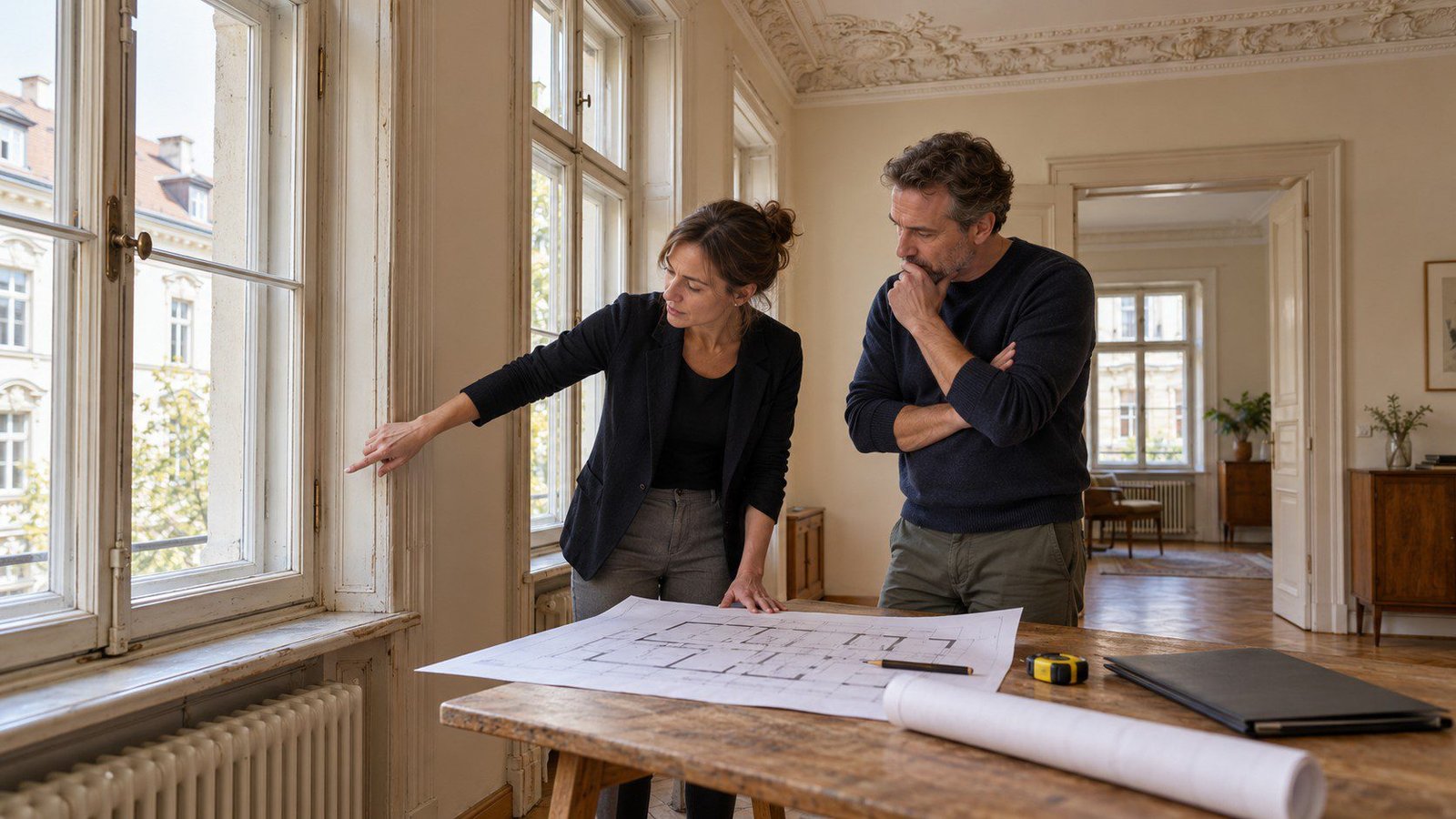
A window replacement or interior change at a neighboring address does not establish permission for yours. Different buildings can have different protected features and approval histories. The immediate question is whether the home suits you as it stands. If it only works after a major alteration, resolve that uncertainty before you commit to the property or order materials.
Rent, Parking, and Other Details an Address Cannot Settle
A street guide cannot establish a dependable rent for a particular apartment. Current offers need to be compared by size, condition, floor, and what the agreement includes. Ask for a clear breakdown of the quoted amount and any separate charges. Confirm which kitchen fittings and appliances remain, whether storage belongs to the unit, and whether parking costs extra.
Parking also requires a direct look at the arrangements. An empty space during a viewing is not proof that parking is unrestricted or usually available. Read the signs and ask whether an advertised space is private, separately rented, or simply a reference to parking on the street. Large deliveries require more detail than an ordinary visit. Give the delivery company the correct entrance information, and establish where the vehicle can legally stop. An accurate address helps, but it does not replace an agreed delivery route.
Frequently Asked Questions
Is Watzmannstraße near the Watzmann mountain?
This article concerns the Munich street, not an address at the mountain. The Alpine name explains the street’s naming history; it should not be used to plan a mountain excursion.
Can I search for Watzmannstrasse without the ß?
Watzmannstrasse uses “ss” in place of the German “ß.” Include 81541 München and the house number, then confirm that the result points to the intended destination.
Are the historic buildings open to visitors?
Their architectural records do not establish public access. View them from public space unless a resident, owner, or authorized event gives you permission to enter.
Does a historic facade mean the apartment has original features?
The interior may have changed over time. Current photographs and an authorized viewing are needed to assess floors, doors, layout, and other details.
Is the map pin the correct place for a delivery?
The map above identifies the street area. A delivery needs the full house number, any suffix, and the correct entrance details.
Before You Set Off
Save the complete address and the name of the person or business you intend to visit. Check the day’s transport connection if you plan to arrive by bus, tram, or train. A property appointment should leave you with more than photographs of the facade. Bring back the measurements, access details, and unanswered questions that matter to your household. Those are the facts that will help you decide whether a home on Watzmannstraße suits you.
Related Post: Direction in Home: Plan for Light, Comfort, and Flow