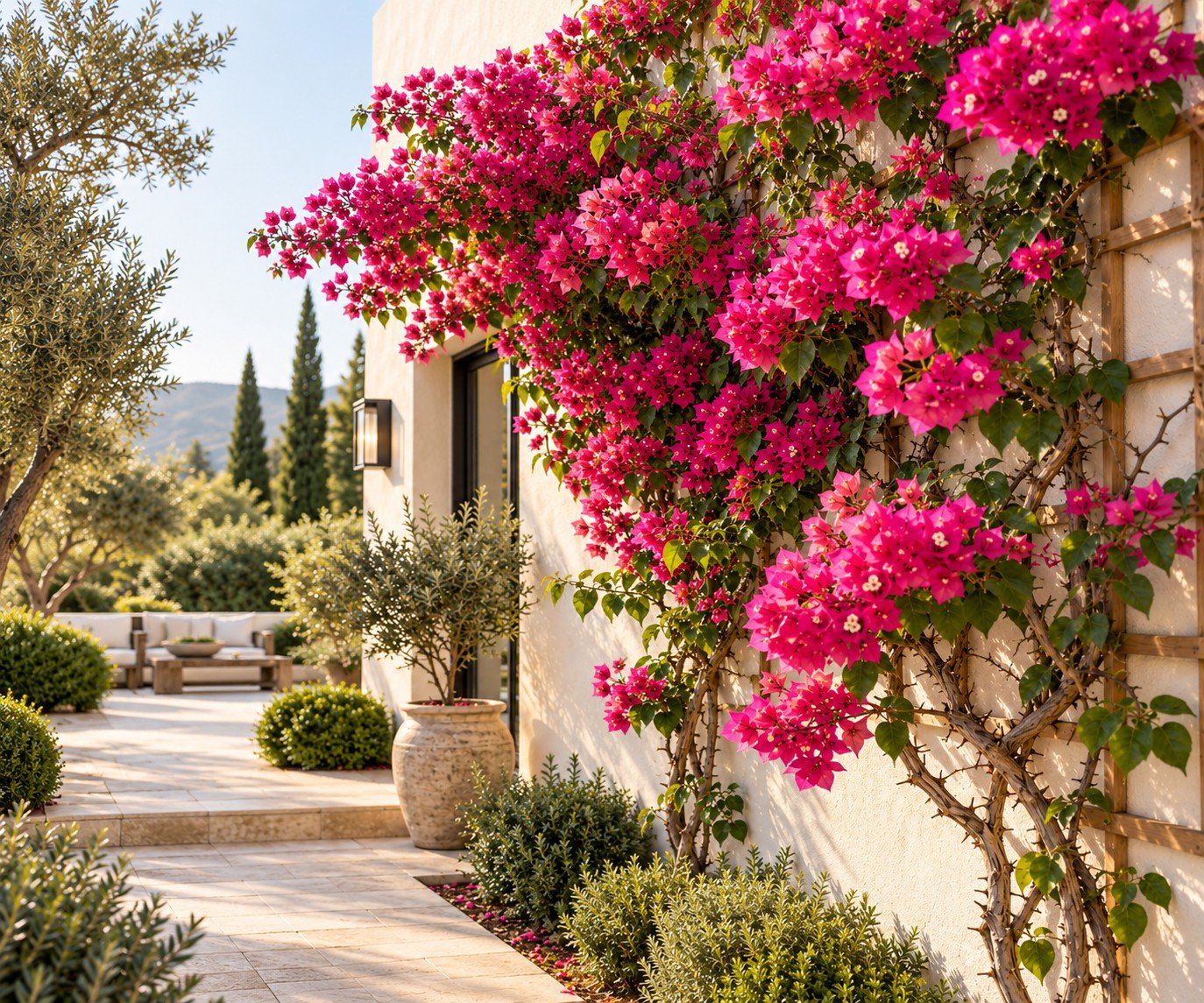
Bougainvillea needs a sunny place, soil that drains fast, and less water than many garden plants. Get those three things right, and it can cover a plain wall, soften a fence, or add strong color to a patio. Get them wrong, and you may end up with long green stems, few flowers, or weak roots. Those bright pink, purple, red, orange, or white parts are not true flowers. They are thin leaves called bracts. Tiny flowers sit in the middle. This detail does not change how you care for the plant, but it explains why its color lasts longer than a soft flower petal. Warm weather helps too. Frost can burn the leaves and young stems, so cold areas need a little more planning.
Find a Sunny Spot With Enough Room
Pick the site before you pick the plant. A bougainvillea needs at least six hours of direct sun each day. Morning or afternoon sun can work, as long as the plant receives at least six hours of direct light each day. Check the area at 9 a.m., noon, and late afternoon. A tall fence or nearby tree may cast more shade than you expect.
Look up as well as across. Large types can reach windows, gutters, lights, and outdoor wires. A compact type suits a pot or small courtyard. A large vine needs a broad wall, strong fence, or open pergola. Sharp thorns make placement just as important as sunlight. Keep the plant away from narrow paths, play areas, pools, and the space beside a parked car. A branch near the front door can catch a sleeve or scratch a visitor. One or two extra feet of clearance will make daily life easier.
Give the Stems Their Own Support
Bougainvillea does not stick to brick like ivy. Its stems lean, arch, and hook onto nearby objects. A young plant may look tidy beside a wall, then fall forward once the top gains weight. Put up a support before that happens. Strong wire, a metal trellis, or a sound timber frame can work. Leave a gap behind it for ties, paint repairs, and wall checks.
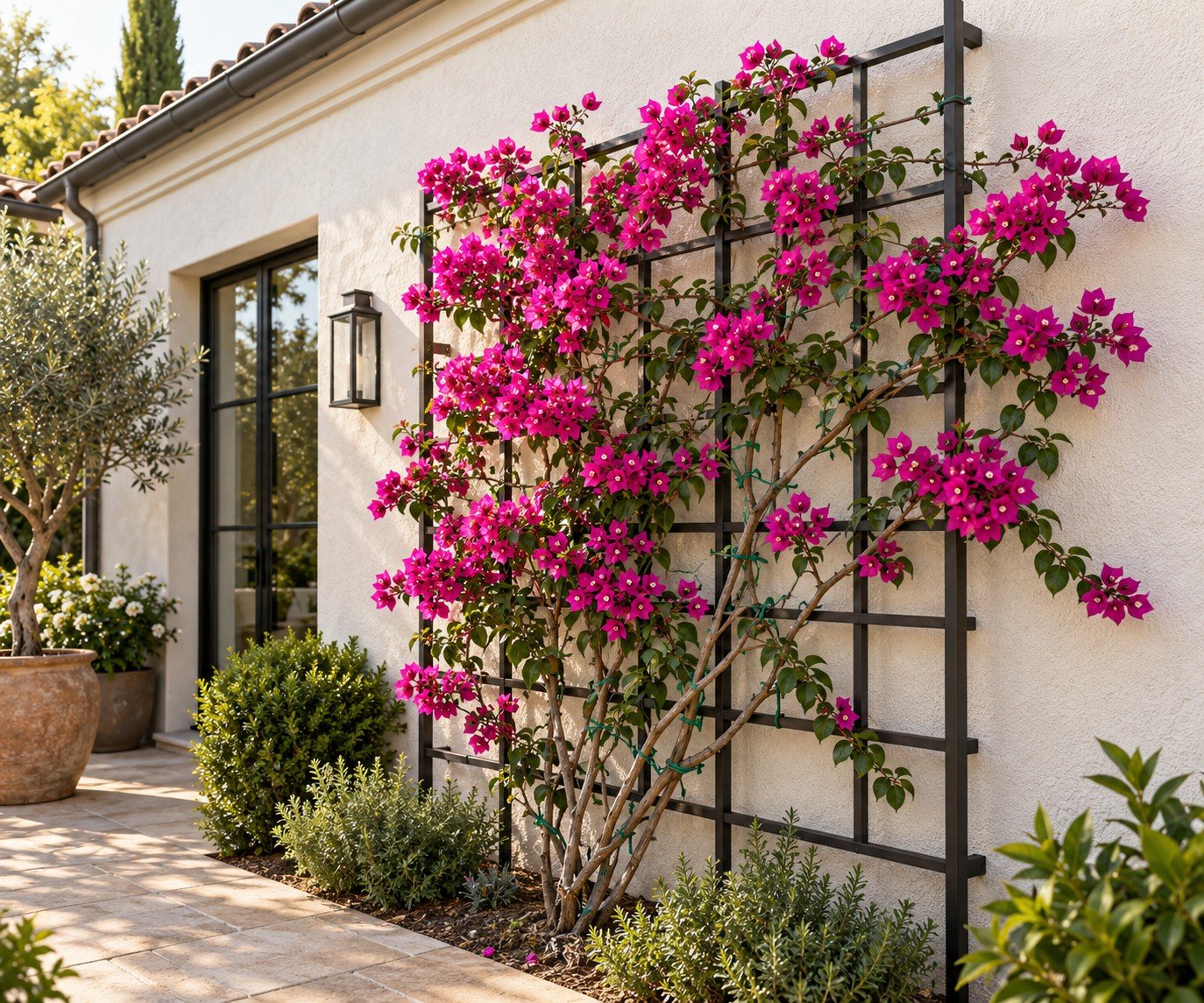
Loose ties are safer than thin wire around a live stem. Replace any tie that starts to bite into the bark. Do not let branches rest on a gutter or roof tile. Wet growth gets heavy after rain, and old woody stems can pull on weak fittings. Keep the main frame below the roofline. Trim stray shoots before they enter vents or pass behind pipes.
Plant Without Hurting the Roots
Good drainage matters more than rich soil. Water should pass through the root area instead of sitting there for days. If a hole stays full after rain, choose another site, raise the bed, or use a large pot. Heavy clay beside a downspout is a poor place, even if it gets full sun. Dig a hole as deep as the nursery pot and about twice as wide. Take the pot off with care. Bougainvillea has fine roots, and the root ball can break if you pull the stem or shake off all the soil. Set the plant at the same depth it had in the pot. Backfill with the soil from the hole, press it lightly, and give it a deep drink.
Keep mulch a few inches from the main stem. A thin layer can slow weeds and protect the soil from hard sun. A thick wet pile against the trunk does the opposite. It traps dampness at the base and can hide early signs of rot. Homeowners who want a simpler yard may also find useful ideas in this guide to garden care without wasted water. Its advice on routes, beds, and daily upkeep can help you choose a site that stays easy to reach.
Water It Deeply, Then Wait
New plants need steady care until the roots move into the nearby soil. Give the whole root ball a deep soak. Check it again after a few days rather than adding a small amount every morning. If the top inch or two feels dry, water again. Rain, heat, wind, and soil type will change the gap between each soak.
An established plant can cope with dry spells, but that does not mean it never needs water. Leaves that lose firmness during a hot afternoon may recover after sunset. Leaves that stay limp in the morning need attention. Check the soil before you reach for the hose because wet roots can also cause wilt. Pots dry faster than garden soil. A dark container in full sun needs close checks during summer. Water until a little drains from the bottom, then empty the saucer. A daily cup can leave the lower mix wet and the upper roots thirsty.
Get More Color and Fewer Leaves
A healthy plant with no color usually tells you something. Shade is the first suspect. Too much water comes next. Heavy lawn feed can also cause the problem because high nitrogen levels push soft green growth. Count the hours of direct sun before you buy a special fertilizer. Check whether a sprinkler hits the roots each night. Look at what you used on the lawn or nearby hedge. Those simple checks often reveal the cause.
Feed only during active growth and follow the dose on the label. Extra fertilizer will not force a weak plant to bloom. It may harm roots or make stems grow too fast. A plant in good soil may need very little help. A short dry gap can help an established plant move from leaf growth to a flush of bracts. Do not turn that idea into severe drought. Young plants and small pots can suffer fast in hot weather. Aim for soil that loses some moisture between deep drinks, not a root ball that turns hard and bone dry.
Prune at the Right Time
Light cuts keep the plant close to its support and make it easier to manage. Trim after a strong flush of color starts to fade. Remove dead wood, weak crossed stems, and shoots that point toward a path or roof. Do not cut every branch to the same length unless you want a formal hedge.
Long framework stems can stay on a wall plant. Short side shoots on that frame carry much of the new display. If you cut the whole frame back at once, the plant will need time to rebuild it. Work in stages when an old vine has become too large. Wear thick gloves, long sleeves, closed shoes, and eye protection. Cut long branches into short pieces as soon as they come down. A loose pile of thorny stems is hard to lift and easy to step on. Put the pieces straight into a firm yard-waste bin or follow your local collection rules.
Keep One in a Pot
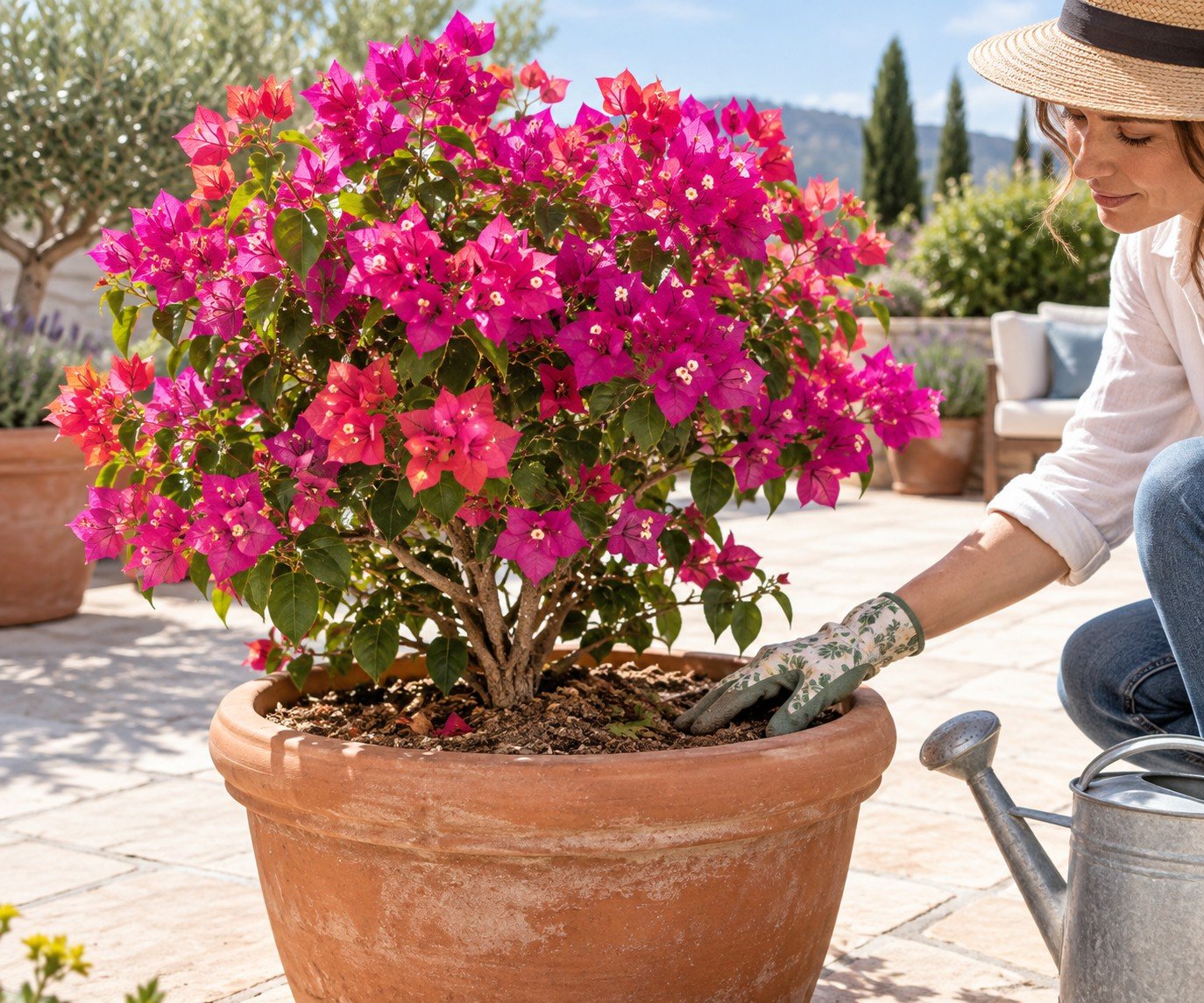
A pot gives you control over size and winter cover. It also suits renters and small patios. Choose a heavy container with open drain holes. Light plastic pots can tip once the top becomes wide, so place one inside a heavier outer pot if needed. Never block the drain hole with a flat stone.
Use an outdoor pot mix that drains well. Move up only one pot size when roots fill the current container. A huge pot may seem helpful, but all that unused mix can stay wet around a small root ball. The plant may also spend more time on roots and leaves before it puts on color. Cold nights call for action. Move the pot to a bright, frost-free place. Water less often because cool roots use less moisture. Return it outside in steps after frost risk ends. Strong midday sun can scorch leaves that formed indoors.
Deal With Common Problems
| Problem | Likely cause | What to do |
|---|---|---|
| Yellow leaves | Wet soil, cold, or root stress | Check drainage and reduce excess water |
| Few colorful bracts | Low light or excess nitrogen | Increase direct sun and reduce heavy feed |
| Sudden leaf drop | Cold or a sharp change in conditions | Protect from frost and allow time to recover |
| Limp leaves | Dry soil or damaged wet roots | Check the soil before adding water |
| Sticky or damaged leaves | Aphids, whiteflies, or mealybugs | Identify the pest and use a suitable treatment |
Yellow leaves do not point to one single cause. Wet soil is common, but cold weather, a recent move, root damage, or poor nutrition can look similar. Wet soil with a sour smell may point to poor drainage. If the plant continues to decline, inspect the roots for soft, dark areas. Dry soil with crisp leaf edges points in another direction. Leaf drop often follows a cold night or a big change in light. Give the plant time before you assume it is dead. Scratch a tiny part of a doubtful stem with a clean blade. Green tissue under the bark shows life. Wait until the risk of frost has passed before you make hard cuts.
Aphids, mealybugs, whiteflies, and spider mites can settle on weak growth. Check under leaves and around new tips. A firm spray of water may remove a light aphid problem. Use soap, oil, or another garden product only after you know which pest you have. Read the label, test a small area, and keep treatment away from hot midday sun unless the label says otherwise.
Plan It as Part of the Yard
One colorful vine can look better than three plants crowded into the wrong place. Think about the view from the kitchen, patio, street, and main gate. A plant on a west wall may shade hot masonry in summer, but you still need access for paint and repair. A pot near outdoor seats adds color without giving the stems control of the wall.
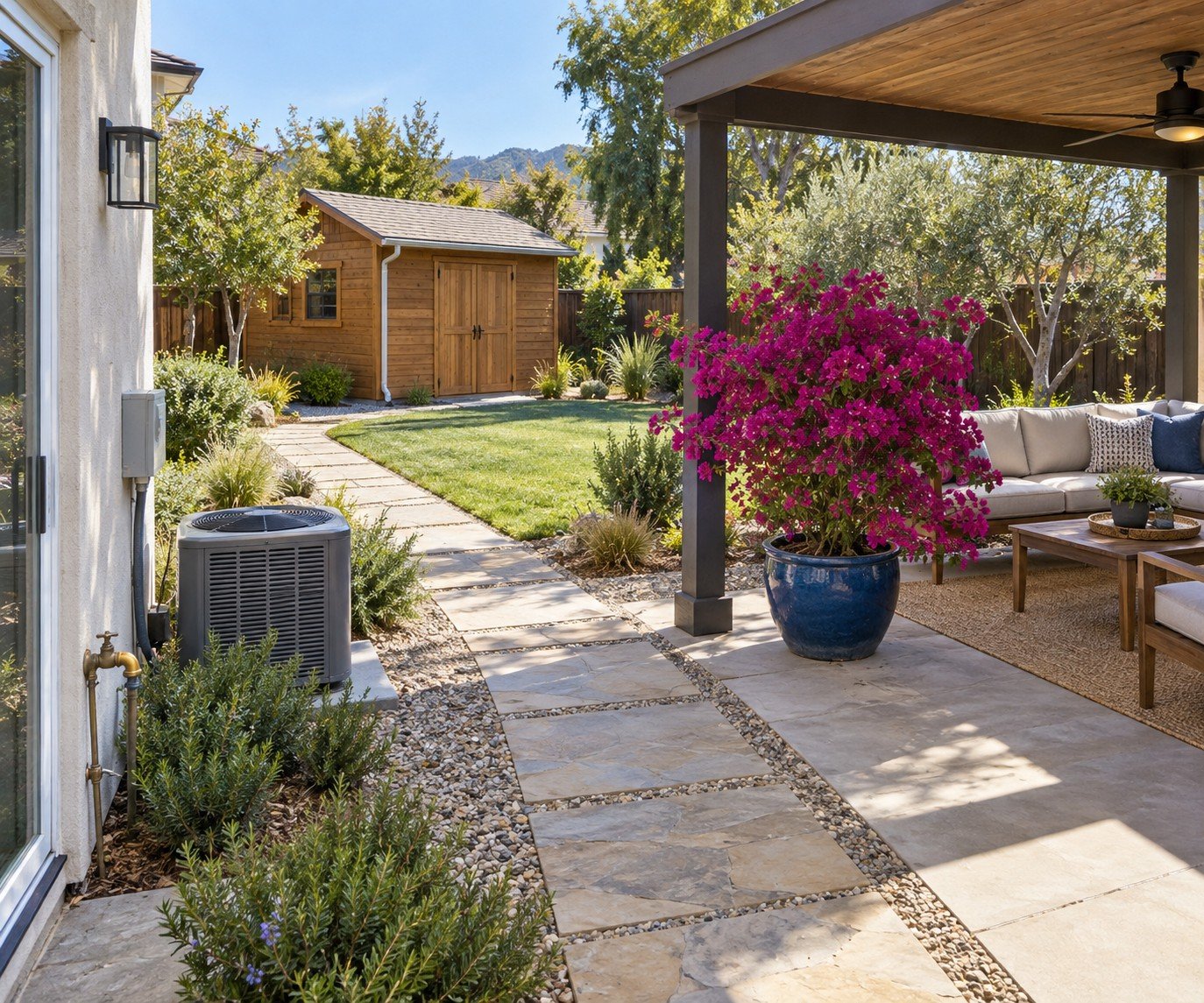
Garden structures can change the light and water around the site. A new shed may cast afternoon shade. Its roof may also send a large amount of rain toward one bed. If you plan to add storage later, read the two-storey garden shed planning guide before you fix a permanent trellis or plant a large vine nearby. Keep irrigation lines, electrical boxes, taps, and air-conditioning units clear. No one wants to fight through thorns to reach a shut-off valve. Mark the mature spread, support, path, and service zones on a rough plan before you plant.
Frequently Asked Questions
What is the downside of bougainvillea?
Bougainvillea has sharp thorns and needs regular pruning. Large plants can block windows, cover gutters, and make wall repairs difficult. It also dislikes frost and wet soil.
Will bougainvillea come back every year?
Yes, bougainvillea is a perennial in warm, frost-free climates. Hard frost may kill its upper growth or the whole plant, so gardeners in cold areas often keep it in a movable pot.
Is bougainvillea poisonous to dogs?
Bougainvillea is not considered highly poisonous to dogs, but its sap may irritate the skin and mouth. Its thorns can also cause cuts, and eating plant material may upset a dog’s stomach.
Do bougainvillea prefer sun or shade?
Bougainvillea prefers full sun and needs at least six hours of direct light each day. Shade may produce healthy green leaves, but the plant will usually have fewer colorful bracts.
Do bougainvillea attract rodents?
Bougainvillea does not directly attract rodents as a food source. Dense, untrimmed growth may still give rats or mice a sheltered place to hide, especially near pet food, rubbish, or fallen fruit.
What is the lifespan of bougainvillea?
A healthy bougainvillea can live for several decades in a warm climate. Its exact lifespan depends on frost, drainage, pruning, pests, and root care, so no single age applies to every plant.
Final Check Before Planting
Choose a spot with full sun, fast drainage, firm support, and safe space around it. Keep the roots away from downspouts and daily lawn water. Leave room to reach the wall, roof edge, and nearby services. Those choices matter far more than a costly fertilizer. Buy a variety that fits the site instead of trying to hold a huge vine in a tiny corner. Water with care, trim after a color flush, and watch the thorns. Bougainvillea can then add years of color without turning into a constant repair job.
Bougainvillea is not known as a highly toxic plant, but its sap may cause irritation and its thorns can injure a dog. Contact a veterinarian if a dog eats a large amount or develops vomiting, mouth irritation, or swelling.
Source note: The UC Master Gardeners guide also covers well-drained soil, containers, thorns, and the use of vines on walls, fences, trellises, and arbors.