
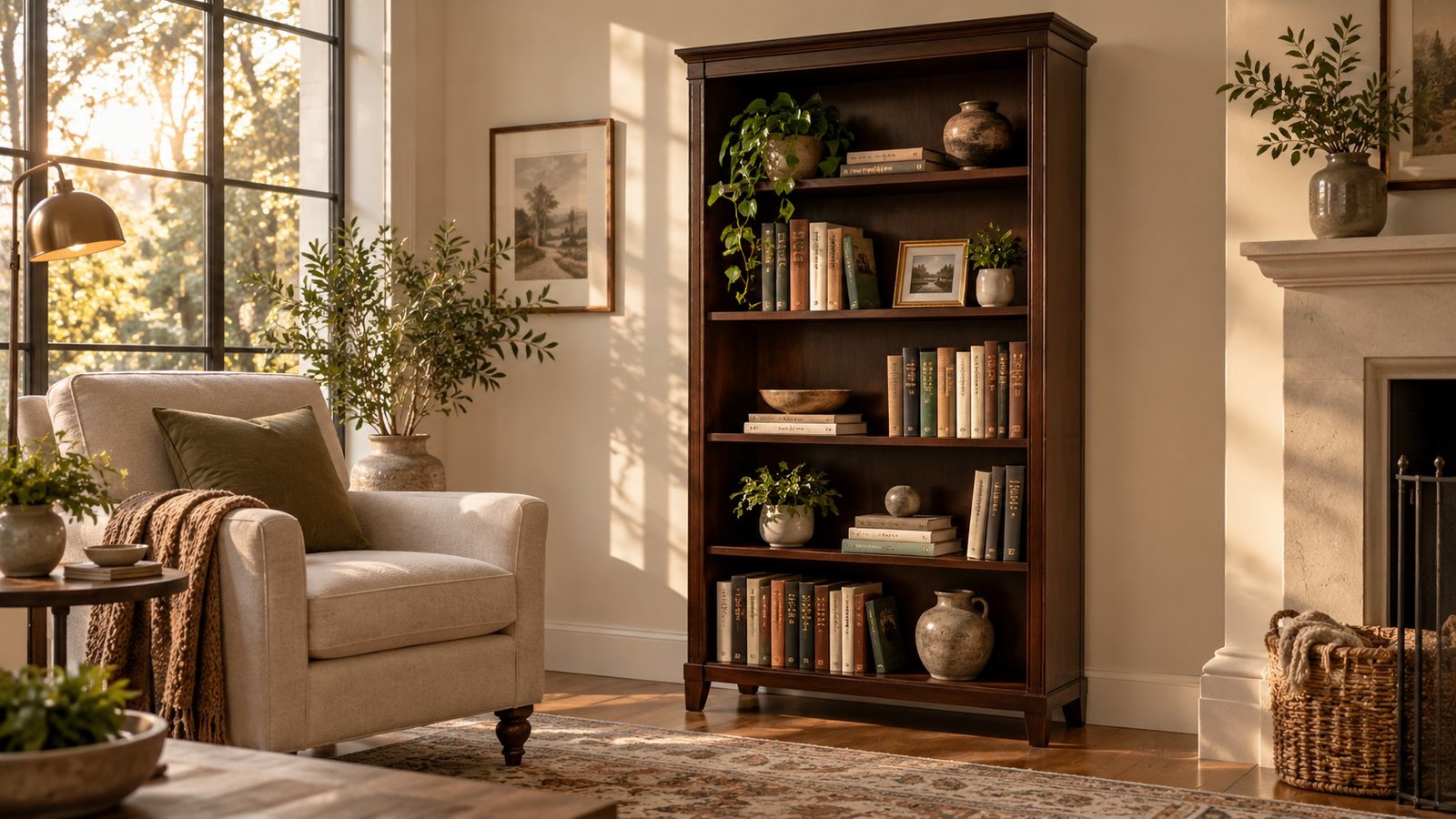
Beachcrest Home Sandstrom Standard Bookcase can suit a living room, bedroom, or home office that needs open storage for books and decorative objects. The first buying decision, though, concerns the product’s identity. Wayfair’s older guide names the Sandstrom, but the product number associated with that name, W004056643, now appears on a listing for the Highland Dunes Aspatria bookcase. Match the item number, selected size, and finish before you rely on an older description or place an order.
Room fit also depends on more than the width of an empty wall. Your books must fit inside the shelves, doors must open beside the unit, and the floor position must allow secure wall anchoring. A shallow bookcase can provide useful storage without a deep footprint, but oversized books, file boxes, and bulky baskets need a closer check. Treat the current listing as information about the version offered today, rather than proof that every bookcase previously sold under the Sandstrom name has identical specifications.
Confirm the Sandstrom Model Before Comparing Specifications
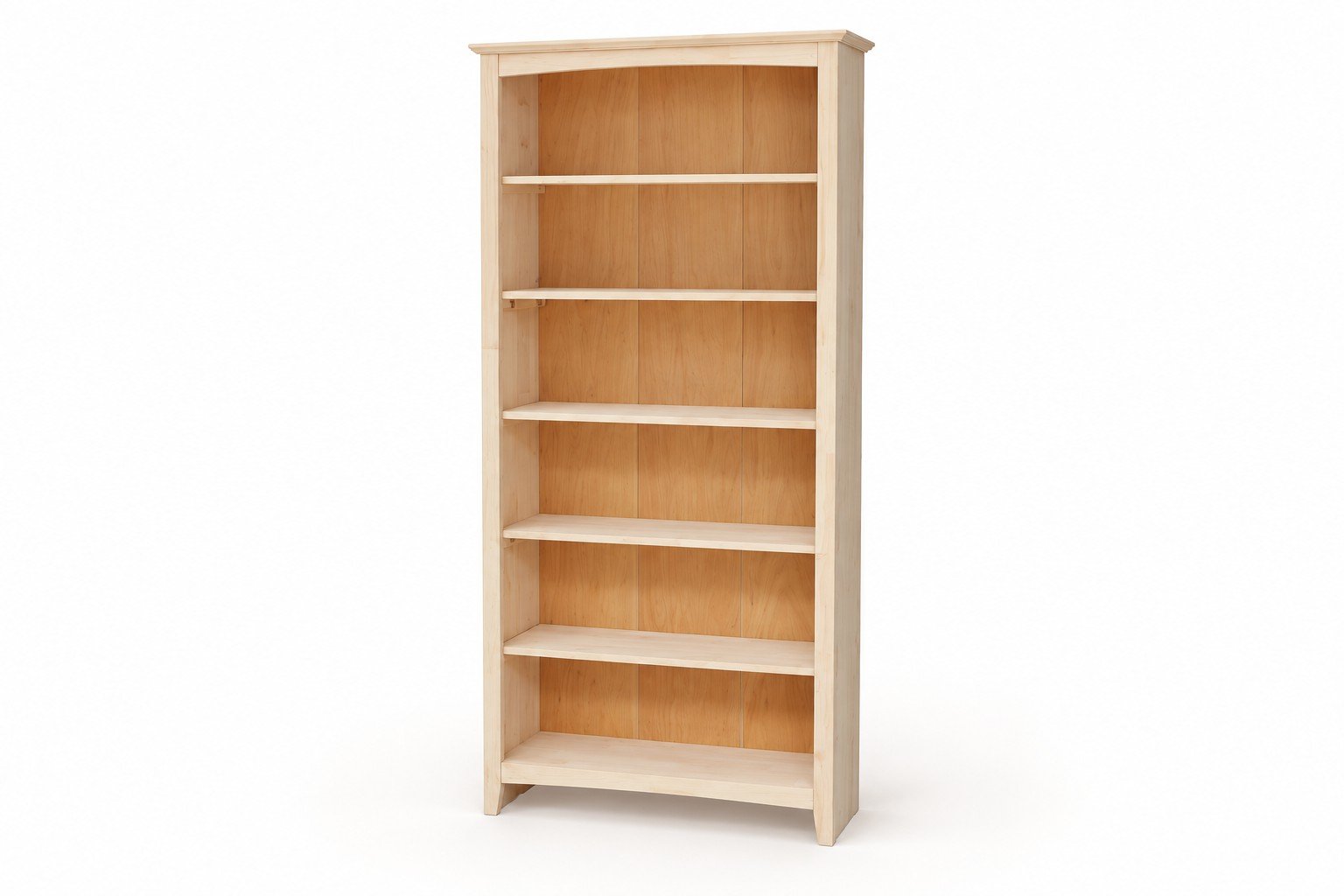
Wayfair’s historical Sandstrom description identifies a vertical bookcase with a closed back, solid wood shelves, adjustable and fixed shelves, tapered feet, and a profiled top. It also lists a tip-over restraint device. These details establish the general form of the older product, but they do not establish every dimension or construction detail of each version.
The current W004056643 listing uses a different product and brand name. That connection is useful when you search for the bookcase, yet a shared item number alone should not replace a comparison of the actual order options. Ask the seller to confirm that the assembly document applies to the selected height. Compare the photograph, shelf arrangement, finish name, and product number with your order confirmation. An old screenshot may show a different configuration from the one in your cart. “Standard bookcase” describes the furniture category. It does not mean that every version has a standard height, shelf opening, or load limit.
Beachcrest Home Sandstrom Standard Bookcase Dimensions Need a Version Check
The current W004056643 product listing offers the following size options under the Aspatria name. These are current listing dimensions, not independently verified measurements of every historical Sandstrom version.
| Current listed option | Overall height | Overall width | Overall depth |
|---|---|---|---|
| Three shelves | 36 inches | 32 inches | 12 inches |
| Four shelves | 48 inches | 32 inches | 12 inches |
| Five shelves | 60 inches | 32 inches | 12 inches |
| Six shelves | 72 inches | 32 inches | 12 inches |
A taller option offers more vertical storage, but it also places some objects farther from easy reach. Decide which books you use daily before you choose height. Reference books that you reach for throughout the day belong within comfortable reach, rather than on the highest available shelf.
Overall depth is not usable shelf depth. The frame, back panel, and front profile occupy part of the exterior measurement. A storage box that measures 12 inches deep should not be assumed to fit a bookcase with a 12-inch overall depth. Measure your largest intended objects first. Record the height and depth of tall books, binders, baskets, and framed photographs. Ask for the internal shelf dimensions of your selected version, including the range of adjustment and the position of fixed shelves.
Mark the footprint before you order
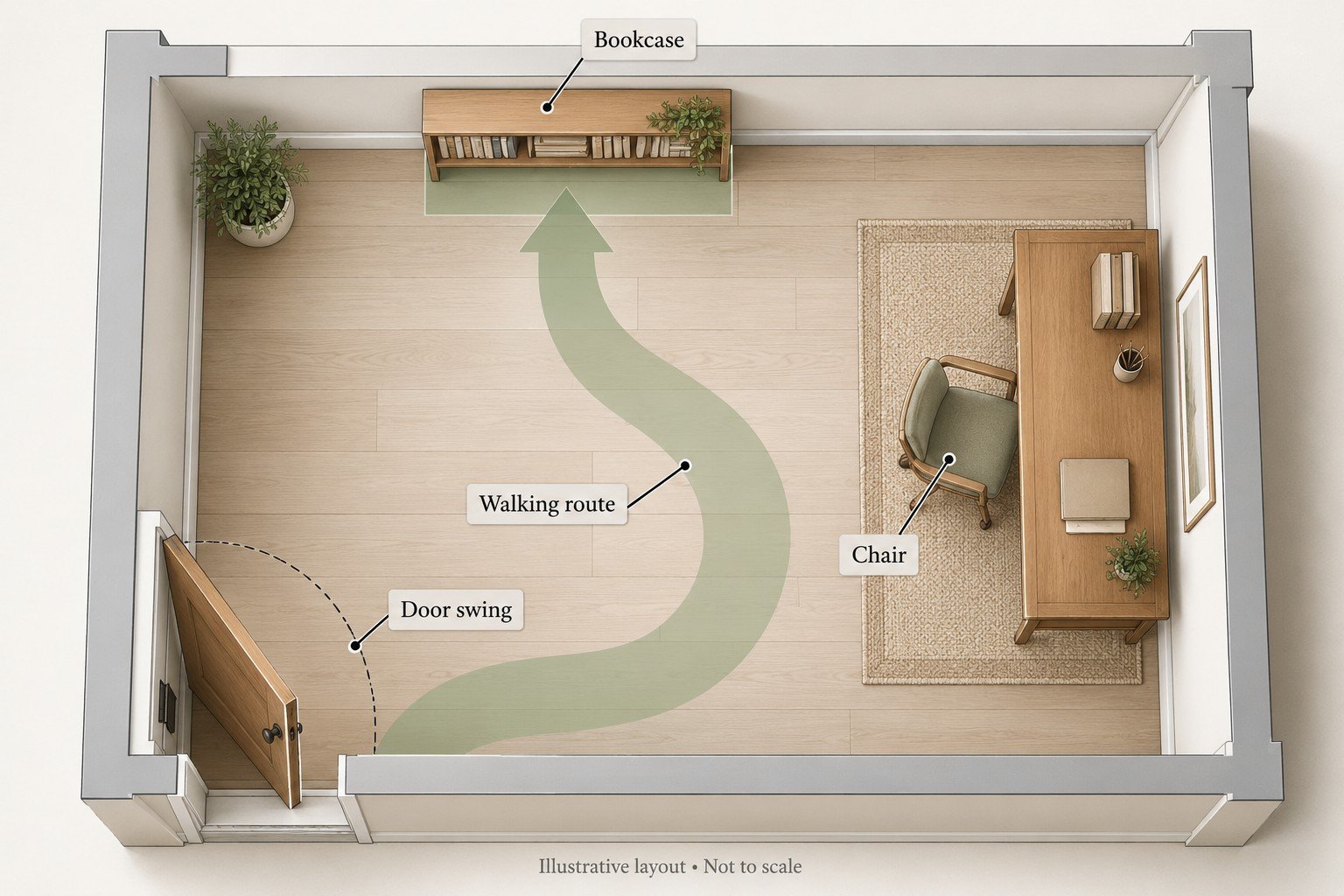
Use painter’s tape to mark the proposed width and depth on the floor. Place the tape where the front edge will actually sit after you account for the baseboard and any required wall gap. Walk past that outline with the room in normal use. Open the adjacent door, pull out the desk chair, and check access to nearby drawers. A bookcase can fit against a wall yet still obstruct the furniture beside it.
Consider this illustrative layout: a wall has 40 inches of clear width, and the proposed unit measures 32 inches across. That leaves 8 inches in total, or 4 inches on each side if centered. Those gaps may look balanced, but they do not establish adequate door clearance or access to an outlet. Check each obstruction separately.
Choose Shelf Space Around Your Books
A shelf count cannot tell you how much of your collection will fit. Book height, spine width, and shelf spacing all affect practical capacity. Group your collection into ordinary books, tall books, and items that need a wider opening. Measure each group along its combined spines. This gives you a useful estimate of the shelf length required without an unreliable promise that the unit holds a particular number of books.
Adjustable shelves help when your collection contains mixed sizes. Fixed shelves create boundaries that you cannot move. Avoid a plan that depends on every opening being adjustable unless the seller confirms that arrangement. Leave room to remove a book without scraping its top edge. A tightly packed shelf may hold the collection, but it can make everyday access awkward. Binders also need enough space for your hand to grip and lift them.
Weight matters before a shelf looks full
The current related listing states a shelf capacity of 40 pounds. Confirm that limit for the version you order and follow any load-distribution instructions in its matching manual. It is a shelf limit, not permission to place the combined capacity of several shelves on one level. Dense textbooks, art books, and document folders deserve a weight check. Weigh a representative group on a household scale, then estimate the planned shelf load. Include bookends, baskets, and decorative objects. Keep heavier items on lower shelves as a general storage practice. This does not replace wall anchoring or permit loads beyond the stated capacity. Remove weight if a shelf bows, a support shifts, or a joint loosens, then investigate the cause before you reload it.
Check Which Parts Are Solid Wood
The older Sandstrom guide specifically identifies solid wood shelves, but its broader construction wording is unclear. The current related listing describes a kiln-dried hardwood frame and solid wood shelves. Neither description should be expanded into an unsupported claim that every panel, including the back, is solid wood. Ask about components separately if material choice affects your purchase. The frame, shelves, and back panel serve different roles, and a general wood bookcase description may not answer all three questions.
Solid wood is a material description, not a complete durability assessment. Shelf span, thickness, supports, connections, and assembly also matter. Judge the stated load capacity and construction details alongside the material name. An indoor bookcase should serve an indoor storage task. Do not assume that a wood finish makes it suitable for a damp basement, bathroom, porch, or garage. Ask the seller about the intended environment if the proposed room has moisture problems.
Select a Finish That Works Beside Existing Furniture
The current related listing displays unfinished, espresso, washed gray taupe, and white options. Check which finish is available in the selected size rather than assuming every combination can be ordered. White can provide a lighter visual contrast beside dark furniture. Espresso creates a stronger dark outline against pale walls. Gray taupe needs a closer comparison with nearby flooring and upholstery because a finish name cannot show its exact undertone.
Matching every wood surface is not essential. A deliberate contrast can work better than a near match that looks accidental. Compare the bookcase with the furniture directly beside it, especially a desk, cabinet, or bed frame. Request a sample if available. Otherwise, examine customer photographs under different light and accept that a screen cannot guarantee an exact color match. The unfinished version needs its own budget and preparation plan. The current listing says it comes without stain or sealant and is intended for the buyer to finish. Follow the applicable finishing guidance, including preparation and drying instructions, before you assemble or load it.
Place It Where Storage Will Stay Convenient
Living room placement
Place the bookcase where you can reach its shelves without moving an armchair or side table. A corner may look suitable in a photograph yet prove inconvenient once the room contains seating, lamps, and everyday belongings. A closed-back unit is best assessed as a wall-positioned piece unless the seller confirms that the rear is finished for display. A room divider exposes the back and requires a suitable installation arrangement. Do not assume either feature from a front-view photograph. Plan the display around what you actually own. Books, photographs, and a few small objects can share the shelves, but decorative spacing reduces the area available for book storage.
Bedroom placement
Check dresser drawers, closet doors, and the route beside the bed. Include the full door swing, not just the opening width. A shorter bookcase may suit a wall where a tall unit would compete with artwork or a window. It still needs the appropriate restraint. Furniture height alone does not remove the need to assess tip-over risk. Avoid a location where objects can fall onto the pillow area. Keep frequently used books accessible so you do not need to stretch across the bed to reach them.
Home office placement
A home office needs a chair-clearance check. Pull the chair back as you would when you stand, then test the route past it. Measure folders and file boxes before you buy. Open shelving suits visible reference material, but loose paperwork may work better in a cabinet or file drawer. Baskets can hide smaller supplies only if their exterior dimensions fit the shelf opening. Choose a position that preserves access to outlets. Do not create a furniture arrangement that requires you to move a loaded bookcase whenever a plug needs attention.
Treat Wall Anchoring as Part of Installation
The U.S. Consumer Product Safety Commission’s Anchor It guidance recommends anchoring furniture with shelves to help prevent tip-over injuries. Plan that connection before you choose the final location. An included restraint does not mean that every supplied fastener suits every wall. The connection depends on the furniture attachment point, restraint instructions, and wall construction. Follow the matching installation document rather than a generic bracket tutorial.
Ask the seller for a readable manual before purchase if wall attachment affects your decision. The current listing provides an assembly-document link, but the exact fastening sequence and hardware could not be confirmed from an accessible manual. Do not guess the approved attachment points. Renters should address permission for wall fixing before ordering. If the necessary restraint cannot be installed, choose another storage arrangement with instructions that suit the permitted installation conditions. Heavy books on the lower shelves do not replace a restraint. A bookcase that feels steady during ordinary use can still face a different force if a child climbs or pulls on it.
Inspect the Parts Before Assembly
Set aside a clear work area and protect the floor. Compare the components with the parts list before you fasten anything. Identify damage, missing shelf supports, and mismatched panels early. The current related listing requires assembly, names a screwdriver as an additional tool, and advises against power tools. Follow the instructions supplied for your specific order. Do not force a connection when holes appear misaligned. Recheck panel orientation and part labels. Excess force may conceal an assembly error until later steps.
After assembly, check that the unit sits correctly and each adjustable shelf rests on all its supports. Install the restraint before you add the collection. If the unit rocks or appears uneven, diagnose the floor position and assembly rather than hoping the books will stabilize it. Keep the packaging until you have inspected the completed unit and understood the return conditions. Photograph damage and retain the order details if you need replacement parts or assistance.
Read Reviews for Specific Problems
Wayfair’s older Sandstrom guide includes buyer comments about assembly, appearance, stability, and a visible rear connector. These are historical customer observations, not DirectionsHomes test results. They are useful prompts for inspection, rather than proof that every unit will behave the same way. Read reviews that identify the height and finish you intend to order. A comment about one configuration may not describe another.
Look for repeated, clearly explained issues. Photographs of damaged corners, shelf supports, or rear details can help you form a precise question for the seller. Poor quality alone offers less useful information than a description of the failed component. Distinguish delivery damage from a construction concern. A broken part on arrival needs a remedy, but it does not establish that an undamaged unit cannot serve its intended use. Similarly, a favorable assembly comment does not guarantee that your delivery will contain every part.
Compare the Delivered Cost and Return Conditions
Compare the total in US dollars for your selected size, finish, and delivery address. Include tax, any delivery charge, assembly service, and necessary installation materials. An unfinished version also adds finishing supplies and work time. Do not use a price for a shorter configuration as the budget for a taller one. Save the selected options and order summary so the comparison remains clear.
The current related page lists a 30-day limited warranty and advertises a general 30-day return policy. Confirm the detailed terms for your purchase, including eligibility, return shipping, packaging, and the treatment of assembled furniture. A warranty and a return policy answer different problems. A discount percentage should not decide the purchase. Suitable shelf openings, a workable wall connection, and an acceptable delivered total matter more than the crossed-out price.
When Another Storage Type Makes More Sense
A different furniture format may solve the problem better if your collection exceeds the usable depth or needs enclosed storage.
| Your main need | Alternative worth comparing | Detail to verify |
|---|---|---|
| Oversized books or large boxes | Deeper bookcase | Internal depth and shelf capacity |
| Paperwork and small supplies | Storage cabinet | Interior openings and door clearance |
| Numerous heavy volumes | Shelving designed for the load | Rated capacity and support arrangement |
| Low, accessible book storage | Short bookcase | Shelf openings and restraint instructions |
| Display visible from two sides | Unit intended for divider use | Rear finish and approved installation |
Compare exact measurements and instructions, not just photographs. An open-back unit may look lighter in the room, but it does not automatically offer greater capacity. A cabinet hides clutter, yet its doors need space to open.
Make the Order Match the Room
Before checkout, record five details: the product number, selected dimensions, usable shelf openings, load limit, and approved restraint method. Match those details to the objects you plan to store and the wall where the unit will stand. Sandstrom’s older description suggests a conventional open bookcase for books and display. The current related listing provides useful comparison information, but the name change makes version checks essential. Buy only when the actual order offers the space, installation conditions, and return terms your home needs.
Also Read: MintPalDecor Ideas to Make Your Home Look and Work Better