

MintPalDecor can help you find ideas for paint, storage, furniture, lighting, and room layout. Still, the best home update often starts with a problem you already notice each day. A dark kitchen needs useful task lights. A crowded entrance needs a clear place for shoes, bags, and coats. A damp patch needs a proper repair before fresh paint covers it. Find the cause, measure the area, set a firm budget, and choose the smallest change that can solve the problem without creating another one.
A full room makeover may look exciting in a photo, but it can cost more than expected and leave the main problem untouched. Most rooms do not need all-new furniture or the latest decor trend. They may only need a better layout, stronger shelves, brighter work areas, or repairs to worn surfaces. Use MintPalDecor to collect ideas and compare possible styles, then check each one against the size, condition, and daily use of your own home. An idea deserves a place in the room only when it fits the space, supports your routine, and stays within the amount you planned to spend.
What MintPalDecor Can Help You Find
MintPalDecor is a home and decor website. It covers paint, furniture, room style, storage, repairs, and outdoor projects. You may visit it when you need a color idea or want to see how another person might arrange a small room. Its advice has limits. A photo cannot show the pipes behind your bathroom wall. A general article does not know that your bedroom door opens against the wardrobe. Online ideas work well at the start of a project, but measurements and the condition of your home must guide the final choice.
Save two or three ideas that fit the problem you want to solve. Then put the phone down and inspect the room. Open every door and drawer. Check where people walk. Look at the room in daylight and again after sunset. Ten quiet minutes in the space can reveal more than an hour of browsing.
Begin With One Annoying Problem
Pick a normal weekday and notice where the house makes life harder. Perhaps school bags land on the dining chairs each afternoon. Maybe the pantry door hides half the shelves when it opens. A lamp may sit behind the sofa because no socket exists near the reading chair. These small faults point to useful projects.
Write the problem in plain words. We need somewhere for five pairs of daily shoes is better than the hall needs an update. Now you can measure the available wall and search for a slim shoe cabinet, a low bench, or hooks. A clear problem also protects you from impulse buys. Safety comes first. Deal with a loose handrail, a leaking pipe, burnt socket marks, soft floorboards, or a strong damp smell before decor. A pretty finish will not stop damage beneath it. Call a suitable trade professional if the repair sits outside your skill.
Check the Space Before You Buy
A small error with a tape measure can turn a good purchase into an expensive problem. A sofa may fit along the wall but leave too little room near the door. A tall cabinet can hide a light switch, cover a socket, or stop a window from opening fully. Shelves may look slim in a product photo yet project too far above a desk or bed. Measure the full width, height, and depth of the space before you order anything. Check the route from the entrance to the room as well. A large item might suit the final spot but fail to pass through a narrow hallway, staircase, or doorway.
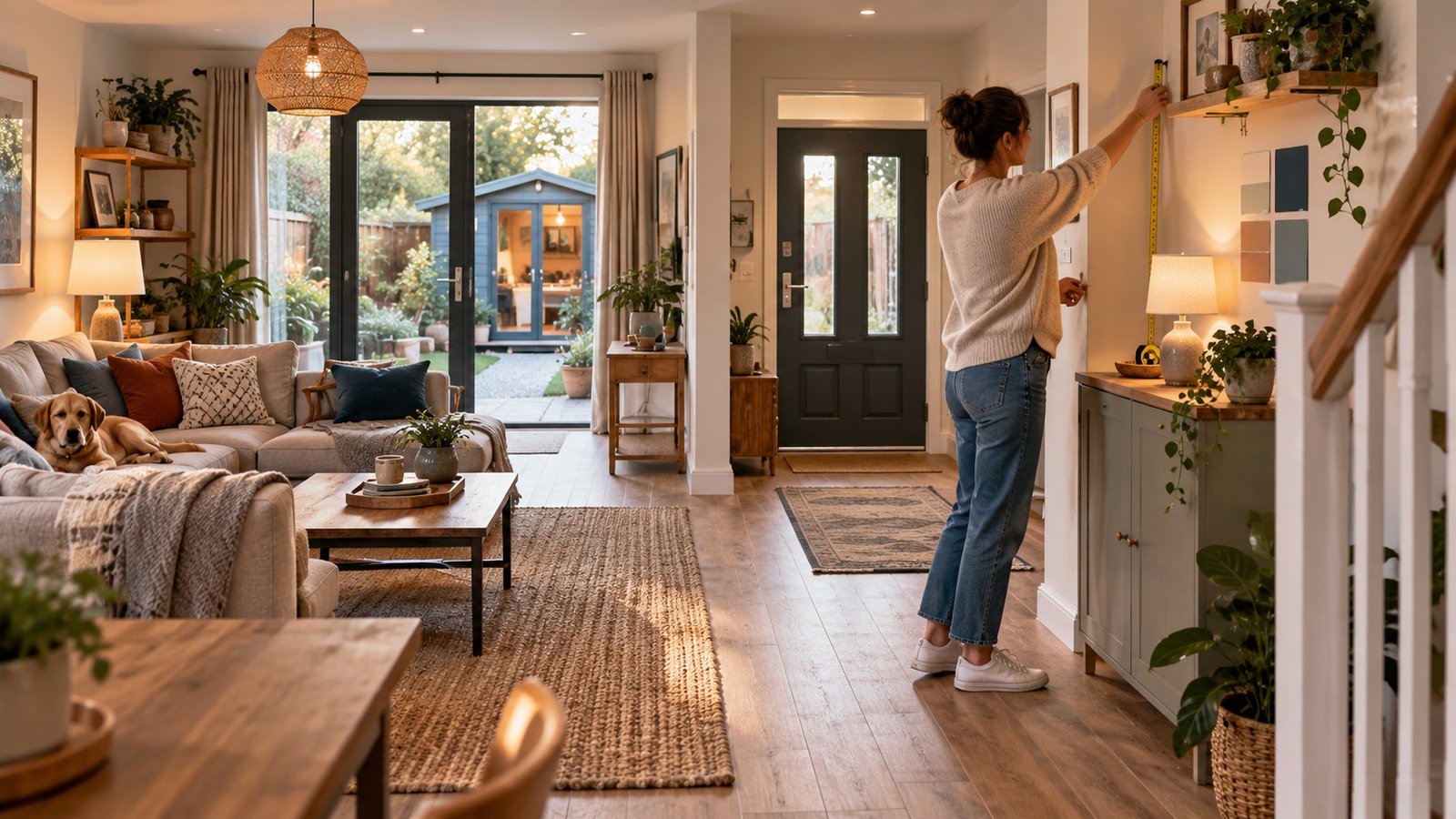
Mark the item’s exact size on the floor or wall with painter’s tape. Include door swings, handles, skirting boards, vents, sockets, and window sills in your check. Leave the outline in place for a day and use the room as normal. Walk around it, pull out nearby drawers, and open every door. Keep these measurements on your phone when you visit a store or compare products online. Words such as compact, space-saving, and ideal for small rooms do not give you a reliable size. Exact numbers do. A few careful checks can save you from return fees, wall damage, and furniture that makes the room harder to use.
Spend on the Room, Not the Trend
Set a top figure for the whole job. Include delivery, tools, fixings, labor, and waste removal. A $120 shelf does not cost $120 if it needs delivery, special anchors, paint repair, and paid assembly. Leave part of the budget untouched. Ten percent may cover a surprise on a basic decor job. Old homes may need more. Paint can reveal loose plaster. New flooring can expose a damaged subfloor. Keep that spare money until the job is done.
Use this order when the budget feels tight:
- Stop leaks, electrical faults, loose parts, and damp.
- Improve daily use with light, storage, or a better layout.
- Repair worn surfaces.
- Add color and decor once the room works well.
That order does not ban fun purchases. It makes sure a new rug does not take the money needed to fix the window above it.
Move What You Own Before You Buy More
Furniture placement can change a room at no cost. Pull every small item out first. Leave the sofa, bed, table, and main storage pieces. The room becomes easier to read once lamps, baskets, stools, and decor no longer distract you. Clear a path from the door to the main seat or work area. Do not make someone turn sideways around a coffee table. Keep radiators and vents open. A desk often feels better beside a window, but glare on a screen can make the exact spot a poor choice.
Try one new layout for two or three days. Daily use will show what a floor plan cannot. You may find that a chair blocks the vacuum route or the new table position makes dinner easier. Buy a missing item only after the room settles. Small homes benefit from pieces with a clear second use. A bench can hold shoes. A bed can include drawers. An ottoman can store spare blankets. Avoid furniture with clever features that your family will never use. Simple often wins.
Let Paint Solve a Clear Visual Problem
Paint helps when a wall looks tired, patched, or too dark for the room. It cannot repair active damp, deep cracks, or loose plaster. Find the cause of marks before you cover them. Test the color on a large card or a small section of wall. Check it near the floor, curtains, and main furniture. Morning sun can make a shade look cool. A warm lamp may change it again at night. One small store sample rarely tells the full story. You do not always need to paint all four walls. A worn hallway may only need a clean and a fresh lower section. Kitchen cabinets can gain a new look from paint and handles if the doors remain sound. Good surface prep takes time, but it prevents rough patches and early peeling.
Fix Dark Corners With the Right Light
One bright ceiling bulb can leave a room harsh at the center and dull at the edges. Add light where a task happens. A lamp beside a chair helps with reading. Light under a wall cabinet makes food prep easier. A small lamp near the entrance helps when someone comes home after dark. Match the fitting to the job. A shaded lamp creates a soft pool of light. A wide ceiling shade spreads general light. A focused desk lamp keeps light on the work surface. Check the bulb type and fixture rating before purchase. Electrical work deserves care. Replacing a plug-in lamp is simple. New wiring, switches, or ceiling points may require a qualified electrician. Local rules differ, so confirm them before work starts.
Put Storage Where the Mess Starts
Storage fails when it sits far from the habit that creates the clutter. Mail piles up near the entrance, so a tray in the home office will not help. Towels land on a chair because the bathroom lacks a hook. Watch where items collect, then place storage there. Sort first. Throw away broken items and move rarely used goods out of prime space. Measure what remains. Buy boxes or baskets only after you know the shelf size and the objects they must hold. Open shelves suit mugs, books, and items used each day. Closed cabinets hide spare supplies and visual clutter. Heavy goods belong low. Tall units need secure wall fixings when there is a risk of tipping, especially in homes with children.
Carry the Same Care Into the Yard
A garden project can affect the house long after the first weekend. Check where water goes after rain. New paving, a raised bed, or a shed base may push water toward the foundation if the slope is wrong. Leave a service gap beside fences and exterior walls. Paint, gutters, pipes, and siding will need access later. Plants also grow beyond the size shown on the nursery label. Keep large roots away from drains and foundations.
Sheds need a level base, roof drainage, and a clear door path. A second floor adds weight and makes stairs, headroom, and floor strength more serious. Read the two-storey garden shed planning guide before you choose the size or location. A combined greenhouse and storage shed needs separate wet and dry areas. Plants need water and warm air. Tools and timber need protection from damp. The garden shed and greenhouse layout guide explains how light, vents, drainage, and storage can share one structure.
Call a Professional Before the Job Turns Risky
Painting a sound wall or assembling a small cabinet may suit a careful homeowner. Structural walls, gas lines, roof repairs, electrical circuits, and major plumbing changes carry a different level of risk. Guesswork can hurt someone and damage the property. Ask a contractor for a written quote.
It should name the work, materials, labor cost, payment stages, and cleanup plan. Check a license where local law requires one. Insurance and recent references also matter. A low price means little if the work must be done twice. Take photos before pipes, wires, or framing disappear behind a wall. Keep receipts, product names, paint codes, permits, and warranty papers together. You will be glad to have them when the next repair comes up.
Common Questions
Is MintPalDecor a contractor?
MintPalDecor presents itself as a home decor and improvement website. Its public pages mainly contain articles and ideas. Check credentials, service details, and local registration before you treat any website as a contractor or design firm.
Can I copy a room I see online?
Use the room as a reference, not a plan. Your doors, windows, ceiling height, climate, and budget will differ. Copy the useful part, such as the color mix or shelf idea, and adjust it to your measurements.
What is the cheapest useful home update?
Start with a deep clean and a furniture move. Repair loose handles, replace failed bulbs, and remove items that block the room. These jobs cost little and show whether you need a larger change.
Which project should come first?
Fix anything that can cause injury or further damage. Leaks, faulty sockets, loose rails, rotten timber, and damp come before new decor. Next, improve light, storage, and room flow.
Conclusion
MintPalDecor can provide a useful starting point when a room feels dated, crowded, or hard to use. An online idea may help you choose a color, adjust the layout, or find a better storage option. Still, no website can measure your walls, inspect hidden damage, or understand how your family uses the room each day. A design that looks good in a photo may block a doorway, reduce useful space, or cost more than expected once labor and materials enter the budget.
Focus on one clear problem at a time. Take accurate measurements, set a realistic spending limit, and deal with repairs before you add decor. Check safety, comfort, and daily use before you follow a trend. Small changes often work best when they have a clear purpose. A secure shelf, brighter work area, drywall, or better furniture position may not draw much attention, but it can make the home easier to use every day.