
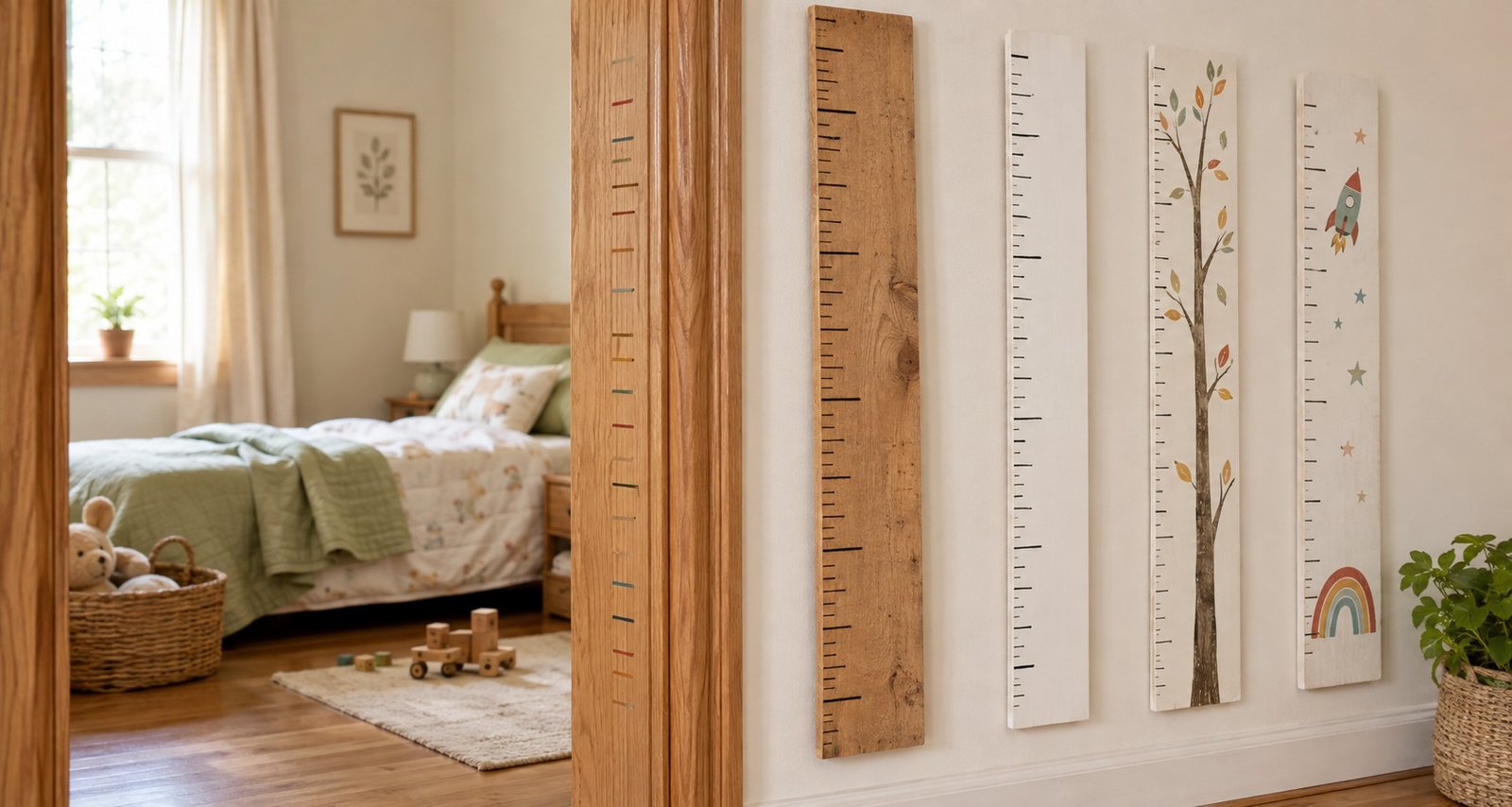
Door jamb growth chart ideas include pencil marks on the frame, wooden ruler boards, removable wall decals, canvas charts, and personalized height trackers. Direct marks work well in a permanent family home. A portable wooden or fabric chart suits renters and families who may move. Each option gives parents a simple way to record a child’s name, date, and height in one clear place. Designs can range from a plain measurement scale to colorful themes with trees, animals, rainbows, or space art.
A growth chart can also preserve meaningful childhood memories. Each new line shows how much a child has changed since the last measurement. Birthday dates, school milestones, or short notes can make every mark feel personal. Parents should choose a chart that is easy to read, safe to use, and simple to update. Accurate marks need a straight surface and a firm, level floor. A thoughtful design can turn an ordinary door frame into a family keepsake that may remain special long after the children grow up.
A Small Record With Lasting Value
A door jamb provides a simple place to track a child’s height because its edge is straight and easy to reach. Children can stand beside it with their feet flat on the floor as a parent places a small mark above the head. Each new line shows clear progress and can turn a quick height check into a special family moment. Brothers and sisters may enjoy comparing their marks, and parents receive a lasting record that can bring back warm memories years later.
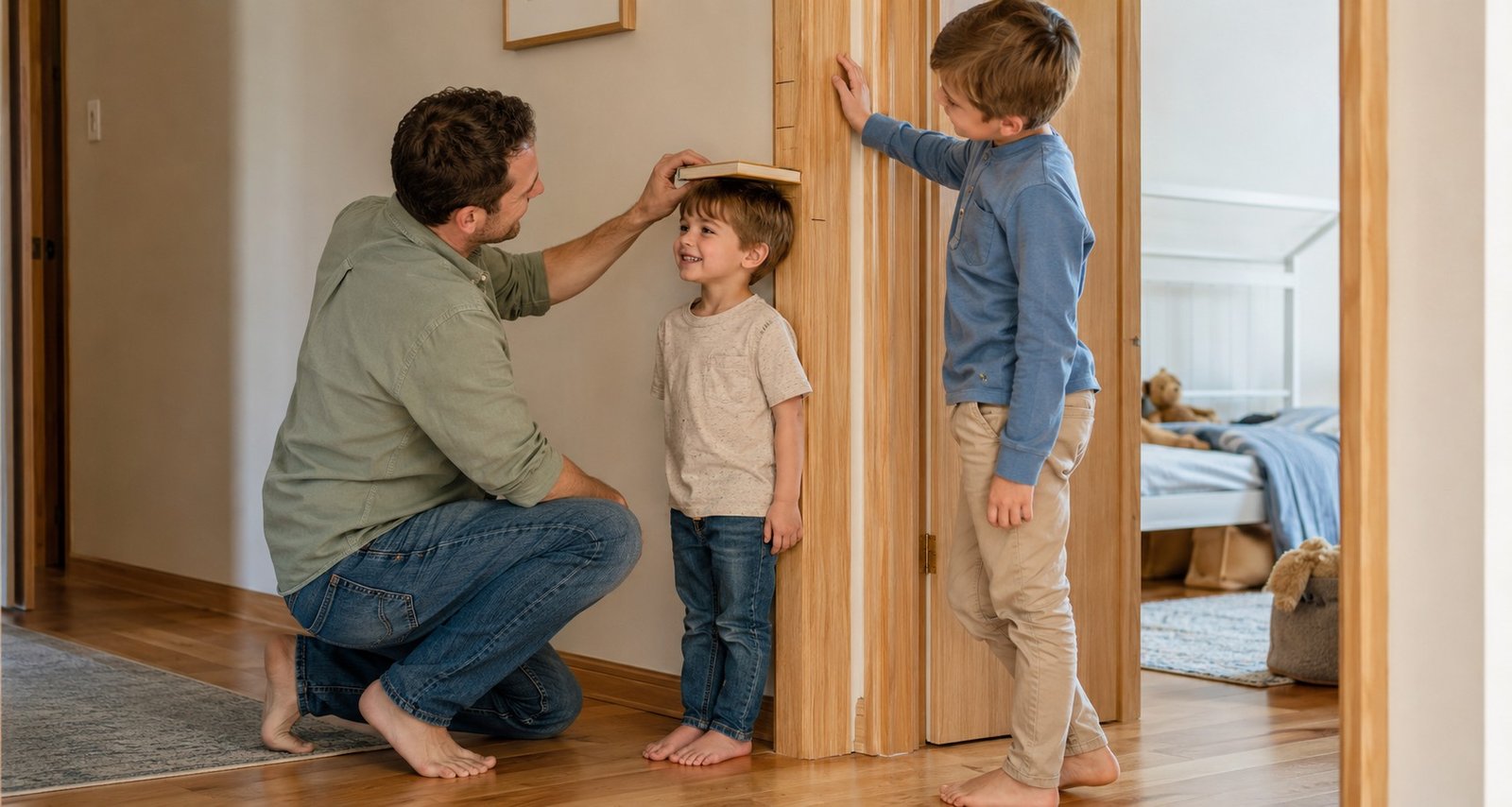
Growth charts can also add a personal touch to the home. A smooth wooden ruler may suit a modern room, while a colorful chart can brighten a child’s space. Names, dates, and short handwritten notes make each entry feel unique. Small flaws do not ruin the result. They often add charm because every line reflects a real moment from the child’s early years.
Choose a Style That Suits Your Space
Direct marks on a door frame offer the simplest choice for homeowners who plan to stay in one place. Use a pencil or fine permanent marker, then add the child’s name and date beside each line. Keep enough space between details so the record remains clear over time. A wooden ruler chart offers greater flexibility because you can hang it beside a door and take it with you after a move. Paint or stain the board to match the room, or leave the wood natural for a classic look.
Fabric charts, canvas rolls, and removable decals suit renters and families with limited wall space. These options often cost less than a custom wooden board and need little room. A canvas chart can roll up for easy storage and later become part of a family memory box. Removable decals work well for short-term use, but test the adhesive first to make sure it will not peel the paint or leave marks.
| Chart style | Best suited to | Main benefit | Point to consider |
|---|---|---|---|
| Marks on the jamb | Long-term homeowners | Simple and personal | Cannot move easily |
| Wooden ruler board | Families who may relocate | Strong and portable | Needs secure wall hooks |
| Canvas chart | Small rooms | Light and easy to store | Can shift during use |
| Removable decal | Renters | Low cost and simple setup | Adhesive may lose strength |
| Magnetic chart | Metal surfaces | Easy to change | Needs a suitable surface |
Easy Door Jamb Designs to Try
A classic pencil-mark chart needs no special skill or costly supplies. Draw a short line for each measurement, then add the child’s name, date, and exact height. Use a different pencil color for each child to keep the marks easy to identify. Clear tape or a thin protective finish may help preserve the record, but test the product on a hidden part of the frame first.
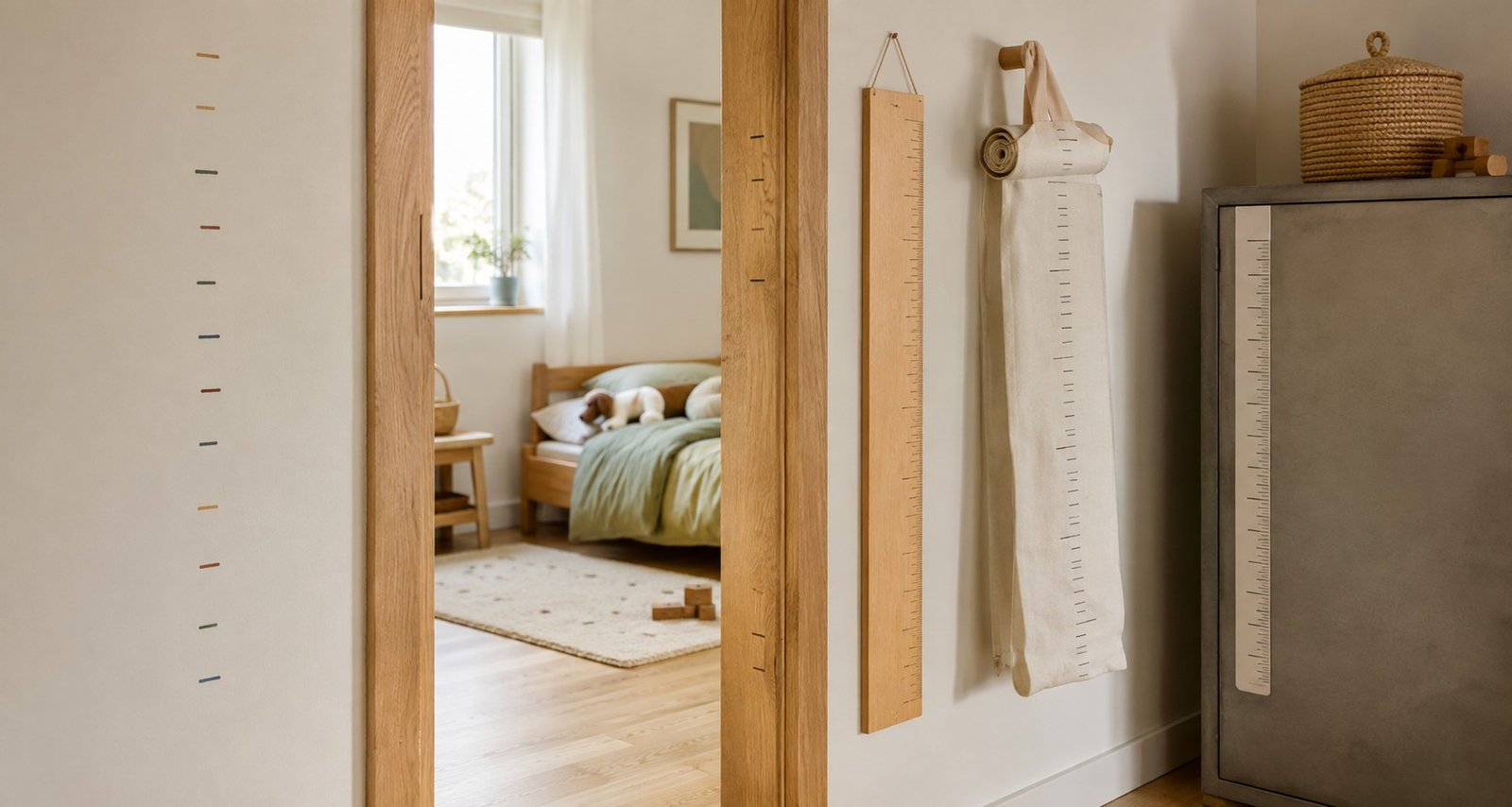
A wooden ruler can create a stronger feature in the room. Use a smooth board that is at least six feet tall, then add clear inch or centimetre marks with a ruler and fine pen. Paint the numbers in a color that suits the space, and add a family name near the top for a personal touch. Trees, rockets, animals, mountains, flowers, or building blocks can add color, but keep the measurement lines clear and easy to read.
Popular ideas include:
- A rustic wooden ruler with dark number marks
- A simple white board with black lines
- A tree with leaves for each height record
- A space chart with a rocket beside each date
- A rainbow chart with one color for each child
- A photo chart with a small picture from each year
Keep the main scale clear even if you add a theme. Large art, stickers, or long notes can cover useful measurement lines. A simple design often lasts longer because it still suits the child’s room as tastes change.
Add Personal Details Without Clutter
Add a name and date beside each height mark so the record remains easy to understand. Initials can save space when several children share one chart. A separate color for each child can also prevent confusion, especially if you place a small color key near the bottom. Short notes such as turned five, first school year, or lost first tooth can preserve special moments without making the design feel crowded.
Take a photo beside the chart on each birthday or at the start of a new school year. Print small copies for a family memory book or store them in a digital album with the measurement date. These pictures will show changes in posture, clothing, and personality as well as height. Keep longer stories in a journal so the chart stays neat and easy to read.
Can You Save Marks From an Old Home?
Clear photographs offer the safest way to preserve door-jamb marks before a move. Place a ruler beside the record for scale, take close photos of each section, and capture one full image from the floor to the highest line. Use bright, even light so every name, date, and measurement remains clear. Save copies in more than one place to protect the record.
Tracing paper can help when pencil lines appear too faint in photos. Place the paper gently over the frame and copy each mark, name, and date. Add the exact distance from the floor beside every line so you can recreate the chart later. Roll the finished sheet instead of folding it, since deep creases may cover small details.
A carpenter may be able to remove the marked section of trim, but this option can cause damage and requires the property owner’s approval. Homeowners should ask a skilled professional whether safe removal is possible. Copying the original marks onto a portable wooden board is often easier. Add a short note with the old address or year to preserve the story behind the chart.
Conclusion
A door jamb growth chart can turn a simple part of the home into a lasting family record. Direct pencil marks suit a long-term home, while wooden boards, canvas charts, and removable decals work well for renters or families who may move. No costly materials are required. Clear dates, accurate measurements, and neat details can preserve years of childhood growth in one small space.
Choose a design that fits your room and feels personal to your family. Record each height on birthdays, school dates, or other meaningful occasions, and take a photo to support the memory. Those small lines may seem ordinary today, but they can become one of the most treasured records in your home years later.
Frequently Asked Questions
What age is best to start a growth chart?
Start once your child can stand straight without help. Baby length records can be added later from medical notes. An early start creates a fuller record of childhood growth.
Should a growth chart use inches or centimetres?
Use the unit your family understands best. A chart can show both inches and centimetres for easy reference. Keep each number clear so the scale remains simple to read.
Does a portable growth chart need to touch the floor?
A portable chart can start several inches above the floor. Record the exact gap before you place the first mark. Use the same distance each time to keep results accurate.
How tall should a wooden growth chart be?
Choose a board that records heights up to at least six feet. Check where the printed or painted scale begins before installation. Select a taller range if adults also plan to use the chart.
What can fix an incorrect height mark?
Erase a light pencil mark and measure the child again. Label a permanent mistake clearly instead of adding a confusing line. Test any cleaner or paint on a hidden area before use.
Related Directions Home:




Pingback: Grow a Healthier Garden Without Wasting Time or Water