Inventive lwmfcrafts is all about making something useful or fun from materials you already have at home. An empty cereal box can become a pencil holder. Old fabric can turn into a colorful wall decoration. Even a few sheets of paper are enough to make a handmade gift. These simple craft ideas give kids and adults a chance to be creative without spending much money.
The idea behind LWMFCrafts connects with the family craft content associated with LookWhatMomFound. It focuses on easy DIY projects, playful activities, and handmade items that suit different ages. You do not need a craft room, expensive kits, or special art skills to take part. A kitchen table and a few basic supplies are usually enough. The best part is that you can change each project to match your own ideas instead of following every detail of an example.
What Is Inventive lwmfcrafts?
Inventive lwmfcrafts refers to simple, creative projects that use familiar materials in new ways. The name appears in online craft content linked to the Look What Mom Found theme. The LWMFCrafts website describes its focus on handmade art, family projects, and DIY ideas. It is a broad craft concept, not a special technique that requires formal lessons. Think about a cardboard box after you unpack a delivery. You could put it in the trash, or you could turn it into a small house, a desk organizer, or a toy garage. Each project uses the same basic material but produces a different result.
That freedom is what makes these crafts interesting. You can follow a simple idea and add your own colors, shapes, or details. Children can make something playful, while adults may prefer decorations or useful household items. There is no need to achieve a perfect result. A slightly uneven paper flower or a hand-painted container can still look lovely. The work should reflect the person who made it.
Start With Materials You Already Have
You may already have enough supplies for several craft projects. Check your drawers, shelves, and recycling bin before you buy anything. Clean cardboard, paper, fabric scraps, and leftover ribbon can serve as craft materials. Keep a small box for supplies you use often. Add washable markers, glue sticks, colored pencils, paper, and age-appropriate scissors. You can also save clean packaging when you have a specific project in mind. Here are a few simple options.
| Material | What you can make | Difficulty |
|---|---|---|
| Cardboard boxes | Toy houses, desk organizers | Easy |
| Colored paper | Flowers, cards, bookmarks | Easy |
| Fabric scraps | Small banners, decorations | Easy |
| Paper tubes | Pencil holders, toy animals | Easy |
| Leaves and twigs | Nature art, collages | Easy |
| Old magazines | Photo frames, paper art | Easy |
You do not need every item on this list. Choose one project and collect only the materials it requires. This keeps your workspace clear and makes cleanup easier.
5 Inventive lwmfcrafts Ideas to try
Some crafts look great in photographs but require more work than expected. The projects below use basic materials and have simple steps. They also leave room for changes, so the finished pieces do not all have to look alike.
1. Make a Cardboard Desk Organizer
A cereal box can solve a small problem on a crowded desk. Instead of leaving pens, pencils, and markers scattered around, you can make a holder that fits your space. Start with an empty cereal box and a few cardboard paper tubes. Ask an adult to cut the box into a shallow tray. Cover the outside with colored paper or paint. Place the tubes upright inside the tray and attach them with craft glue.
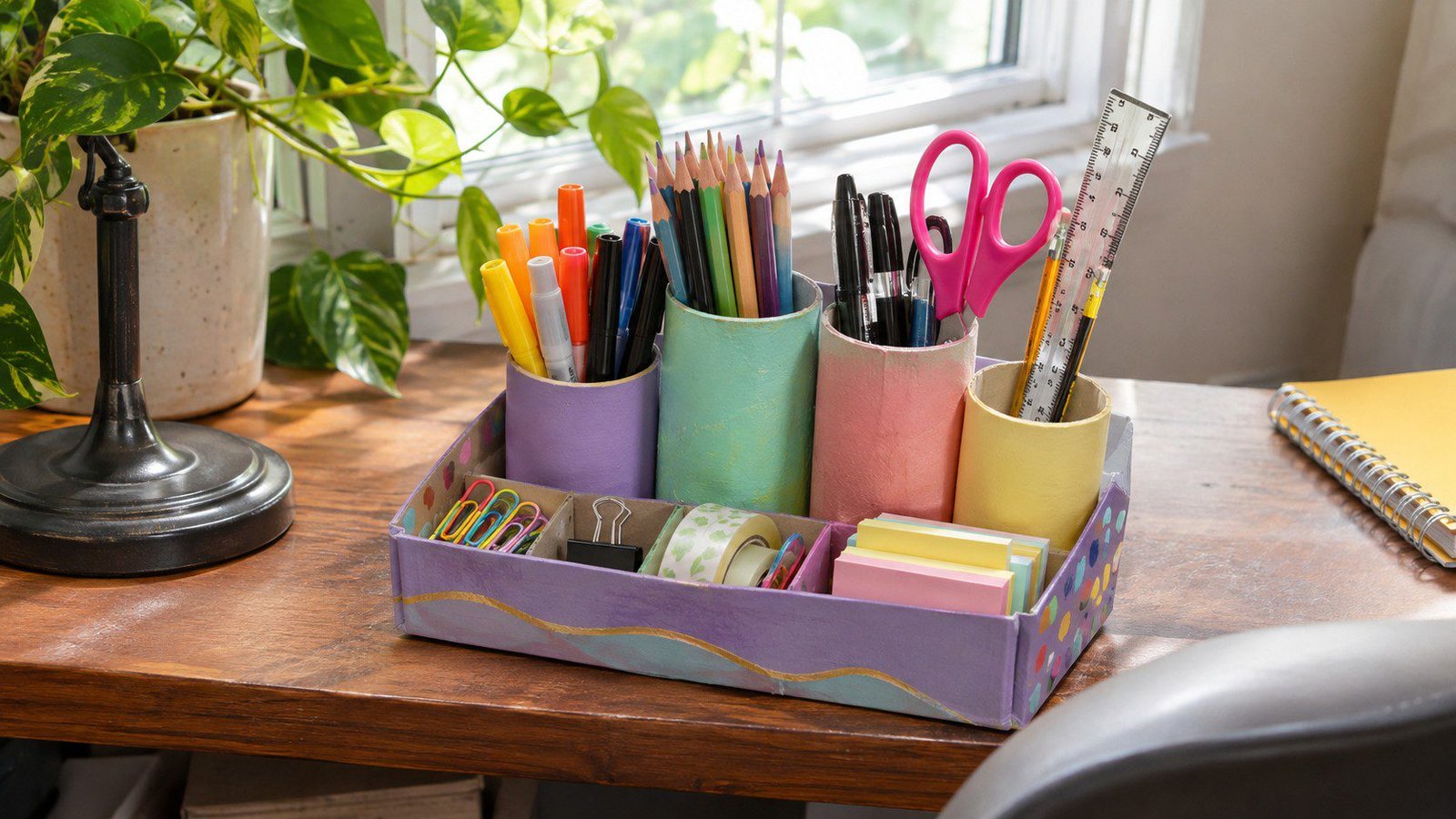
Once the glue dries, fill each section with stationery. You can keep pencils in one tube and markers in another. Add paper labels if you want separate spaces for different supplies. Try different colors or patterns to match your desk. A simple design works well in a home office, while brighter colors may suit a child’s room.
2. Create Paper Flowers That Last
Fresh flowers look lovely, but handmade paper flowers let you choose any color or shape. They can decorate a bedroom shelf, birthday table, or greeting card. Take a sheet of colored paper and draw five or six petals. Cut them out with suitable scissors and fold each one gently down the center. Attach the petals around a small paper circle with glue.
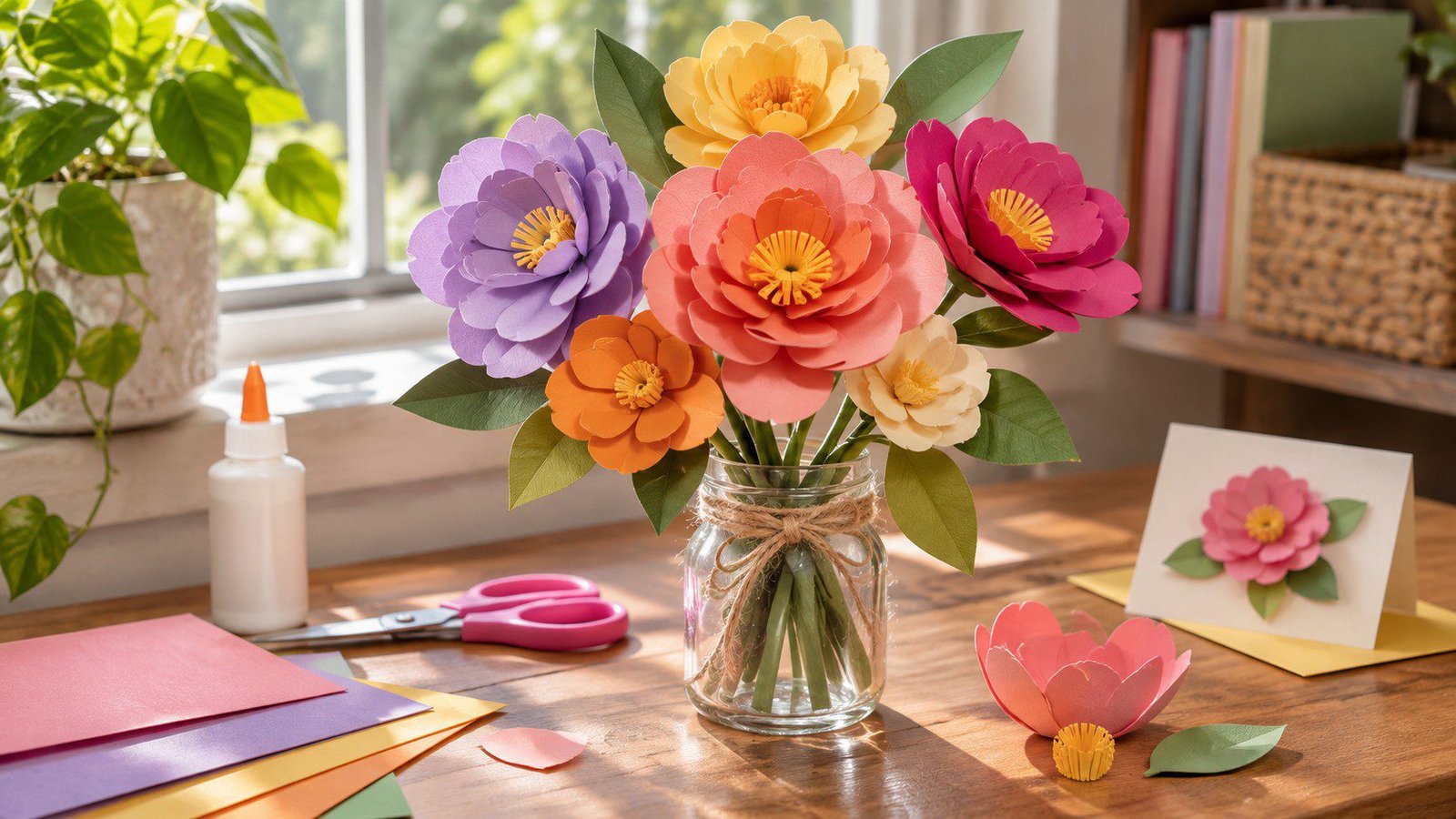
Make a stem from rolled paper or a craft stick. Add green paper leaves, then place the finished flower in a lightweight container. You can create several flowers in different sizes. A few large petals give one look, while smaller layered petals produce a fuller design. Children can experiment with shapes instead of copying the same flower each time. These flowers also make thoughtful handmade gifts. Add a short note or arrange them on a card for someone special.
3. Turn Leaves Into Nature Art
A short walk outside can provide materials for a new craft. Fallen leaves have interesting shapes and textures that look beautiful on paper. Choose clean, dry leaves with clear veins. Put one leaf beneath a thin sheet of paper and gently rub a crayon across the surface. The leaf pattern will slowly appear.
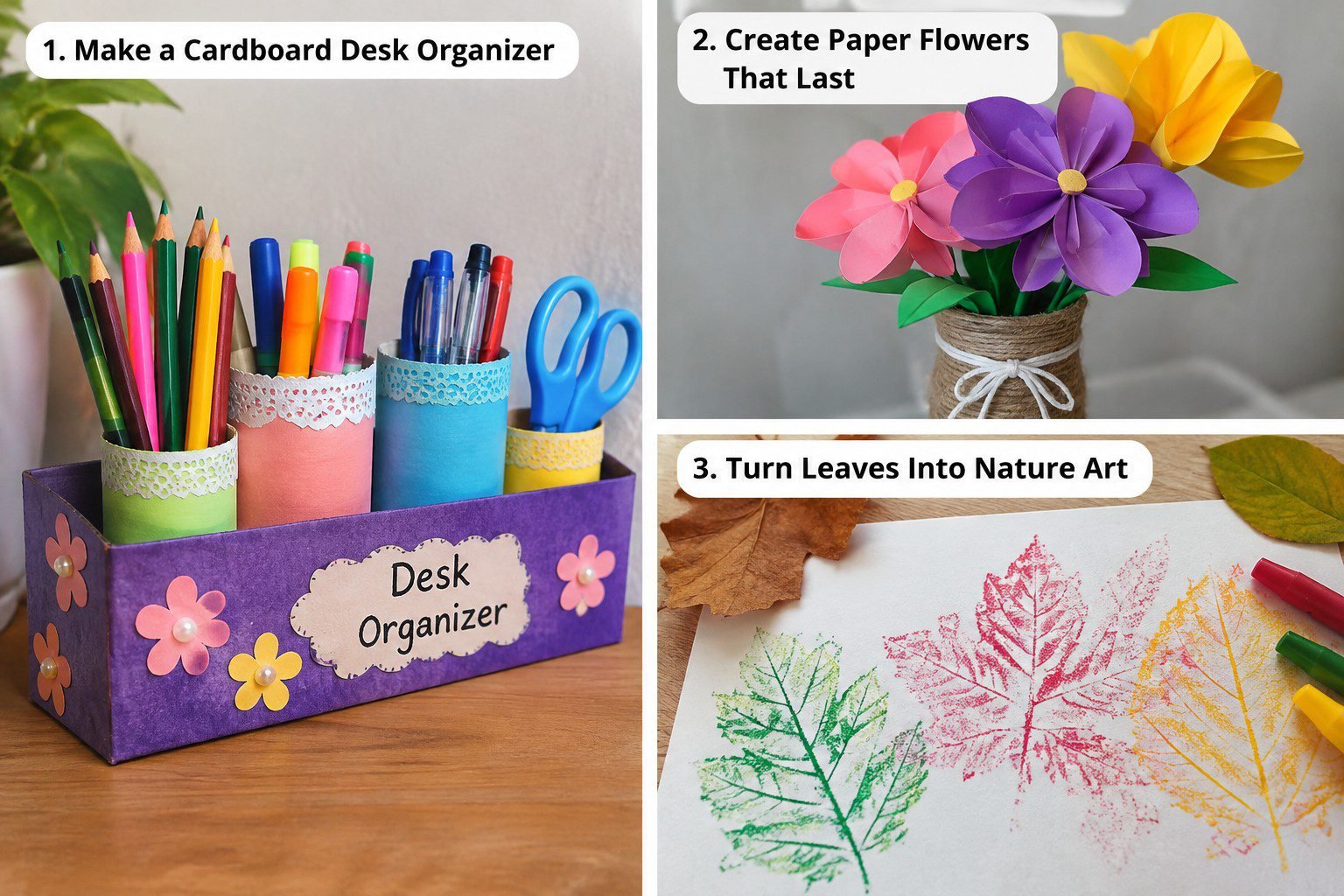
Repeat the process with different leaves and colors. Arrange the prints into a picture, or use them as a background for a handmade card. You can also place leaves directly onto paper and create a collage with suitable glue. Try arranging them into animals, trees, or simple patterns. This activity works well on a quiet afternoon. It gives children a reason to look more closely at the shapes they find outdoors.
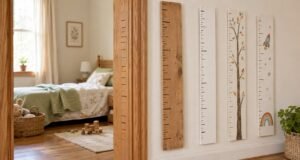
4. Make a Family Height Chart
A handmade height chart can turn a simple craft project into a family keepsake. Children can decorate it with animals, flowers, stars, or other designs that match their interests. Start with a long strip of sturdy paper or canvas. Use a ruler to draw a clear measurement scale, and make sure the numbers are accurate. Add decorations around the edges without covering the marks.
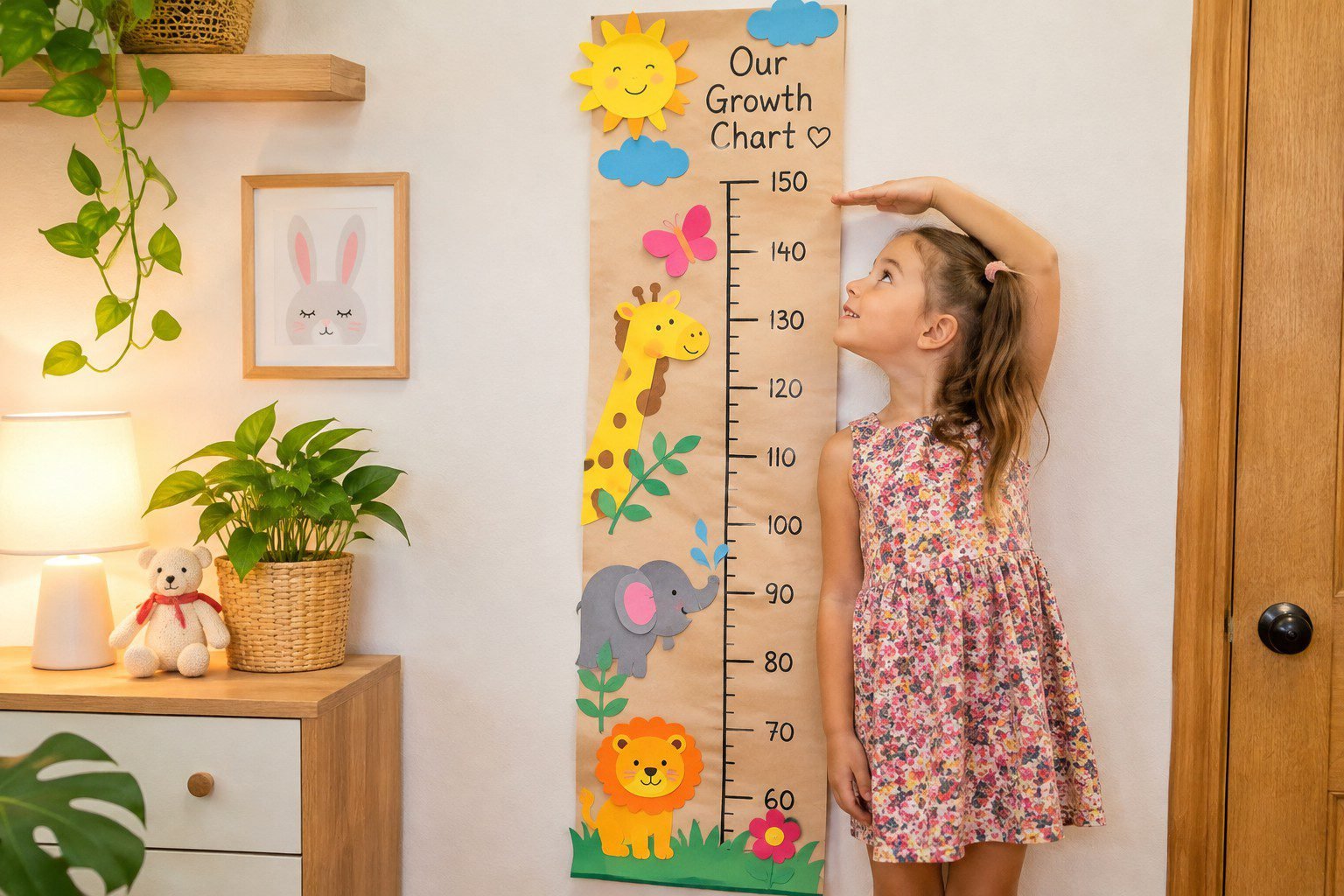
Attach the chart securely at the correct height above the floor. Record each child’s name, height, and date as they grow. If you use paper, choose a protected location where it will not tear easily. A removable design is useful if you rent your home or plan to move. Directions Homes has more door jamb growth chart ideas, including wooden boards, canvas charts, and renter-friendly options. The finished chart gives children a creative project they can return to over the years.
5. Design a Fabric Scrap Wall Banner
Small pieces of leftover fabric often end up forgotten in a drawer. You can use them to make a simple decoration for a bedroom or craft corner. Collect several pieces of clean fabric in colors you like. Cut them into strips of similar length. Tie each strip around a smooth wooden dowel or sturdy craft stick.
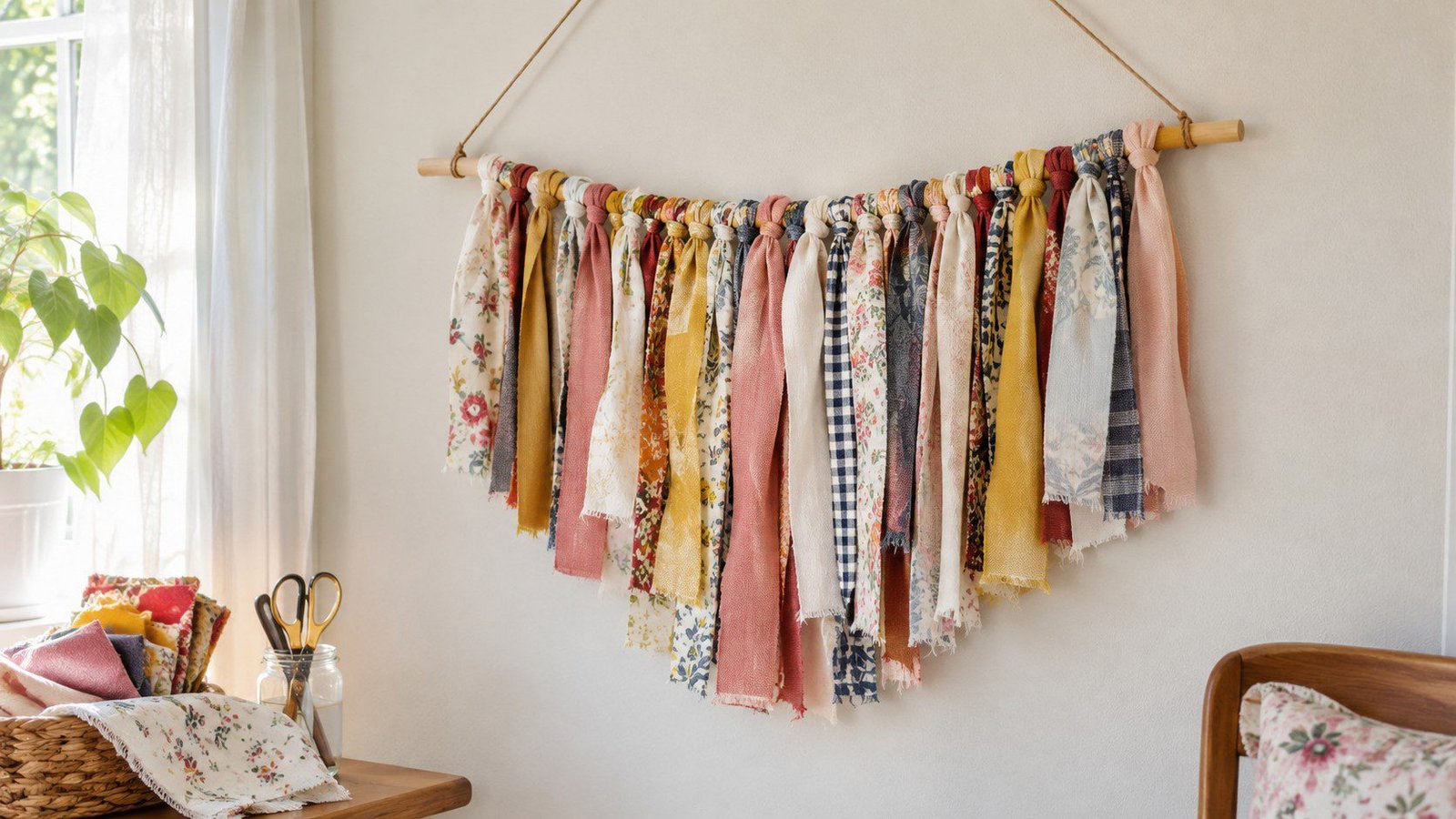
Arrange the colors in a pattern, or mix them for a more relaxed look. Add a piece of string to hang the banner. Keep the decoration out of reach of very young children. You can also change the length of the strips to create a curved shape along the bottom. This project does not require a sewing machine. It works especially well when you want to reuse fabric from an old project without buying new decorations.
Make Handmade Crafts Useful at Home
Crafts do not have to sit on a shelf and collect dust. Some of the nicest projects solve small problems around the house. A decorated box can hold remote controls, a handmade tray can organize a desk, and a simple paper label can help identify stored supplies. Before you start, think about where the finished item will go. A large wall decoration may look attractive, but it could overwhelm a small room. A tiny organizer may be cute but too small to hold what you need.
Measure the available space and choose colors that work with the furniture you already own. The same idea appears in the MintPalDecor home improvement guide on Directions Homes, which discusses practical room changes, storage, and decor choices. You can apply that approach to handmade projects. Create something because you have a place and purpose for it. A useful craft is more likely to remain part of your home.
Let Children Make Their Own Choices
Children often have very different ideas about how a craft should look. You might suggest a red paper flower, but your child may prefer a purple one with green spots. That is perfectly fine. Give children a simple starting point and let them decide some of the details. They can choose colors, arrange materials, and add decorations that interest them.
The National Association for the Education of Young Children describes process art as an approach where children explore materials without the pressure to produce one exact result. It places value on curiosity, experimentation, and personal choices. You can use a similar approach at home. Instead of fixing every uneven cut or crooked shape, ask your child what they want to do next.
Sometimes a mistake creates a new idea. A paper house with a broken roof might become a shop with an open terrace. A flower with uneven petals might inspire an entirely different design. Children learn more about their materials when they get the chance to make decisions and try again.
Make Craft Time Fit Your Schedule
You do not need to set aside an entire afternoon for every project. A short activity can work well after school or on a rainy day. Paper bookmarks, simple greeting cards, and leaf prints are good choices when time is limited. Larger cardboard projects may need more preparation and a space where unfinished pieces can remain overnight. A simple way to choose is to match the project to your available time.
- 5 to 10 minutes: Draw a bookmark, make a paper collage, or decorate a gift tag.
- 15 to 30 minutes: Create paper flowers, animal puppets, or a small desk organizer.
- 30 minutes or more: Build a cardboard town, decorate a family height chart, or make a large wall display.
These are rough time estimates. Some children work quickly, while others enjoy adding small details. If a project takes longer than expected, there is no need to rush. Save the unfinished work in a safe place and return to it another day.
Keep Craft Projects Safe for Kids
A craft should suit the child’s age and ability. Young children need close supervision, especially when a project involves scissors, glue, small objects, or recycled packaging. The American Academy of Pediatrics offers guidance on safe art and craft supplies. It advises parents to check product labels, supervise children, and store materials safely after use.
Choose washable supplies intended for children when possible. Keep craft knives, hot glue guns, and sharp tools in adult hands. Avoid small beads, buttons, and loose decorative pieces in projects for children under three because they can pose a choking risk. Check recycled materials before use. A broken container, sharp metal edge, or package with chemical residue does not belong in a child’s craft box. A little preparation helps everyone focus on the project instead of dealing with preventable problems.
Use Crafts to Create Family Memories
Some of the most personal crafts are connected to family moments. A handmade birthday card can hold a child’s first written message. A paper decoration might become part of an annual holiday tradition. A height chart can preserve dates that would otherwise be easy to forget. You can make a small memory box for these pieces. Keep special cards, drawings, and photos of larger projects that cannot fit inside. Add the date and a short note about who made each item.
Not every project needs to be saved. Choose the ones that tell a story or have special meaning. Parents can also take part without doing all the work. Help prepare materials, offer ideas when needed, and let children decide how their projects should look. A paper puppet may last only a few weeks, but the story your family creates with it can be worth remembering.
Avoid These Common Craft Mistakes
It is easy to get excited about a project and buy supplies before you have a clear plan. Then the materials sit unused because the idea takes too much time or needs tools you do not own. Start with one small project. Check the instructions, gather your materials, and make sure you have enough space to work.
Another mistake is choosing a craft that is too difficult for the child. A complicated cardboard model may frustrate a preschooler who would be happier with a simple paper animal. Adjust the project to the child’s abilities instead of expecting them to finish every step alone. Do not rush paint or glue. If pieces need time to dry, allow it before you add more decorations or use the finished item. Most of all, avoid treating every craft as a test of skill. A handmade item can look unusual and still be a successful project.
Your First Inventive lwmfcrafts Project
A good first project does not need fancy materials or complicated instructions. Pick something that interests you and check what you already have at home. If your desk needs a little organization, try a cardboard pencil holder. If you want a small gift, make a flower card. Choose a project with a clear purpose, so you have a reason to finish it.
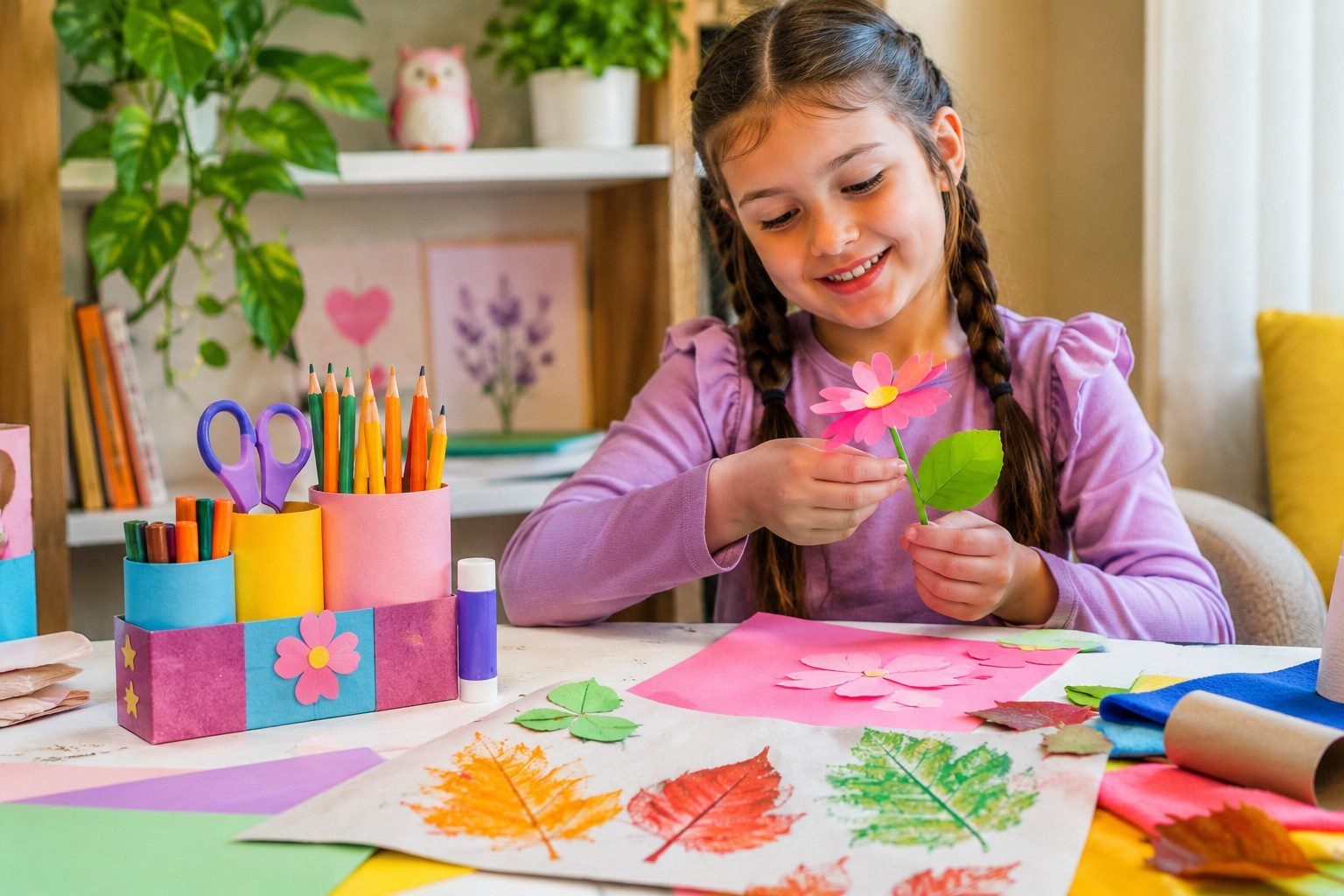
Once you complete one craft, think about what you would change next time. You might try a different material, adjust the size, or add your own design. Inventive lwmfcrafts gives you room to experiment without spending a lot of money. Sometimes all you need is a sheet of paper, a little patience, and an idea worth trying.
Frequently Asked Questions
What does inventive lwmfcrafts mean?
Inventive lwmfcrafts refers to creative DIY activities that use simple materials to make handmade items. These can include paper art, recycled decorations, small toys, gifts, and useful home accessories.
Can beginners try inventive lwmfcrafts?
Beginners can start with paper flowers, bookmarks, leaf art, or simple cardboard projects. These crafts need few supplies and do not require advanced skills.
What can I make with household materials?
You can make pencil holders from cardboard, wall decorations from fabric scraps, greeting cards from paper, and organizers from clean packaging. Choose materials that are safe and sturdy enough for the project.
Are LWMFCrafts good for young children?
Many simple crafts can suit young children with adult help. Paper art, coloring, and large-piece collages are good starting points. Avoid small parts and sharp tools, and follow the age guidance on craft products.
How can I make crafts without spending much money?
Use clean materials you already own and choose a project before buying new supplies. Paper, cardboard, old magazines, and fabric scraps can support many activities. Save reusable leftovers for another project.
Can inventive lwmfcrafts be used for home decor?
Handmade crafts can work well as home decorations. Paper flowers, fabric banners, painted containers, and framed artwork can add a personal touch to a room. Choose designs that fit your space and daily needs.